



கம்பராமாயணம் 1408 · அயோத்தியா 1.21
பாடல் · The poem
Tap a word to see its gloss in the commentary and where else it occurs.
பாட வேறுபாடு · Project Madurai reads
பொருள் · Meaning in Tamil
அருஞ் சிறப்பு அமைவரும் துறவும் - அரிய சிறப்புப் பொருந்திய துறவும்; அவ் வழி தெரிஞ்சு - அந்த வழியை அறிந்து; உறவு என மிகும்தெளிவும் ஆய் - அதற்கு இனம் என்று சிறந்துள்ள மெய்யுணர்வும் ஆகி; வரும்பெருஞ் சிறை உள எனின் - வருகின்ற பெரிய சிறகுகள் உண்டானால்; பிறவிஎன்னும் இவ் இருஞ் சிறை - பிறப்பு என்னும் இந்தப் பெரிய சிறைச்சாலையை; கடத்தலின் இனியது யாவதோ - நீங்கிச் செல்லுவதினும் இனிமையான தொன்று வேறு எதுவோ? (எதுவும் இல்லை).
உயிராகிய பறவைக்குத் துறவு, மெய்யுணர்வு என்னும் இரு சிறகுகள் முளைத்துவிட்டால் அது பிறவி ஆகிய கூண்டை விட்டுப் பறந்துவிடும் என்பது கருத்து. அருஞ் சிறப்புஅமைவரும் - அடைவதற்கு அரிய வீட்டினை அடைதற்குக் காரணமான எனலும் பொருந்தும். தெரிஞ்சு - தெரிந்து என்பதன் போலி. திருவள்ளுவர் துறவையும் மெய்யுணர்தலையும் அடுத்தடுத்து வைத்துள்ள முறைமை துறந்தார்க்கே மெய்யுணர்வு தோன்றும் எனத் தெரிவித்தல் ஈண்டுக் கருதத் தக்கது.
ஆங்கிலம் · English translationAI
Translation
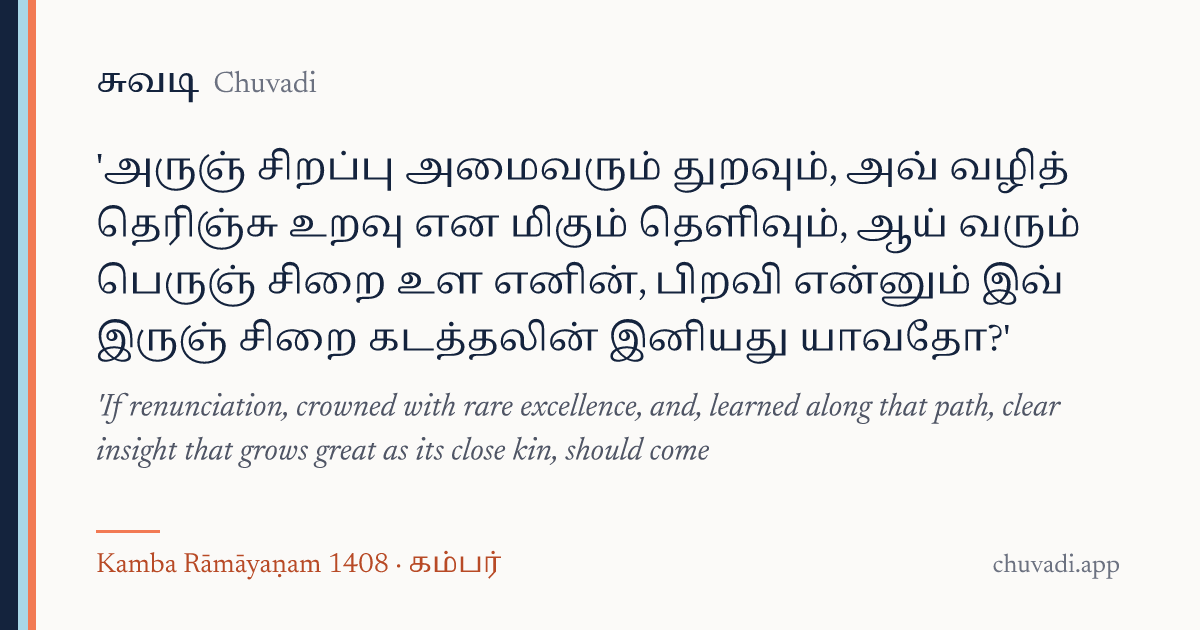
- 'If renunciation, crowned with rare excellence, and, learned along that path,
- clear insight that grows great as its close kin, should come
- as two great wings, what could be sweeter than to pass
- out of this vast prison called birth?'
What the poem says
The verse plays on ciṟai, which means both "wing" and "prison". The soul is a bird caged in the prison of rebirth; once it grows the two wings of renunciation and true knowledge, it can fly free.
The commentary notes that the Kuṟaḷ places its chapters on renunciation and on true knowledge side by side, implying that true knowledge dawns only on those who have renounced.