



கம்பராமாயணம் 1409 · அயோத்தியா 1.22
பாடல் · The poem
Tap a word to see its gloss in the commentary and where else it occurs.
பாட வேறுபாடு · Project Madurai reads
பொருள் · Meaning in Tamil
“துனி வரு - துன்பம் வருதற்குக் காரணமாகிய; புலன் எனத் தொடர்ந்து - ஐம்புலன்கள் என்னும் பெயரையுடையனவாக உயிரைப் பற்றிக்கொண்டு; தோற்கலா - தோல்வியுறாத; நனிவரும் பெரும் பகை நவையின் நீங்கி - மிகுதியாக வருகின்ற பெரிய பகையினால் வரும் குற்றங்களினின்றும் விலகி; அத் தனிஅரசாட்சியில் - அந்த ஒப்பற்ற வீட்டரசை ஆளுவதில்; தாழும் உள்ளம் - ஈடுபடும் மனமானது; இனியது போலும் இவ் அரசை - இனியது போலத் தோற்றும் இந்த உலகினை ஆளும் அரசாட்சியை; எண்ணுமோ - ஒரு பொருளாக மதிக்குமோ? (மதிக்காது)”
புலன் எனத் தொடர்ந்து என்பது “நாள்என ஒன்றுபோல் காட்டி” என்பது போல வருவது. புறப்பகையினும் அகப்பகை கொடிதாதலின் பெரும்பகை எனப்பட்டது. அரச பதவி துன்பமின்றித் தொழத்தக்கது அன்றாதலின் “இனியது போலும் அரசு” என்றார். கீழ் உள்ள பாடல்களில் துறவின் பெருமை பேச, இதில் அத்துறவில் தன்மனம் செல்வதைத் தெரிவிக்கிறான் தயரதன்.
ஆங்கிலம் · English translationAI
Translation
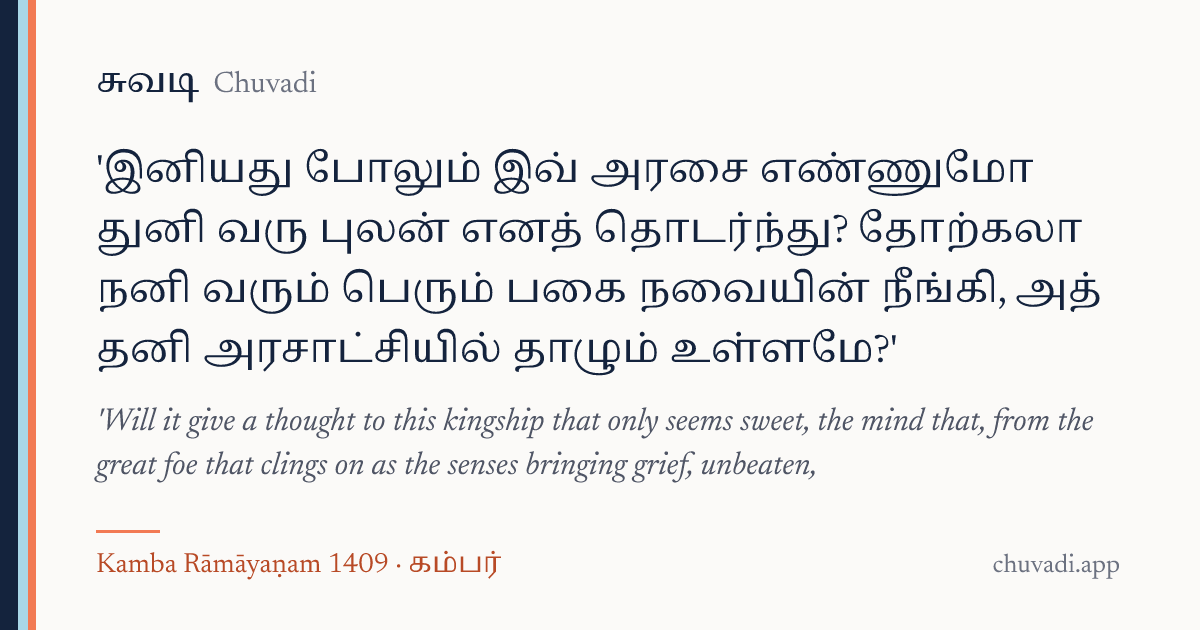
- 'Will it give a thought to this kingship that only seems sweet,
- the mind that, from the great foe that clings on as the senses bringing grief, unbeaten,
- coming on in force, has broken free of its faults, and now
- is bent on ruling that one sovereign realm?'
What the poem says
The "one sovereign realm" is liberation. A mind intent on ruling there, having freed itself from the senses, the inner enemy that clings to the soul and never admits defeat, will not care for earthly kingship, which only looks sweet.
The inner enemy is called "great" because it is worse than any outer foe. Earlier verses praised renunciation in general; here Tacarataṉ confesses that his own heart is already turning to it.