



கம்பராமாயணம் 1413 · அயோத்தியா 1.26
பாடல் · The poem
Tap a word to see its gloss in the commentary and where else it occurs.
பொருள் · Meaning in Tamil
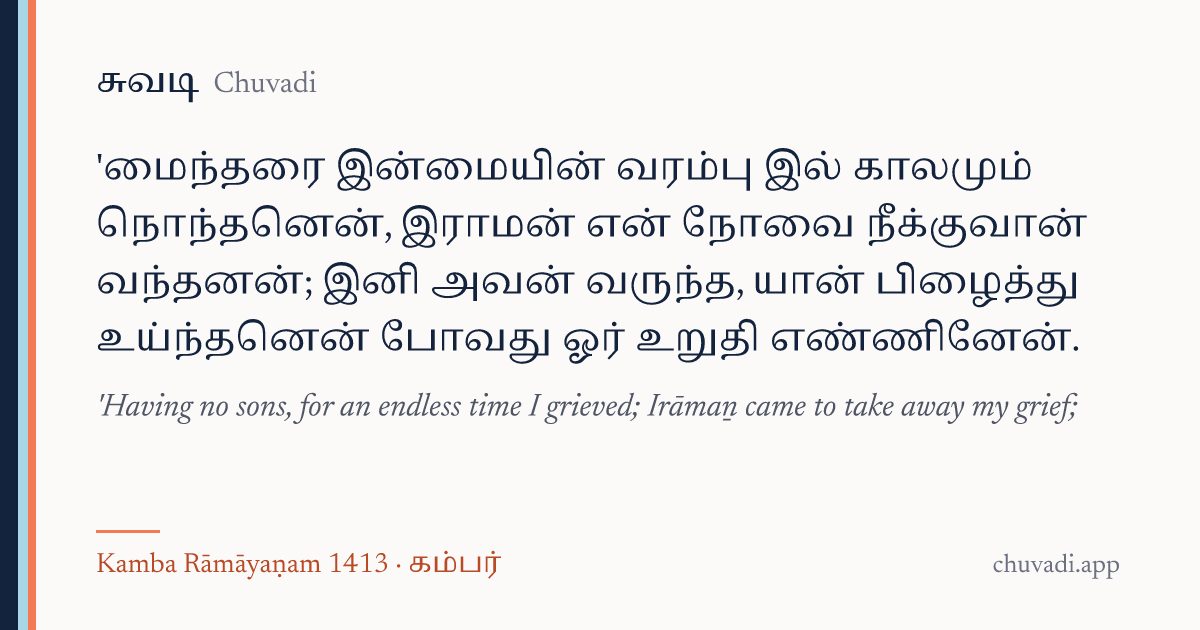
“மைந்தரை இன்மையின் - பிள்ளைகள் இல்லாமையால்; வரம்பு இல் காலமும் - எல்லையற்ற காலமும்; நொந்தனென் - (மனம்) வருந்தினேன்; என் நோவை நீக்குவான் - என் வருத்தத்தை நீக்குவதற்கு; இராமன் வந்தனன் - இராமன் எனக்கு மகனாகப் பிறந்தான்; இனி அவன் வருந்த - இனி அந்த இராமன் அரசாட்சியைத் தாங்கித் துன்பம் உற; யான் பிழைத்துஉய்ந்தனென் போவதோர் உறுதி - யான் தப்பி ஈடேறிப் போவதான ஒரு நன்மையைப் பெற; எண்ணினேன் - நினைந்தேன்.”
இராமனிடம் ஆட்சிப் பொறுப்பை ஒப்படைத்துவிட்டு யான் துறவு மேற்கொள்ள எண்ணினேன் என்பது கருத்து. இராமன் எனற் பெயர் மகிழச் செய்பவன் என்னும் பொருளது. ஆதலின் என் நோவை நீக்க என் தவத்தினாலன்றித் தானே வந்து தோன்றினான் என்பான் “இராமன் வந்தனன்” என்று கூறினான். “அவன் வருந்த யான் பிழைத்துய்ந்தனன் போவதோர் உறுதி எண்ணினேன்” என்பது இராமன் நாடு துறந்து காடு சென்று துன்புற, யான் இவ்வுடலைத் துறந்து துறக்கம் போவதாகிய ஓர் உறுதியை எண்ணினேன் என்று மேல் வினையைக் குறிப்பாகக் காட்டுவதாக அமைந்தது. நீக்குவான் “வான்” ஈற்று எதிர்கால வினையெச்சம்.
ஆங்கிலம் · English translationAI
Translation
- 'Having no sons, for an endless time
- I grieved; Irāmaṉ came to take away my grief;
- now, while he bears the strain, I have thought of a good way
- by which I may escape and go on to my salvation.'
What the poem says
Tacarataṉ was childless for ages until Irāmaṉ was born and ended his sorrow; the name Irāmaṉ means "one who gives delight". Now he plans to let Irāmaṉ shoulder the burdens of kingship while he himself goes free.
The commentary hears an unintended prophecy: Irāmaṉ will indeed suffer, in exile in the forest, while Tacarataṉ will "escape" by leaving his body and going to heaven.