



கம்பராமாயணம் 1414 · அயோத்தியா 1.27
பாடல் · The poem
Tap a word to see its gloss in the commentary and where else it occurs.
பாட வேறுபாடு · Project Madurai reads
பொருள் · Meaning in Tamil
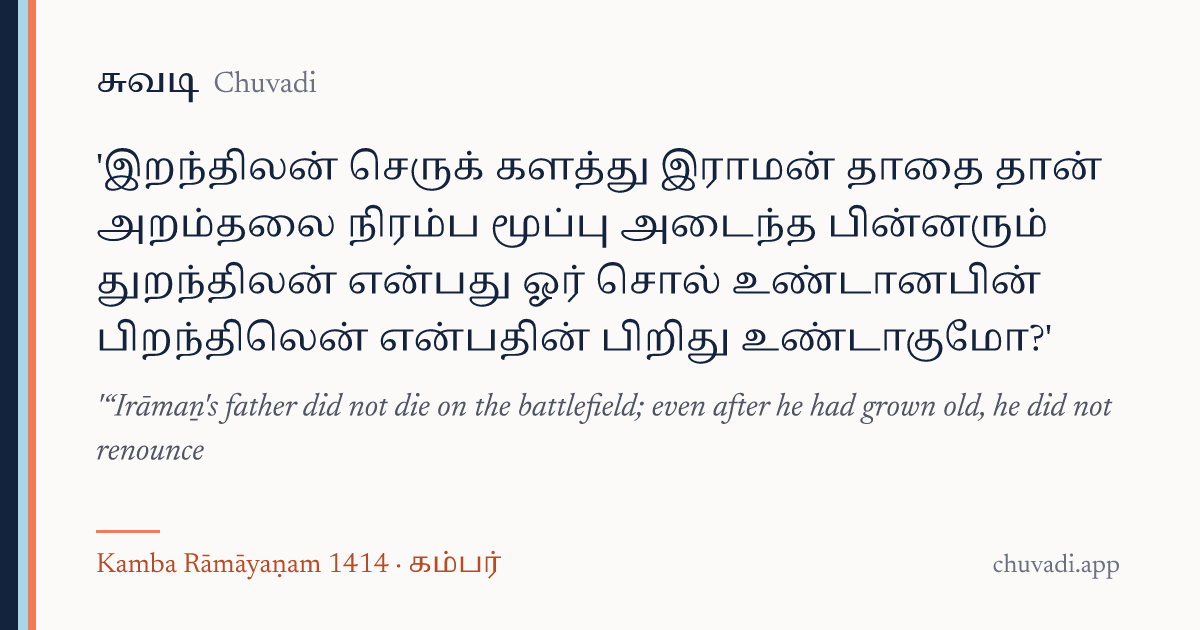
இராமன் தாதை - இராமனுக்குத் தந்தையான தயரதன்; செருக்களத்து இறந்திலன் - போர்க்களத்தில் உயிர் விட்டானில்லை; தான் மூப்பு அடைந்த பின்னரும் - தான் கிழத்தனத்தை அடைந்த பிறகும்; அறம் தலைநிரம்ப - அறம் முழுதும் நிறையும்படி; துறந்திலன் - துறவு நெறியை மேற்கொண்டானில்லை; என்பது ஓர் சொல் - என்பதாகிய ஒரு பழிச்சொல்; உண்டான பின் - தோன்றிய பின்பு; பிறந்திலென் என்பதின் - பிறந்திலேன் என்பதினும்; பிறிது உண்டாகுமோ - வேறு உண்டோ?
முனைமுகத்து விழுப்புண் பட்டு வீரசுவர்க்கம் அடைவது மன்னர்க்குச் சிறப்பு; அது வாய்க்காது போயின், மூப்புப் பருவத்தில் துறந்து அதன் பயன் கோடல் தக்கதாம். இவ்விரண்டும் வாய்க்காது போயின் பிறந்தும் பயனில்லை; பழிச்சொல் உண்டாகும் என்பது வற்புறுத்தப்பட்டது. பிறவிப் பயன் அடையாதார் பிறந்தும் பிறவாதாரே ஆவார். “இராமன் தாதை” என்பது பிள்ளையைப் பெற்ற பின்னரும் துறந்திலன் என்னும் குறிப்பினை உட்கொண்டது.
ஆங்கிலம் · English translationAI
Translation
- '“Irāmaṉ's father did not die on the battlefield;
- even after he had grown old, he did not renounce
- so as to fulfil his dharma”: once such a word is spoken,
- would that be any different from never having been born?'
What the poem says
For a king there are two honourable ends: death in battle, which wins the warrior's heaven, or renunciation in old age. Tacarataṉ dreads the reproach that "Irāmaṉ's father" managed neither, even after he had a worthy son to succeed him.
A life that misses its purpose, the commentary says, is as good as never having been born.