



கம்பராமாயணம் 1415 · அயோத்தியா 1.28
பாடல் · The poem
Tap a word to see its gloss in the commentary and where else it occurs.
பொருள் · Meaning in Tamil
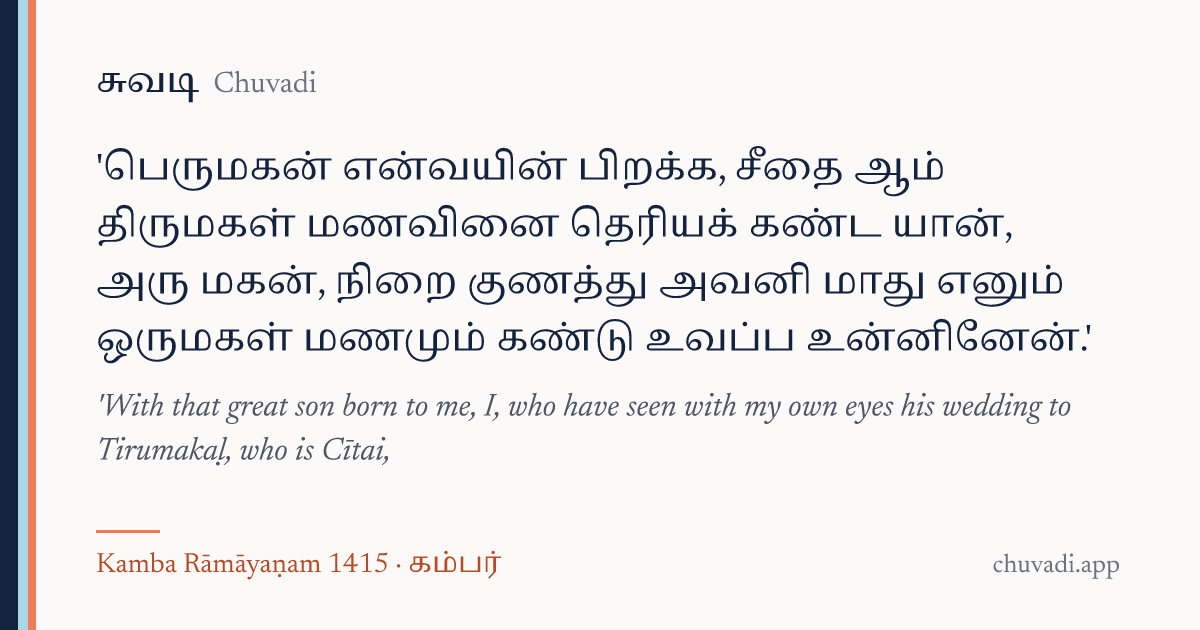
“பெருமகன் என்வயின் பிறக்க - ஆடவர் திலகமாகிய இராமன் எனக்கு மகனாகத் தோன்ற; சீதை ஆம் திருமகள் மணவினை - சீதையாகிய திருமகளின் திருமணத்தை; தெரியக் கண்ட யான் - கண்ணாரப் பார்த்து மகிழ்ந்த யான்; அரு மகன் - அந்த அரிய மகனாகிய இராமன்; நிறை குணத்து அவனி மாது எனும் - நிறைந்த குணத்தையுடைய மண்மகள் என்கிற; ஒரு மகள் மணமும் - ஒப்பற்ற பெண்ணை மணம்புரிந்து கொள்ளுதலையும்; கண்டு உவப்ப உன்னினேன் - கண்ணாரக்கண்டு களிக்கக் கருதினேன்.”
தயரதன், “இராமனுக்குத் திருமணம் நடந்ததைக் கண்டு மகிழ்ந்த யான் அரசுரிமை ஏற்றலையும் செய்விக்கப் பேரவாக் கொள்கிறேன்” என்கிறான். பெருமகன், திருமகள், அவனிமாது ஆகிய சொற்கள், “பெருமாளுக்குத் தேவியர் இருவருள் திருமகள் கூடியதைக் கண்டு களித்தேன்; இனி மண்மகள் கூடுவதனையும் காண விழைகிறேன்” என்னும் பொருளினைத் தெரிவிப்பனவாக அமைந்துள்ளன.
இதுவரை தயரதன் தான் துறக்க விரும்பியதற்குக் காரணங் கூறி, இது முதல் இராமனுக்கு அவன் முடிசூட்ட விரும்பியதைக் கூறுகிறான்.
ஆங்கிலம் · English translationAI
Translation
- 'With that great son born to me, I, who have seen with my own eyes
- his wedding to Tirumakaḷ, who is Cītai,
- now wish to see my rare son wed that one bride
- called the Earth, full of every virtue, and rejoice in it.'
What the poem says
Having seen Irāmaṉ marry Cītai, Tacarataṉ wants to see him "marry" the Earth, that is, be crowned, since a king was thought of as the husband of the land.
The commentary finds a theological layer: Viṣṇu has two consorts, Śrī (Tirumakaḷ) and the Earth goddess. Tacarataṉ has seen his son united with the first in Cītai and now longs to see him united with the second. From here on, the king turns from his own retirement to his wish to crown Irāmaṉ.