



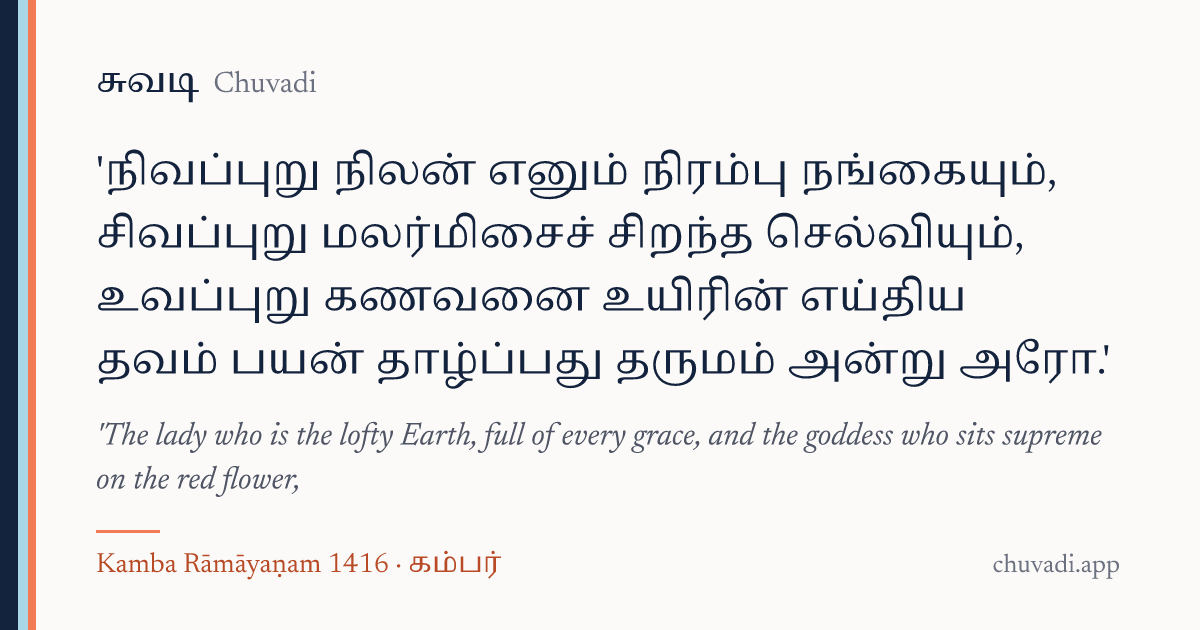
கம்பராமாயணம் 1416 · அயோத்தியா 1.29
பாடல் · The poem
Tap a word to see its gloss in the commentary and where else it occurs.
பொருள் · Meaning in Tamil
நிவப்புறு - உயர்வு பெற்ற; நிலன் எனும் நிரம்புநங்கையும் - மண் என்னும் பெண்மைக் குணங்கள் நிரம்பிய தேவியும்; சிவப்புறு மலர்மிசைச் சிறந்த செல்வியும் - செந்நிறத் தாமரை மலரின்மீது வீற்றிருக்கின்ற சீதேவியும்; உவப்புறு கணவனை - விரும்பத்தக்க மணாளனை; உயிரின் எய்திய - தம் உயிர்போல அடைவதற்குக் காரணமான; தவப் பயன் - தவத்தின் பயனை; தாழ்ப்பது தருமம் அன்று - பிற்படச் செய்வது அறம் ஆகாது.
நிவப்புறு என்பதனை நங்கையொடும் செல்வியொடும் தனித்தனிக் கூட்டுக. நிலமடந்தைக்கு உயர்வாவது - எல்லாப் பொருள்களையும் தாங்கும் ஆற்றலுடைமை, வளம் முதலியவற்றால் சிறந்திருத்தல். திருமகளுக்கு உயர்வாவது - யாவர்க்கும் செல்வப் பெருக்கைத் தந்து இம்மை மறுமை இன்பங்களை நுகரச் செய்தல். அரோ - ஈற்றசை.
முன் பாட்டின் கருத்தையே மறுமுறையும் வற்புறுத்தி இராமனுக்கு முடிசூட்டும் நாளைத் தள்ளிப் போடுவது அறம் ஆகாது என்றும் ஆதலின் விரைந்து முடிசூட்டல் வேண்டும் என்றும் கூறுகிறான். திருமடந்தையும் மண்மடந்தையும் இராமனைத் தலைவனாக அடைந்தமை, “பொன்உயிர்த்த பூமடந்தையும் புவி எனும் திருவும், இன் உயிர்த்துணை இவன் என நினைக்கின்ற இராமன்” (1350) எனப் பின்னும் சுட்டப்படுகிறது.
ஆங்கிலம் · English translationAI
Translation
- 'The lady who is the lofty Earth, full of every grace,
- and the goddess who sits supreme on the red flower,
- have earned by penance a beloved husband, dear to them as life;
- to put off the fruit of that penance is not dharma.'
What the poem says
Tacarataṉ presses the point of the previous verse. Both the Earth goddess and Śrī, the goddess of the red lotus, have earned Irāmaṉ as husband by their penance, and it would be wrong to keep them waiting, so the coronation should come soon.
Vaciṭṭaṉ repeats the same idea a few verses later, calling Irāmaṉ the one whom both Śrī and the Earth think of as their dearest companion.