



கம்பராமாயணம் 1417 · அயோத்தியா 1.30
பாடல் · The poem
Tap a word to see its gloss in the commentary and where else it occurs.
பாட வேறுபாடு · Project Madurai reads
பொருள் · Meaning in Tamil
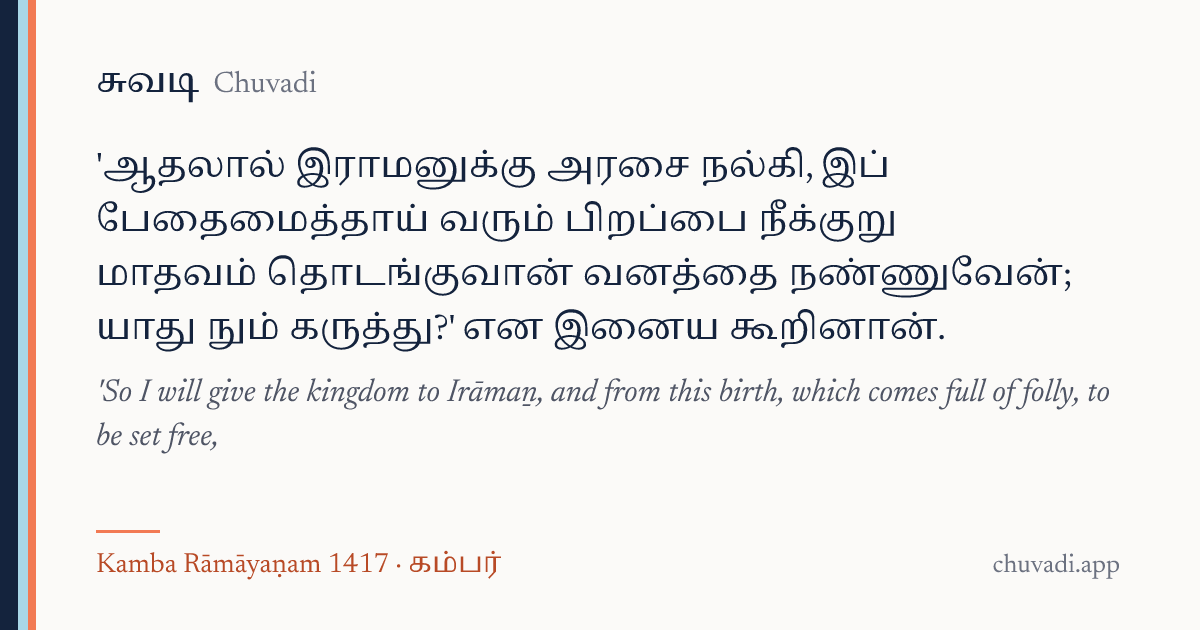
“ஆதலால் - ஆகையால்; இராமனுக்கு அரசை நல்கி - இராமனுக்கு அரசாட்சியை அளித்துவிட்டு; இப் பேதைமைத்தாய் வரும் பிறப்பை - இந்த அறியாமையை உடையதாக வரும் பிறவி நோயை; நீக்குறு மாதவம் தொடங்குவான் - நீக்குகின்ற பெரிய தவத்தைத் தொடங்குவதற்காக; வனத்தை நண்ணுவேன் - கானகத்தை அடையப் போகிறேன்; நும் கருத்து யாது - உங்கள் எண்ணம் யாது; என - என்று; இனைய கூறினான் - இத் தன்மையானவற்றைத் தெரிவித்தான்.
பேதைமை - அறியாமை; அவிச்சை. அறியாமை நிறைந்தது மனிதப் பிறப்பு என்பதனைத் திருவள்ளுவரும் “பிறப்பென்னும் பேதைமை” (358) என்று புலப்படுத்தியுள்ளார். தொடங்குவான் - “வான்” ஈற்று எதிர்கால வினையெச்சம். இனைய - குறிப்பு வினையாலணையும்பெயர். இராமனுக்கு இளவரசுப் பட்டம் கட்டத் தயரதன் எண்ணியதாகவே முதல்நூல் கூறுகிறது. இங்கோ அரசுரிமை ஏற்றலே பேசப்படுகிறது.
ஆங்கிலம் · English translationAI
Translation
- 'So I will give the kingdom to Irāmaṉ, and from this
- birth, which comes full of folly, to be set free,
- to begin the great penance, I will go to the forest;
- what is your view?' Such were the things he said.
What the poem says
Tacarataṉ states his proposal plainly: hand the kingdom to Irāmaṉ, then go to the forest and perform the penance that frees the soul from rebirth, which the Kuṟaḷ calls "the folly of birth". He asks the council for its view.
The commentary notes a difference from Vālmīki, where Tacarataṉ means only to make Irāmaṉ crown prince; in Kampaṉ he intends to hand over the throne itself.