



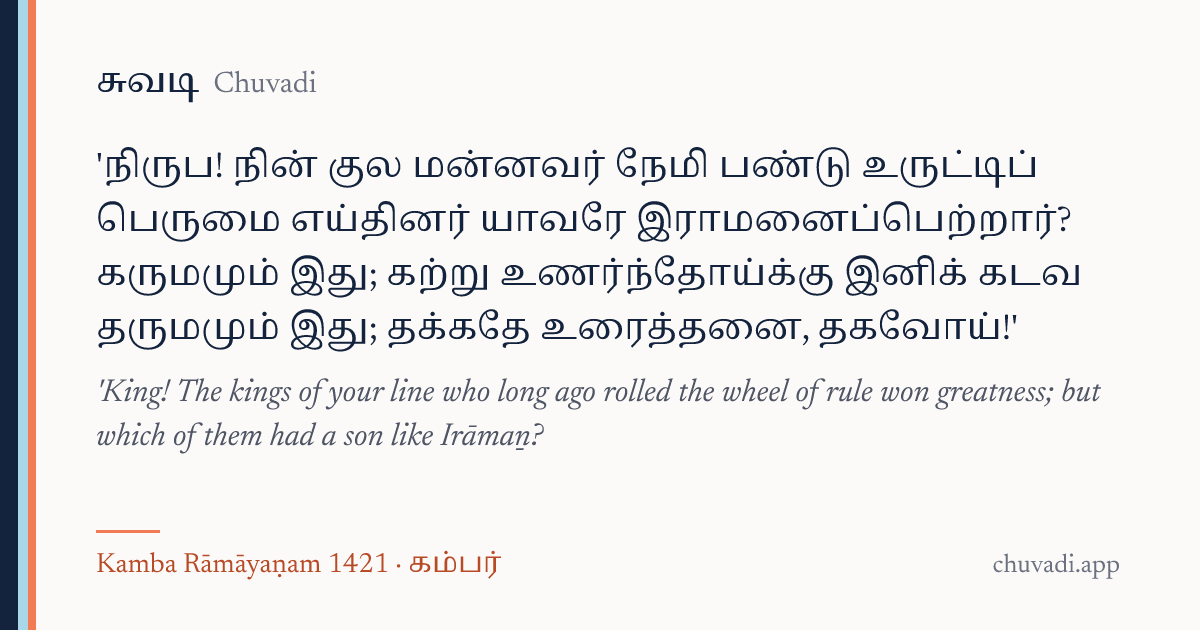
கம்பராமாயணம் 1421 · அயோத்தியா 1.34
பாடல் · The poem
Tap a word to see its gloss in the commentary and where else it occurs.
பாட வேறுபாடு · Project Madurai reads
பொருள் · Meaning in Tamil
“நிருப - மன்னவனே! தகவோய் - தகுதியுடையோனே! பண்டு - முற்காலத்தில்; நின் குல மன்னர் நேமி உருட்டி - உன்குலத்தில் தோன்றிய அரசர்கள் ஆணைச் சக்கரத்தைச் செலுத்தி; பெருமை பெற்றனர் - பெருமை அடைந்தார்கள்; யாவரே இராமனைப் பெற்றார் - அவர்களுள் இராமனைப் போன்ற மைந்தனைப் பெற்றவர் எவர்? (ஒருவரும் இலர்); கற்று உணர்ந்தோய்க்கு - கற்பதற்குரிய நூல்களைக் கற்று அவற்றின் பொருளை உணர்ந்த உனக்கு; கருமமும் இது - இப்பொழுது செய்தற்குரியதும் இதுவே; இனி கடவ தருமமும் இது - இனிச் செய்வதற்குரிய அறச்செயலும் இதுவே; தக்கதே நினைந்தனை - தகுதியுடைய செயலையே புரியக் கருதினாய்.”
மன்னன் ஆணையைச் சக்கரம் என்றல் மரபு. யாவரே இராமனைப் பெற்றார் என்பது இராமன் தனிச் சிறப்புகள் பல பெற்றவன் என்பதனைக் குறித்தது. கருமம் - தன் நலம்குறித்துச் செய்வது; தருமம் - யாவர்க்கும் பயன் தரும்படி செய்வது.
ஆங்கிலம் · English translationAI
Translation
- 'King! The kings of your line who long ago rolled the wheel of rule
- won greatness; but which of them had a son like Irāmaṉ?
- This is the task at hand; for you, who have learned and understood, this too
- is the dharma that falls to you now; you have spoken fittingly, worthy one!'
What the poem says
Vaciṭṭaṉ approves. Many kings of the Solar line ruled gloriously, turning the wheel of royal command, but none had a son like Irāmaṉ.
The plan is both the right practical step and the right moral one: the commentary distinguishes karumam, what is done for one's own good, from tarumam, what is done for the good of all.