



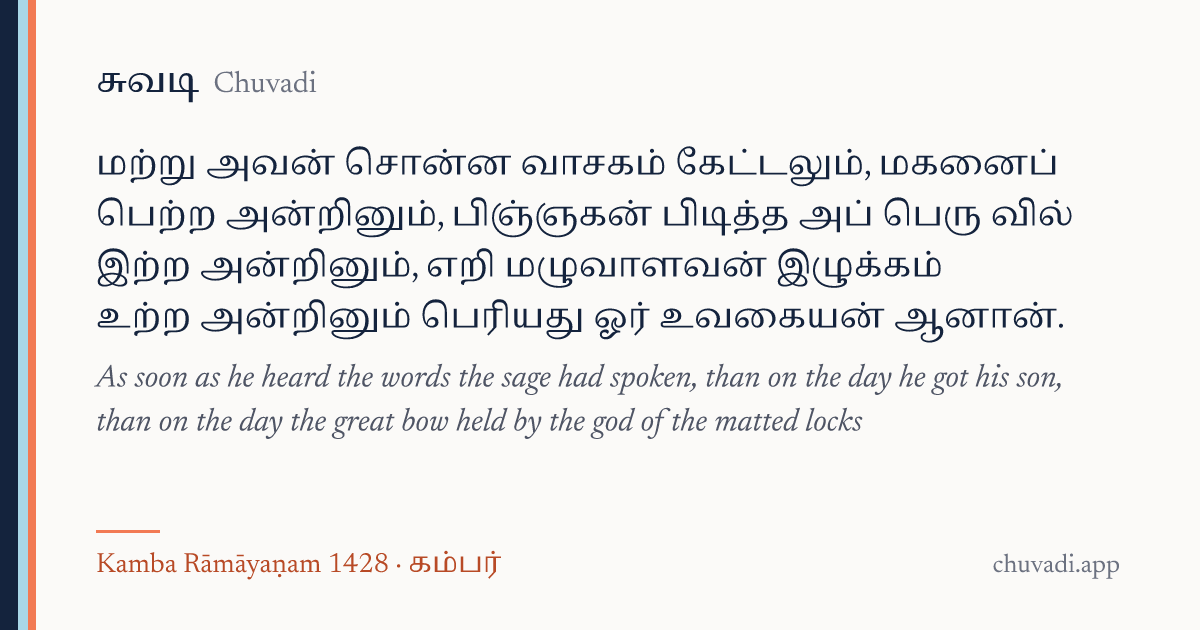
கம்பராமாயணம் 1428 · அயோத்தியா 1.41
பாடல் · The poem
Tap a word to see its gloss in the commentary and where else it occurs.
பொருள் · Meaning in Tamil
அவன் சொன்ன வாசகம் கேட்டலும் - வசிட்ட முனிவன் சொன்ன சொற்களைக் கேட்டவுடன்; மகனைப் பெற்ற அன்றினும் - நெடுங்காலம் மகப்பேறு இல்லாதிருந்து வேள்வி செய்து இராமனை மகனாகப் பெற்ற அந்த நாளினும்; பிஞ்ஞகன் பிடித்த அப் பெரு வில் - தலைக்கோலமுடைய சிவபிரான் ஏந்திய பிறரால் வளைத்தற்கு அரிய அந்தப் பெரிய வில்லானது; இற்ற அன்றினும் - இராமன் ஆற்றலுக்குப் போதாமல் கணத்தில் ஒடிந்த நாளினும்; எறி மழுவாளவன் - அரசர்களை வெட்டி வீழ்த்திய மழு என்னும் படை ஏந்திய பரசுராமன்; இழுக்கம் உற்ற அன்றினும் - தோல்வி அடைந்த நாளினும்; பெரியது ஒர் உவகையன் ஆனான் - மிகுந்த ஒப்பற்ற மகிழ்ச்சியுடையவனாக ஆயினான்.
இராமன் பிறந்த நாளில் தன் ஒருவன் துயரமும், வில் முரிந்த அன்று சனகனாகிய பிறன் ஒருவன் துயரமும், பரசுராமன் தோல்வியுற்ற நாளில் மன்னர் குலமாகிய பலரின் துயரமும் அகன்றன. ஆதலின், ஒன்றின் மற்றொன்று மிக்க மகிழ்ச்சிக்கு அடியாய் அமைந்தது. இராமன் முடிசூடினால் உயிர்க்குலம் அனைத்தும் இன்புறுமாதலின் அவற்றினும் இன்று பெரியதோர் உவகையன் ஆயினான். ஈன்ற பொழுதினும் சான்றோன் எனக் கேட்ட பொழுது தாய் மகிழ்வாள் என்பர் திருவள்ளுவர். தாயேயன்றித் தந்தையும் மகிழ்வான் என்பது இதனால் போந்தது. பிஞ்ஞகன்: சடை (தலைக்கோலம்) கொண்ட சிவபிரான். மழு - பரசு. இழுக்கம் - இழிவு; ஈண்டுத் தோல்வியைக் குறித்தது.
ஆங்கிலம் · English translationAI
Translation
- As soon as he heard the words the sage had spoken, than on the day
- he got his son, than on the day the great bow held by the god of the matted locks
- broke, than on the day the wielder of the flung axe suffered his
- disgrace, he felt a greater joy.
What the poem says
Tacarataṉ's joy at Vaciṭṭaṉ's approval surpasses the three great joys of his life: Irāmaṉ's birth after long childlessness, the breaking of Civaṉ's bow at Mitilai, and the humbling of Paracurāmaṉ. Each of those ended a wider sorrow, first the king's own, then Caṉakaṉ's, then that of all royal houses; Irāmaṉ's coronation will gladden every living being.
The Kuṟaḷ says a mother rejoices more on hearing her son called wise than on the day she bore him; here a father does the same.