



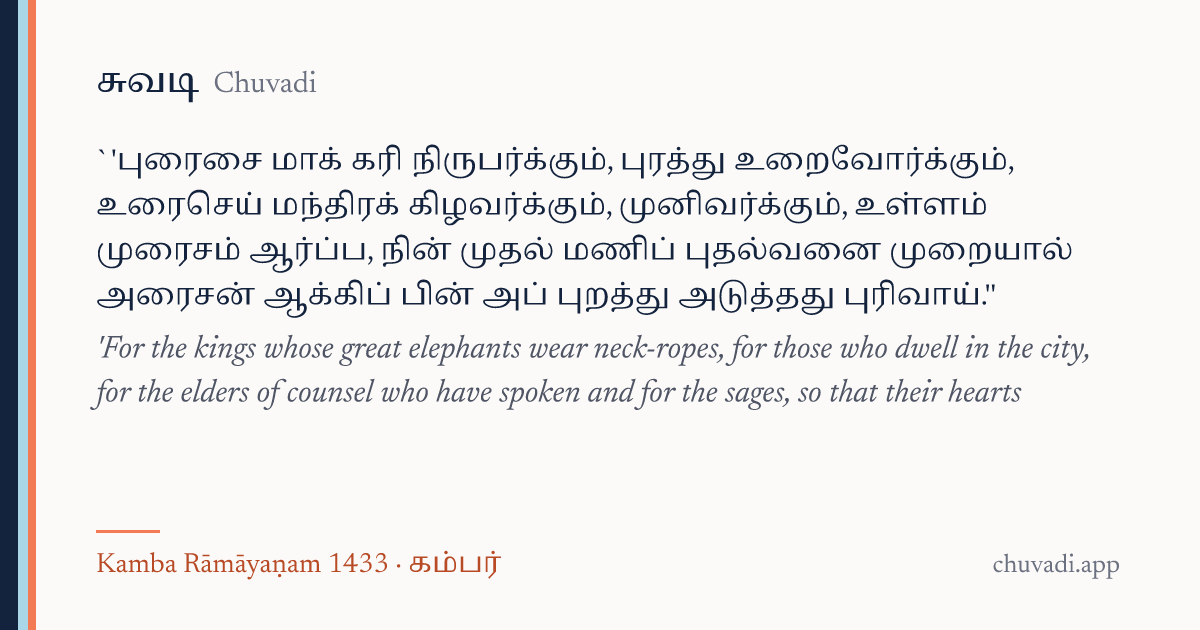
கம்பராமாயணம் 1433 · அயோத்தியா 1.46
பாடல் · The poem
Tap a word to see its gloss in the commentary and where else it occurs.
பொருள் · Meaning in Tamil
புரைசை மாக் கரி நிருபர்க்கும் - கழுத்தில் இடப்படும் கயிற்றையுடைய பெரிய யானைப் படையையுடைய அரசர்களுக்கும்; புரத்து உறைவோர்க்கும் - அயோத்தி நகரத்தில் வாழ்பவர்களுக்கும்; உரை செய் மந்திரக் கிழவர்க்கும் - தம் கருத்தை எடுத்துரைத்த அமைச்சர்களுக்கும்; முனிவர்க்கும் - வசிட்டன் தொடக்கமான முனிவர்களுக்கும்; உள்ளம் முரைசம் ஆர்ப்ப - மனம் மகிழ்ச்சியால் முரசடிக்க (ஒலிக்க); நின் முதல் மணிப் புதல்வனை - நினக்கு முதல் மகனும் நீலமணி போலும் நிறத்தையுடையவனுமான இராமனை; முறையால் - செய்ய வேண்டிய முறையோடு; அரசன் ஆக்கி - அரசனாக முடிசூட்டி; பின் அப் புறத்து அடுத்தது - பிறகு உனக்குத் தக்கதான துறவு மேற்கொள்ளுதலை; புரிவாய் - செய்வாய்.
புரைசை, முரைசு, அரைசு - இடைப் போலிகள். முதல் புதல்வன், மணிப்புதல்வன் எனத் தனித்தனிக் கூட்டுக. தயரதன் துறவு மேற்கொள்வது தனக்கு வருத்தம் தருவதாயினும் அறம் கருதி அதுவும் செய்ய வேண்டுவதாய் இருத்தலால் நேரே சொல்லாமல் “அப்புறத்து அடுத்தது புரிவாய்” என்கிறான்.
ஆங்கிலம் · English translationAI
Translation
- 'For the kings whose great elephants wear neck-ropes, for those who dwell in the city,
- for the elders of counsel who have spoken and for the sages, so that their hearts
- may sound like drums, make your first-born, your jewel of a son, in due form
- king, and after that do what comes next.'
What the poem says
Cumantiraṉ advises the king to crown Irāmaṉ with full ceremony first, so that kings, citizens, ministers and sages may all rejoice.
Only afterwards should he "do what comes next". Retirement grieves the minister, so he avoids naming it.