



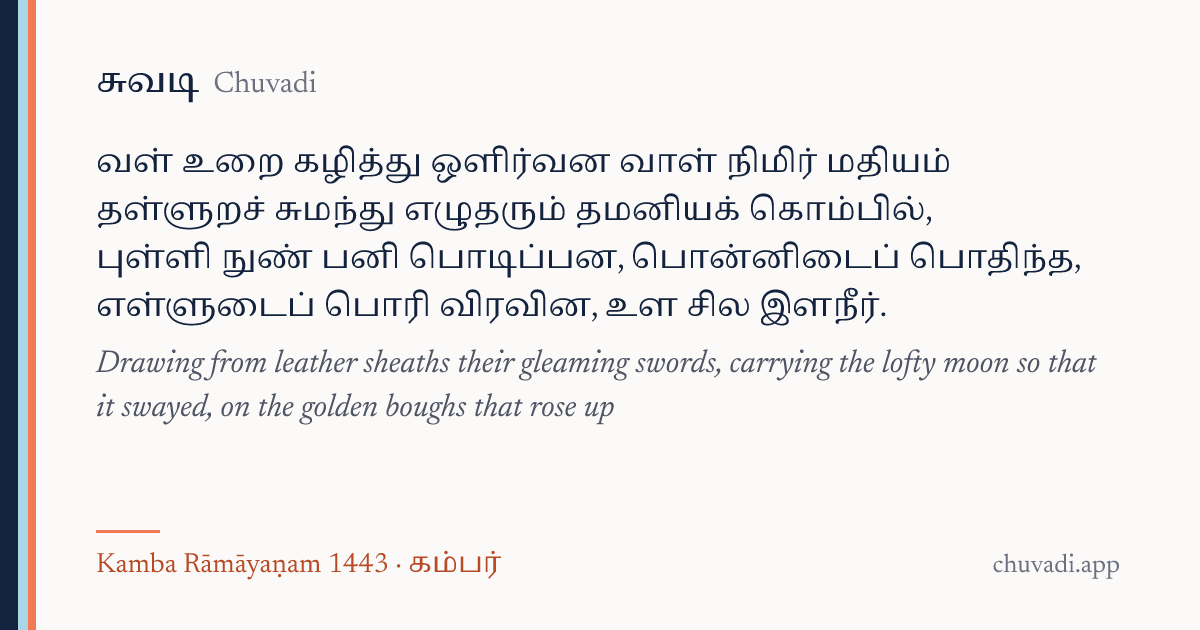
கம்பராமாயணம் 1443 · அயோத்தியா 1.56
பாடல் · The poem
Tap a word to see its gloss in the commentary and where else it occurs.
பொருள் · Meaning in Tamil
வள் உறை கழித்து - (இராமனைக் கண்டவுடன்) வாரினால் இயன்ற உறைகளை நீக்கி; ஒளிர்வன வாள் - ஒளிவீசுகின்ற வாள்களோடு; நிமிர் மதியம் தள்ளுறச் சுமந்து - நிமிர்ந்த சந்திரனைத் தள்ளாடியவாறு சுமந்து கொண்டு; எழுதரும் தமனியக் கொம்பில் - எழுகின்ற பொன்னாலாகிய கொம்புகளில்; உள சில இளநீர் - உள்ளனவாகிய இரண்டு இளநீர்கள்; புள்ளி நுண்பனி பொடிப்பன - புள்ளிகளாகிய நுண்ணிய வியர்வை தோன்றுவனவும்; பொன்னிடைப் பொதிந்த - இடையிடையே பொற் பொடி கலந்தனவுமாய்; எள்ளுடைப் பொரி விரவின - தேமலாகிய எள்ளின் பொரிகள் ஆங்காங்கு விரியப் பெற்றன.
மகளிரின் இமைகளை உறைகளாகவும், கண்களை வாளாகவும், முகத்தை மதியாகவும், அவர்களைக் கொம்பாகவும், வியர்வையைப் புள்ளிகளாகவும், தேமலைப் பொன்னாகவும், பசலையை எட்பொரியாகவும், நகில்களை இளநீராகவும் உருவகித்தார். சில - ஈண்டு இரண்டு என்னும் பொருளில் வந்தது.
ஆங்கிலம் · English translationAI
Translation
- Drawing from leather sheaths their gleaming swords, carrying the lofty moon
- so that it swayed, on the golden boughs that rose up
- were tender coconuts, a few, breaking out in fine drops of dew, wrapped in gold,
- and sprinkled with puffed sesame.
What the poem says
A purely figurative verse in which every object stands for part of a woman gazing at Irāmaṉ. The sheaths are her eyelids, the swords her eyes, the moon her face, the golden bough her body, the tender coconuts her breasts, the dew drops of sweat, and the gold and sesame the pale and freckled marks of lovesickness.
The commentary decodes the metaphors one by one; "a few" here means two.