



கம்பராமாயணம் 1445 · அயோத்தியா 1.58
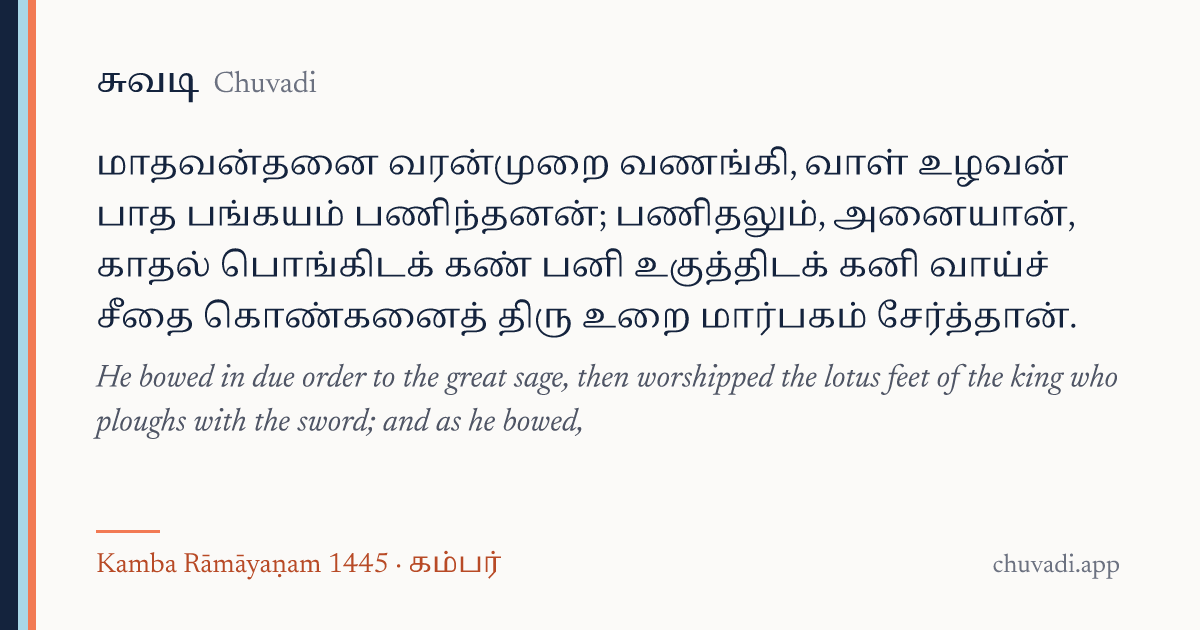
பாடல் · The poem
Tap a word to see its gloss in the commentary and where else it occurs.
பொருள் · Meaning in Tamil
வரன்முறை மாதவன்தனை வணங்கி - தொன்றுதொட்டுவரும் முறைப்படி பெரியதவமுனியாகிய வசிட்டனைத் தொழுது; வாள் உழவன் பாத பங்கயம் பணிந்தனன் - வாட்போரில் வல்லவனான தயரத மன்னன் திருவடியாகிய தாமரைகளை வணங்கினான்; பணிதலும் - அவ்வாறு இராமன் வணங்கிய அளவில்; அனையான் - அவ்வாறு வணங்கப்பெற்ற தயரதன்; காதல் பொங்கிட - இராமன் மீது கொண்ட பாசம் மேலிட; கண்பனி உகுத்திட - கண்கள் இன்பக் கண்ணீரைச் சொரிந்திட; கனிவாய்ச் சீதை கொண்கனை - கனிபோன்ற இதழ்களையுடைய சீதையின் கணவனாகிய இராமனை; திருஉறை மார்பகம் சேர்த்தான் - திரு தங்கிய தன் மார்போடு அணைத்துக் கொண்டான்.
வாள் உழவர் - வாட்போரில் வல்லவர். வில்லேர் உழவர் என்று திருவள்ளுவர் வீரர்களைக் குறித்தல் கருதத்தக்கது (குறள். 872). திரு - அரசச் செல்வம்.
ஆங்கிலம் · English translationAI
Translation
- He bowed in due order to the great sage, then
- worshipped the lotus feet of the king who ploughs with the sword; and as he bowed,
- the king, his love welling up, his eyes shedding tears, drew the husband
- of fruit-lipped Cītai to his chest, where Fortune dwells.
What the poem says
Irāmaṉ enters and bows first to Vaciṭṭaṉ, as custom requires, then to his father. Tacarataṉ, overflowing with love and weeping for joy, hugs him to his chest, where the goddess of royal fortune is said to dwell.
"Ploughman of the sword" is a classical Tamil way of calling a man a warrior; the Kuṟaḷ similarly speaks of "ploughmen of the bow".