



கம்பராமாயணம் 1447 · அயோத்தியா 1.60
பாடல் · The poem
Tap a word to see its gloss in the commentary and where else it occurs.
பாட வேறுபாடு · Project Madurai reads
பொருள் · Meaning in Tamil
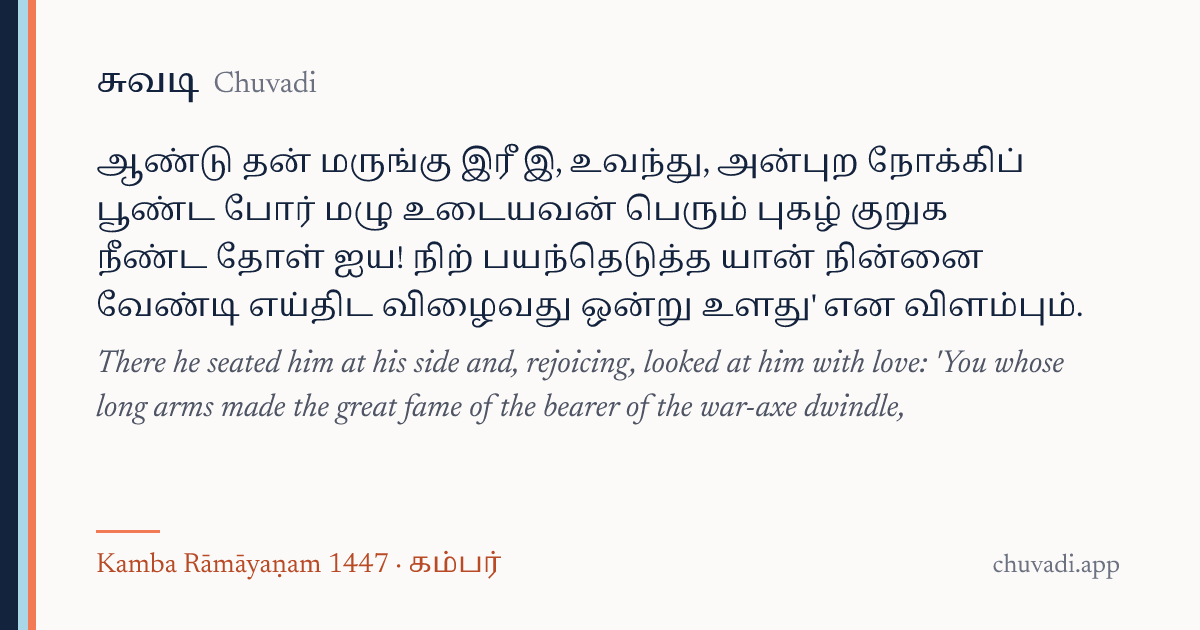
ஆண்டு - அங்கு; தன் மருங்கு இரீஇ - தன்பக்கத்தில் இராமனை இருக்கச் செய்து; உவந்து - மனம் மகிழ்ந்து; அன்புற நோக்கி - அன்பு தோன்றுமாறு உற்றுப் பார்த்து; “பூண்ட போர் மழு உடையவன் - தாங்கிய போர்க்கு உரிய மழுவாயுதத்தை உடையவனாகிய பரசுராமனது; பெரும்புகழ் குறுக - மிக்க புகழ் தேயும்படி; நீண்ட தோள் ஐய! - நீண்ட தோள்களை உடைய ஐயனே!; நின் பயந்து எடுத்த யான் - நின்னை மகனாகப் பெற்று வளர்த்த யான்; நின்னை வேண்டி எய்திட விழைவது ஒன்று உளது என - உன்னைக் கேட்டுப் பெறவிரும்புவதாகிய ஒரு காரியம் உண்டு என்று சொல்லி; விளம்பும் - அதனை விரித்துச் சொல்வானானான்.
பூண்ட போர் மழு உடையவன் - பரசுராமன். அவன் புகழ் தேய, இராமன் அவன்தந்த வில்லை வளைத்த திறம் பால காண்டத்தின் இறுதியில் உள்ள பரசுராமப் படலத்தில் கூறப்பட்டது. இராமன் அரசபாரம் ஏற்கவேண்டும் என்று மேலே கூறுதலின் அதற்குரிய ஆற்றல் அவனிடம் உள்ளது என்பதனைக் காட்டப் பரசுராமனை வென்ற செய்தியினை நினைவுபடுத்துகிறான். இரீஇ - அளபெடை. விளம்புதல் - விரித்துக் கூறுதல்.
ஆங்கிலம் · English translationAI
Translation
- There he seated him at his side and, rejoicing, looked at him with love:
- 'You whose long arms made the great fame of the bearer of the war-axe dwindle,
- my son, I who begot and raised you have one thing
- I long to ask of you and obtain,' he said, and went on to explain.
What the poem says
Tacarataṉ seats Irāmaṉ beside him and begins his request. He deliberately recalls the defeat of Paracurāmaṉ, told at the close of the previous book, to show that Irāmaṉ has the strength for the burden he is about to be asked to carry.