



கம்பராமாயணம் 1449 · அயோத்தியா 1.62
பாடல் · The poem
Tap a word to see its gloss in the commentary and where else it occurs.
பொருள் · Meaning in Tamil
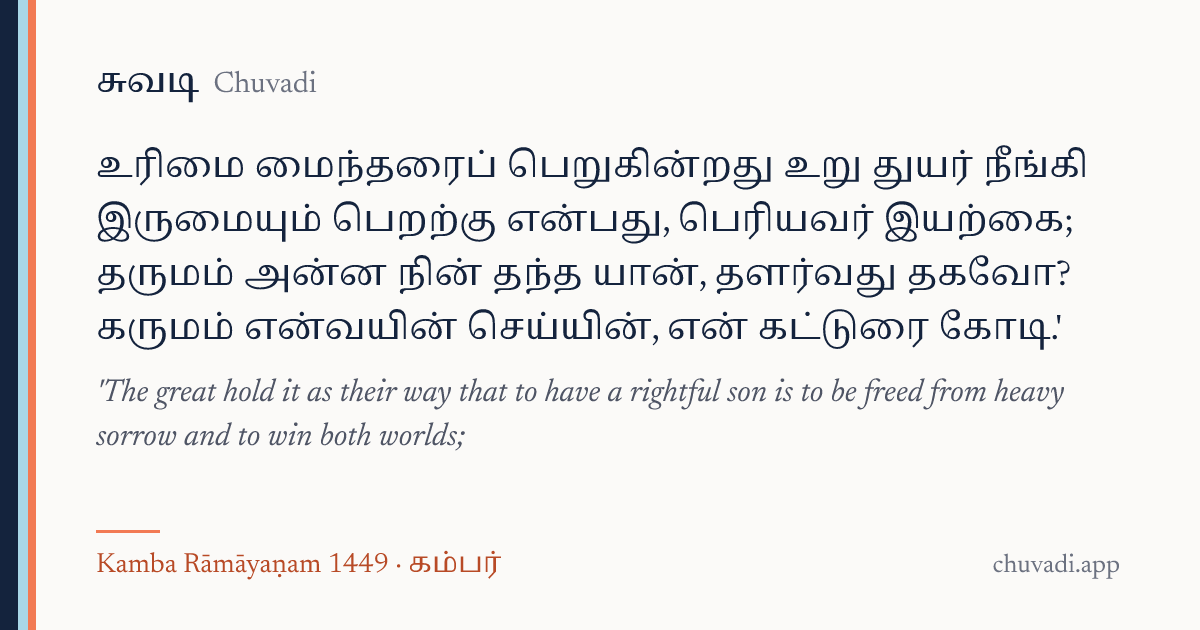
“உரிமை மைந்தரைப் பெறுகின்றது - எல்லா உரிமைகளையும் உடைய பிள்ளையை ஒருவர் பெறுவது; உறு துயர் நீங்கி - மிக்க துயரத்தினின்றும் விலகி; இருமையும் பெறற்கு என்பது - இம்மை மறுமை இன்பங்களை அடைவதற்காகும் என்பது; பெரியவர் இயற்கை - பெரியோரது இயல்பாக உள்ளது; தருமம்அன்ன நின் தந்த யான் - அறமே போன்ற நின்னை மகனாகப் பெற்ற நான்; தளர்வது தகவோ - மனத் தளர்ச்சியடைதல் தக்கதோ? (அன்று); என்வயின் கருமம் செய்யின் - (ஆதலால்) என்மீது செய்தற்குரியது செய்ய விரும்பினால்; என் கட்டுரை கோடி - என் பயனுள்ள சொல்லைக் கொள்வாய்.”
உரிமை மைந்தர் - அறநூல்கள் புத்திரர்களின் வகைகள் சில கூறுகின்றன. அவர்களுள் சிலர்க்குச் சில உரிமையே உண்டு. ஒருவனுக்கு முறைப்படி பிறந்த மகனுக்கே எல்லா உரிமைகளும் உண்டு. அத்தகைய மைந்தர் என்றவாறு. மைந்தனைப் பெறுவதன் பயன் துயரம் நீங்கி நன்மை அடைவதாகும். இதனைப் பின்னும், “பராவரும் புதல்வரைப் பயக்க யாவரும், உராவரும் துயரைவிட்டு உறுதி காண்பரால்” (1453) என்று குறிப்பர்.
ஆங்கிலம் · English translationAI
Translation
- 'The great hold it as their way that to have a rightful son
- is to be freed from heavy sorrow and to win both worlds;
- is it fitting that I, who begot you, who are like Dharma itself, should languish?
- If you would do what is due to me, accept my word.'
What the poem says
Tacarataṉ argues that the purpose of having a lawful son, one with full rights of inheritance, is to be released from sorrow and to gain happiness in this world and the next.
With a son like Dharma itself, he should not have to go on toiling; if Irāmaṉ wishes to do right by his father, he will agree.