



கம்பராமாயணம் 1450 · அயோத்தியா 1.63
பாடல் · The poem
Tap a word to see its gloss in the commentary and where else it occurs.
பாட வேறுபாடு · Project Madurai reads
பொருள் · Meaning in Tamil
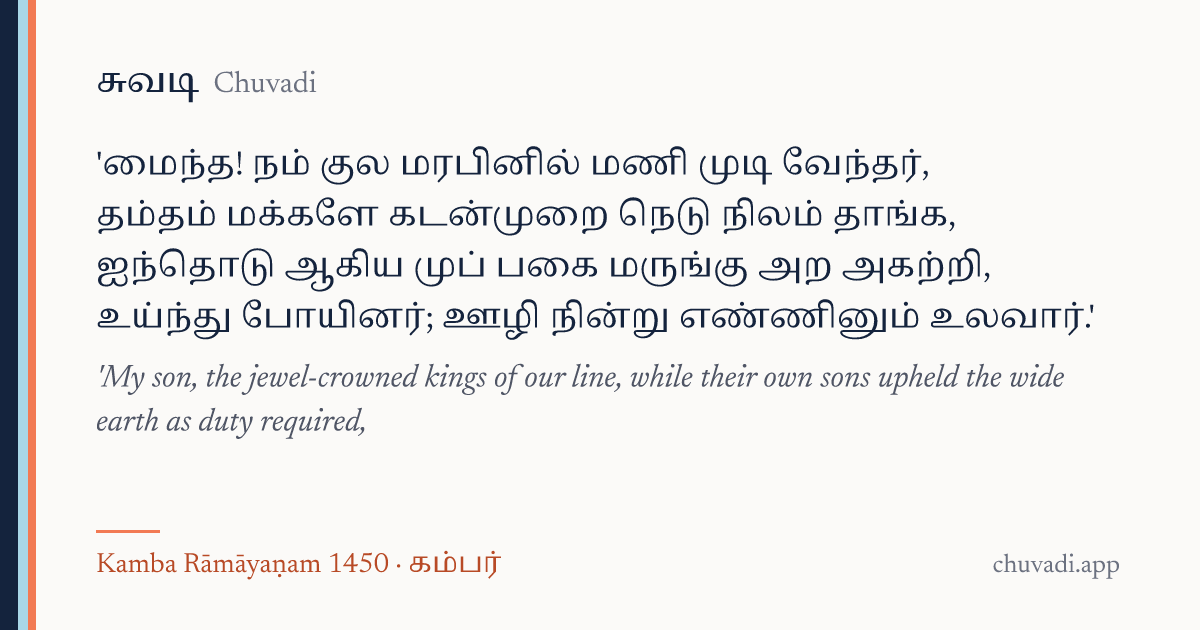
“மைந்த - மகனே!; நம்குல மரபினில் மணிமுடி வேந்தர் - நமது சிறந்த குலத்தில் தோன்றிய அழகிய முடிசூடி ஆண்ட வேந்தர்கள்; தம் தம்மக்களே - தம் தம் பிள்ளைகளே; கடன்முறை நெடு நிலம் தாங்க - முறைப்படி நெடிய உலகை அரசர்களாகிக் காப்பாற்ற; ஐந்தொடு ஆகிய முப்பகை - ஐந்துபொறிகளால் உண்டாகிய மூன்று பகைகளையும்; மருங்கு அற அகற்றி - வேரோடு நீக்கி; உய்ந்து போயினர் - பிழைத்துப் போனார்கள்; ஊழிநின்று எண்ணினும் - அவ்வாறு உய்ந்தவர்களை ஊழிக்காலம் இருந்து எண்ணினாலும்; உலவார் - குறையார் (எண்ணற்றவர் என்றவாறு).”
ஐந்தொடு ஆகிய முப்பகை - ஐம்பொறிகளாகிய மெய், வாய், கண், மூக்கு, செவி ஆகியவற்றின் வாயிலாகப் புலப்படும் காமம், வெகுளி, மயக்கம் என்னும் பகைகள். ஐந்தொடு - ஓடு உருபு ஐந்தால் எனப் பொருள்பட்டுக் கருத்தாப் பொருளில் வந்தது. “ஊழி நின்று எண்ணினும் உலவார்” என்றது எவ்வளவு காலம் நின்று எண்ணினாலும் எண்ணி முடிவுகாண முடியாதவாறு மிகப் பலராவர் என்பதனைக் காட்டிற்று.
ஆங்கிலம் · English translationAI
Translation
- 'My son, the jewel-crowned kings of our line,
- while their own sons upheld the wide earth as duty required,
- drove out root and all the three enemies that come through the five senses,
- and went on to salvation; count them for an age and they would not run out.'
What the poem says
Tacarataṉ tells Irāmaṉ what he told the council: countless ancestors handed the kingdom to their sons and freed themselves from the three inner enemies, desire, anger and delusion, which enter through the five senses.
There are so many of them that one could count for an entire age and never finish.