



கம்பராமாயணம் 1451 · அயோத்தியா 1.64
பாடல் · The poem
Tap a word to see its gloss in the commentary and where else it occurs.
பாட வேறுபாடு · Project Madurai reads
பொருள் · Meaning in Tamil
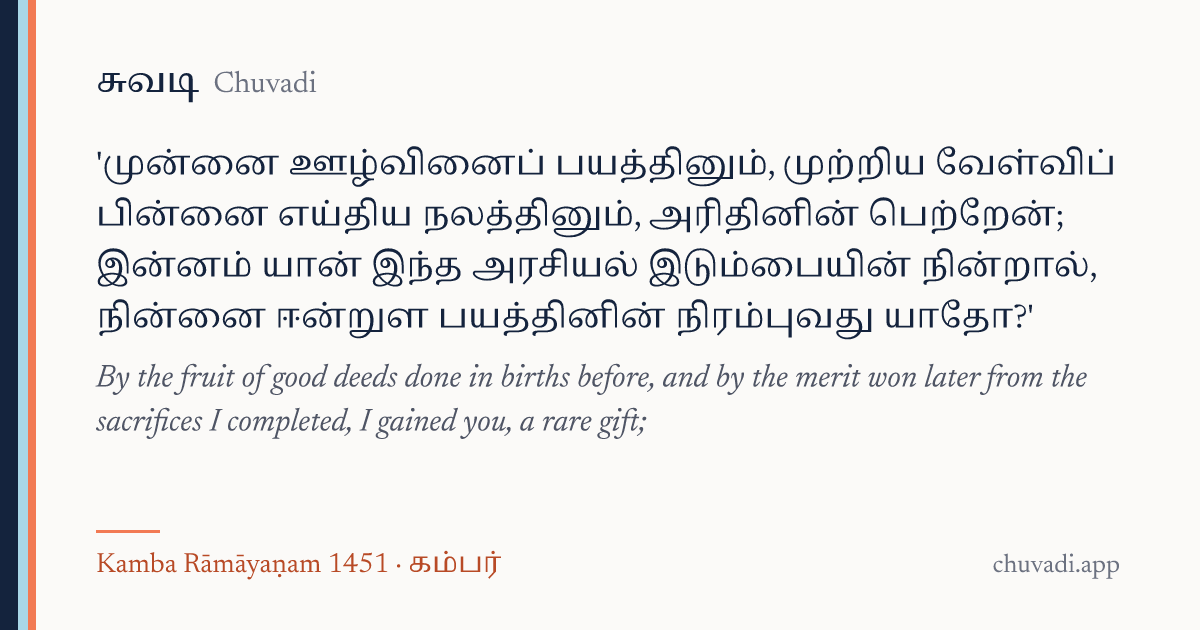
முன்னை ஊழ்வினைப் பயத்தினும் - முற்பிறப்பில் செய்த நல் வினையின் விளைவாகவும்; பின்னை முற்றிய வேள்வி எய்திய நலத்தினும் - பிறகு இப்பிறப்பில் செய்து முடித்த வேள்வியால் அடைந்த நன்மையாலும்; அரிதினின் பெற்றேன் - உன்னை அரிய பேறாகப் பெற்றேன்; இன்னம் - இன்னமும்; யான் இந்த அரசியல் இடும்பையின் நின்றால் - நான் இந்த அரச வாழ்க்கையாகிய துன்பத்தில் இருந்தால்; நின்னை ஈன்றுள பயத்தினின் - உன்னைப் பெற்றதால் அடைந்த பயனால்; நிரம்புவது யாதோ - நிறைவது எவ்வாறு?
முற்றிய வேள்வி - அசுவமேதம், புத்திரகாமேஷ்டி முதலியன. ‘மெய்யாய வேதத்துறை வேந்தருக்கு ஏய்ந்த யாரும் செய்யாத யாகம் இவன் செய்தும் மறந்த மாதோ’ என்று தயரதன் செய்த வேள்விகள் பற்றி முன்னும் சொன்னார் (170)
ஆங்கிலம் · English translationAI
Translation
- By the fruit of good deeds done in births before,
- and by the merit won later from the sacrifices I completed, I gained you, a rare gift;
- if I still remain in this affliction that is kingship,
- what fulfilment can I draw from the fruit of having fathered you?
What the poem says
Tacarataṉ is still addressing Irāmaṉ before the assembled court. He says his son was a rare gift, earned by good deeds in earlier births and by the great sacrifices of this one, such as the horse sacrifice and the rite for obtaining sons.
His point is that a son is only truly enjoyed when the father can lay down his burden: if he goes on carrying the cares of the throne, what has having such a son brought him?