



கம்பராமாயணம் 1452 · அயோத்தியா 1.65
பாடல் · The poem
Tap a word to see its gloss in the commentary and where else it occurs.
பொருள் · Meaning in Tamil
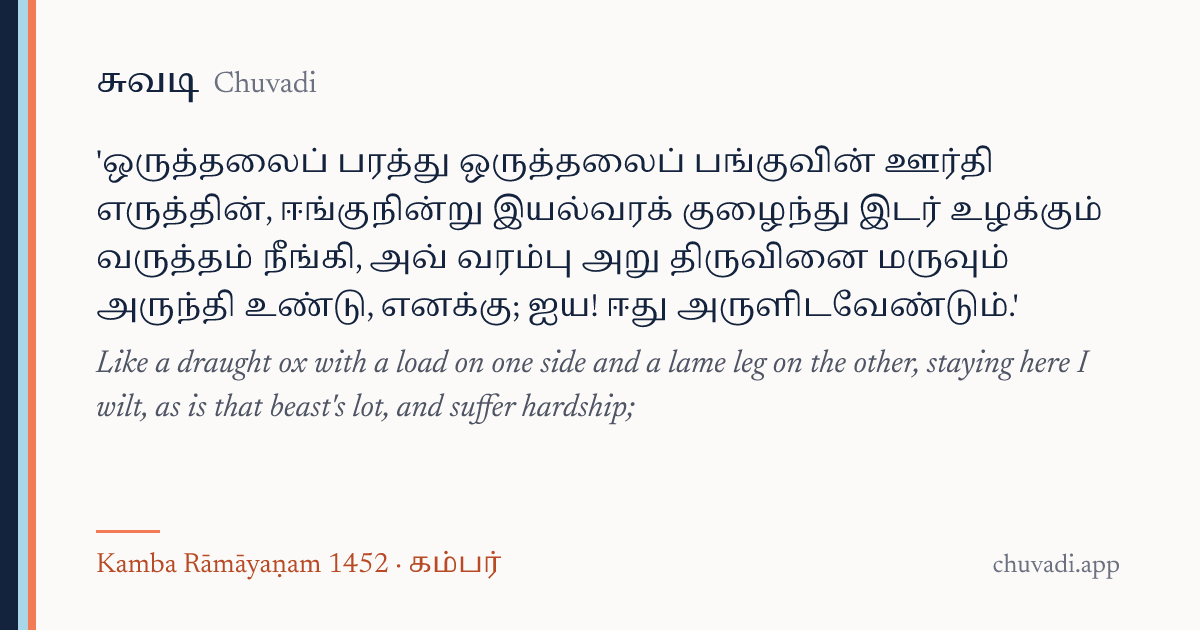
ஒரு தலைப் பரத்து - ஒரு பக்கத்தில் பாரத்தையும்; ஒருதலை - மற்றொரு பக்கத்தில்; பங்குவின் - நொண்டியாய் இருக்கும் தன்மையையும் கொண்ட; ஊர்தி எருத்தின் - மனிதன் ஊர்ந்து செல்லும் வண்டியில் பூட்டப்பட்ட பொதிமாட்டைப் போல; ஈங்கு நின்று - இவ்வுலகிலிருந்து; இயல்வரக் குழைந்து - தன்மை பொருந்த வருந்தி; இடர் உழக்கும் வருத்தம் நீங்கி - துன்பப்படும் அரசபாரமாகிய வருத்தத்தினின்றும் அகன்று; அவ்வரம்பு அறு திருவினை - அந்த எல்லையில்லாத முத்திச் செல்வத்தை; மருவும் அருத்தி எனக்கு உண்டு - பொருந்தும் ஆசை எனக்கு உள்ளது; ஐய! ஈது அருளிடவேண்டும் - ஐயனே! இதனை நீ கொடுக்க வேண்டும்.
ஒரு பக்கம் சுமக்கமுடியாத பாரமும், மற்றொரு பக்கம் நொண்டிக் காலும் பெற்ற பொதிமாடு படும் பாட்டை ஆட்சிச் சுமையாலும், வயோதிகத்தாலும் தான் படுவதாகத் தயரதன் அறிவிக்கிறான். ஒருத்தலை - ஒருதலை என்பதன் விகாரம். பரம் - பாரம். “அந்தமில் இன்பம்” என்று சிலம்பும் “சென்றடையாத திரு” என்று தேவாரமும் வீடுபேற்றினைக் குறித்தமை இங்கு ஒப்புநோக்கத்தக்கது.
ஆங்கிலம் · English translationAI
Translation
- Like a draught ox with a load on one side and a lame leg on the other,
- staying here I wilt, as is that beast's lot, and suffer hardship;
- to be freed from that strain and reach that boundless wealth
- is my longing; my lord, you must grant me this.
What the poem says
Tacarataṉ compares himself to a pack-ox hitched to a cart, overloaded on one side and lame on the other: the weight of rule on one hand, old age on the other.
What he wants instead is "that boundless wealth", meaning final liberation, the endless bliss that other Tamil classics also describe. Strikingly, the aged king asks his son for this as a favour, addressing him as "my lord".