



கம்பராமாயணம் 1454 · அயோத்தியா 1.67
பாடல் · The poem
Tap a word to see its gloss in the commentary and where else it occurs.
பொருள் · Meaning in Tamil
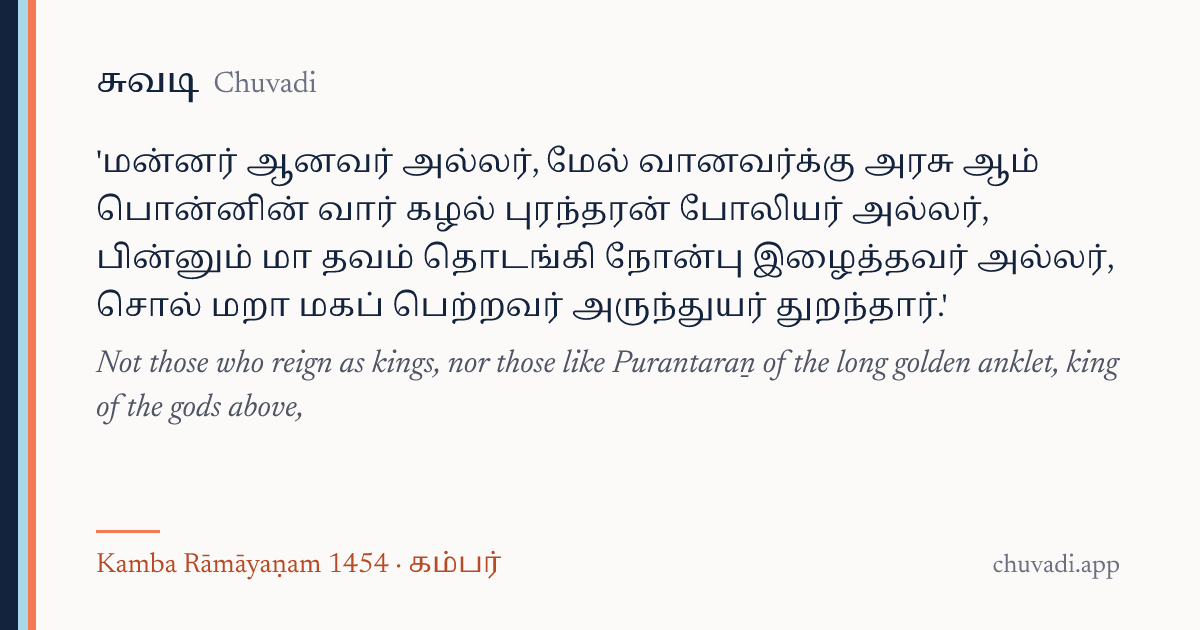
அருந் துயர் துறந்தார் - இவ்வுலகில் அரிய துன்பத்திலிருந்து விடுபட்டவர்கள்; மன்னர் ஆனவர் அல்லர் - அரசர்களாக வாழ்கின்றவர்கள் அல்லர்; மேல் - மேலுலகில் உள்ள; வானவர்க்கு அரசு ஆம் - தேவர்களுக்கு அரசனாகிய; பொன்னின் வார்கழல் புரந்தரன் போலியர் அல்லர் - பொன்னாலான நீண்ட வீரக்கழல் அணிந்த இந்திரன் போன்றவரும் அல்லர்; பின்னும் - அன்றியும்; மா தவம் தொடங்கி - பெருந்தவத்தைச் செய்யத் தொடங்கி; நோன்பு இழைத்தவர் அல்லர் - பல விரதங்களைச் செய்தவரும் அல்லர்; சொல் மறா மகப் பெற்றவர் - (பின்னர் யார் என்று வினவின்) தம் சொல்லைத் தட்டாத மக்களைப் பெற்றவரே ஆவர்.
நல்ல மக்களைப் பெற்றவரே துயரம் நீங்கியவர் என்பது கருத்து. “ஏவா மக்கள் மூவா மருந்து” என்பது ஈண்டு நினைத்தற்குரியது.
ஆங்கிலம் · English translationAI
Translation
- Not those who reign as kings,
- nor those like Purantaraṉ of the long golden anklet, king of the gods above,
- nor those who went on to begin great penance and keep their vows:
- it is those who have sons who never refuse their word who have cast off bitter sorrow.
What the poem says
Tacarataṉ continues: true freedom from grief belongs neither to earthly kings, nor to beings like Intiraṉ, here called Purantaraṉ, ruler of the gods, nor even to ascetics.
It belongs to parents whose children never set aside their word. A Tamil saying makes the same point: children who do what is needed without being told are a medicine against ageing. The remark gently binds Irāmaṉ to accept.