



கம்பராமாயணம் 1458 · அயோத்தியா 1.71
பாடல் · The poem
Tap a word to see its gloss in the commentary and where else it occurs.
பாட வேறுபாடு · Project Madurai reads
பொருள் · Meaning in Tamil
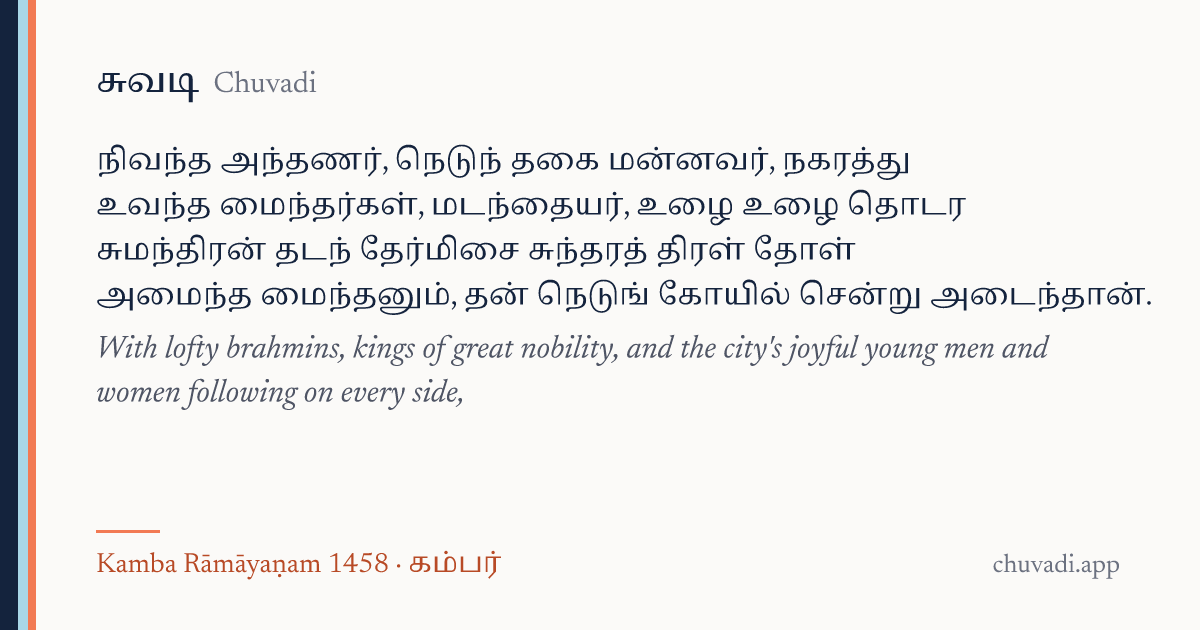
நிவந்த அந்தணர் - உயர்ந்த வேதியரும்; நெடுந்தகை மன்னர் - பெருந்தன்மை பொருந்திய அரசர்களும்; நகரத்து உவந்த மைந்தர்கள் - அயோத்தி நகரத்தில் வாழும் தன்னைக் காணுதலில் பெருமகிழ்ச்சி யடையும் இளைஞர்களும்; மடந்தையர் - பெண்களும்; உழை உழை தொடர - பக்கங்களிலே சூழ்ந்துவர; சுந்தரத் திரள்தோள் அமைந்த மைந்தனும் - அழகிய திரண்ட தோள்களையுடைய இராமனும்; தன் நெடுங் கோயில் - தனது பெரிய மாளிகையை; சென்று அடைந்தான் - போய்ச் சேர்ந்தான்.
நிவப்பு - உயர்வு. குலம், அறிவு, ஒழுக்கம் ஆகியவற்றால் உயர்ந்தோர் அந்தணர் ஆவர். தாடகையைக் கொன்று, சிவன் வில்லை முறித்து, பரசுராமன் செருக்கினை அழித்ததோடு கட்டழகும் நிறைந்திருப்பவையாதலின் இராமன் தோள்கள் ‘சுந்தரத் திரள் தோள்’ என்று சிறப்பிக்கப்பட்டன. மைந்தனும் - உம்மை இறந்தது ச் தந்தை போனபின் தனயனும் சேர்ந்தான் என்பதை உணர்த்தியது.
ஆங்கிலம் · English translationAI
Translation
- With lofty brahmins, kings of great nobility, and the city's
- joyful young men and women following on every side,
- on Cumantiraṉ's broad chariot, he of the beautiful, massive shoulders,
- the son too, went on and reached his own tall palace.
What the poem says
After his father leaves, Irāmaṉ too returns home, riding in the chariot of Cumantiraṉ, the king's charioteer and minister. Brahmins, princes and the delighted young people of Ayōtti crowd around him.
His shoulders are called beautiful and massive because they have already done great deeds, killing Tāṭakai, breaking Civaṉ's bow and humbling Paracurāmaṉ, while also being handsome. The word "too" signals that the son followed after the father.