



கம்பராமாயணம் 146 · பால 3.65
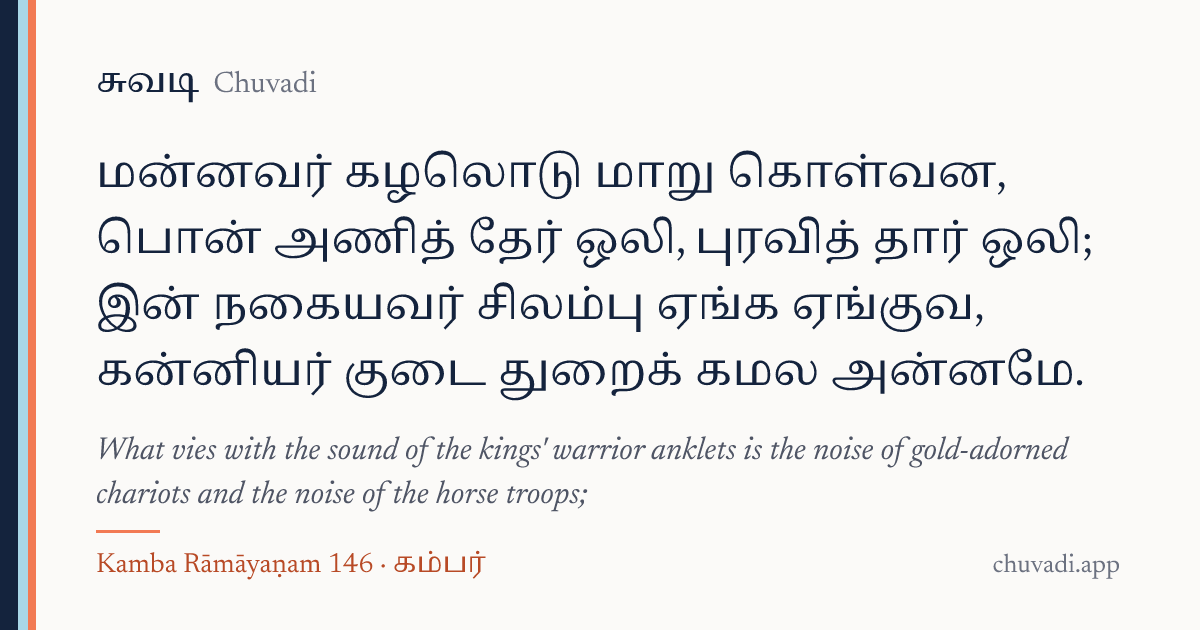
பாடல் · The poem
Tap a word to see its gloss in the commentary and where else it occurs.
பொருள் · Meaning in Tamil
மன்னவர் கழலொடு - அரசர்களின் வீரக் கழல்களின் ஒலியுடன்; மாறு கொள்வன - மாறு கொண்டு ஒலிப்பவை; பொன்னணி தேர் ஒலி - பொன்னால் அலங்கரிக்கப்பட்ட தேர்களின் ஒலியும்; புரவித் தார் ஒலி - குதிரைப் படைகளின் ஒலியுமே ஆகும்; இன் நகையவர் சிலம்பு ஏங்க - இனிய சிரிப்பு உடைய மகளிரின் சிலம்புகள் ஒலிக்கும்படியாக; கன்னியர் குடைதுறை - நீராடும் நீர்த்துறையில் வாழும்; கமல அன்னமே ஏங்குவ - தாமரையில் உள்ள அன்னங்களே ஏங்குவனவாம்.
பொன் அணி தேரொலியும், புரவித் தாரொலியும், மன்னவர் கழலொடு மாறுகொண்டு ஒலிப்பன. கன்னியர் சிலம்பேங்க, அன்னங்கள் ஏங்குகின்றன. அம்மகளிரைப் போன்று நடை அமைந்திருக்கும் அம்மாதர்கள் அணிந்துள்ள சிலம்புகள் நமக்கில்லையே என அன்னங்கள் ஏங்கின என்கிறார். மன்னவர் கழலொலி, தேரொலி, புரவித் தாரொலி, சிலம்பொலி ஆகிய ஒலிகள் மிக்கது அந்நகரம். தார்: படை. படை: குதிரை. குடைதுறை: வினைத்தொகை. ஓரிடத்து எழும் ஒலிகளைக் கொண்டு அந்த இடத்தின் தன்மை அறியலாம்.
ஆங்கிலம் · English translationAI
Translation
- What vies with the sound of the kings' warrior anklets
- is the noise of gold-adorned chariots and the noise of the horse troops;
- and as the anklets of sweetly smiling women ring,
- the swans of the lotus pools where the maidens bathe are filled with longing.
What the poem says
The din of chariots and cavalry competes with the ringing anklets of the kings.
At the bathing places the women's anklets chime as they walk. The swans, whose graceful walk is often compared to a woman's, pine with envy because they have no anklets of their own. A town's character, the commentary remarks, can be read from its sounds.