



கம்பராமாயணம் 1462 · அயோத்தியா 1.75
பாடல் · The poem
Tap a word to see its gloss in the commentary and where else it occurs.
பாட வேறுபாடு · Project Madurai reads
பொருள் · Meaning in Tamil
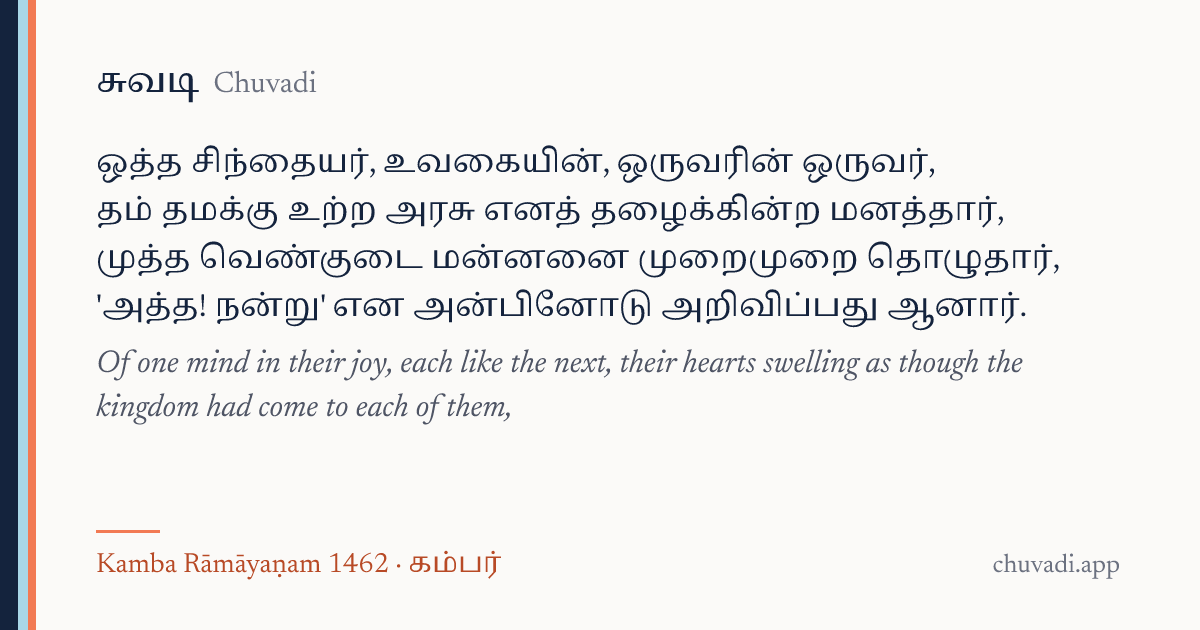
உவகையின் ஒத்த சிந்தையர் - (அவ்வரசர்கள்) மகிழ்ச்சியினால் இராமபிரான் முடிசூடுதலில் ஒத்த கருத்துடையவர்களாய்; ஒருவரின் ஒருவர் அரசு தம் தமக்கு உற்ற என - ஒருவரைப் போல ஒருவர் அரசு தத்தமக்குக் கிடைத்ததுபோல; தழைக்கின்ற மனத்தார் - மகிழ்ச்சிமிகும் மனமுடையவர்கள்; முத்த வெண்குடை மன்னனை - முத்துகள் பதிக்கப்பட்ட வெண்கொற்றக்குடையையுடைய தயரத மன்னனை; முறை முறை தொழுதார் - வரிசை வரிசையாய் நின்று வணங்கினார்கள்; அத்த நன்று என - ஐயனே! தங்கள் கருத்து நல்லதே என்று; அன்பினோடு அறிவிப்பது ஆனார் - கனிவோடு தங்கள் கருத்தை அவனுக்குத் தெரிவிக்கலாயினர்.
இராமபிரான் மக்களொடு கலந்து பழகும் நீர்மையுடையவனாதலின் அவனுக்கு அரசு கிடைப்பதைத் தமக்குக் கிடைப்பது போல யாவரும் பாராட்டுவராயினர். சுமந்திரன் இத்தகைய எண்ணமுடையவனாய் இருந்தமை, “தலங்கள் யாவையும் பெற்றனன் தான் எனத் தளிர்ப்பான்” (1361) என்று குறிக்கப்பட்டுள்ளது.
ஆங்கிலம் · English translationAI
Translation
- Of one mind in their joy, each like the next,
- their hearts swelling as though the kingdom had come to each of them,
- they bowed in turn to the king of the pearl-set white parasol
- and lovingly made it known: "Lord, it is good."
What the poem says
The assembled kings all agree, and each rejoices as if he himself were being crowned. They bow to Tacarataṉ, whose royal white parasol is set with pearls, and tell him warmly that his decision is good.
They feel this way because Irāmaṉ mixes freely and kindly with people, so his good fortune seems to belong to everyone. Earlier the poet said the same of the minister Cumantiraṉ.