



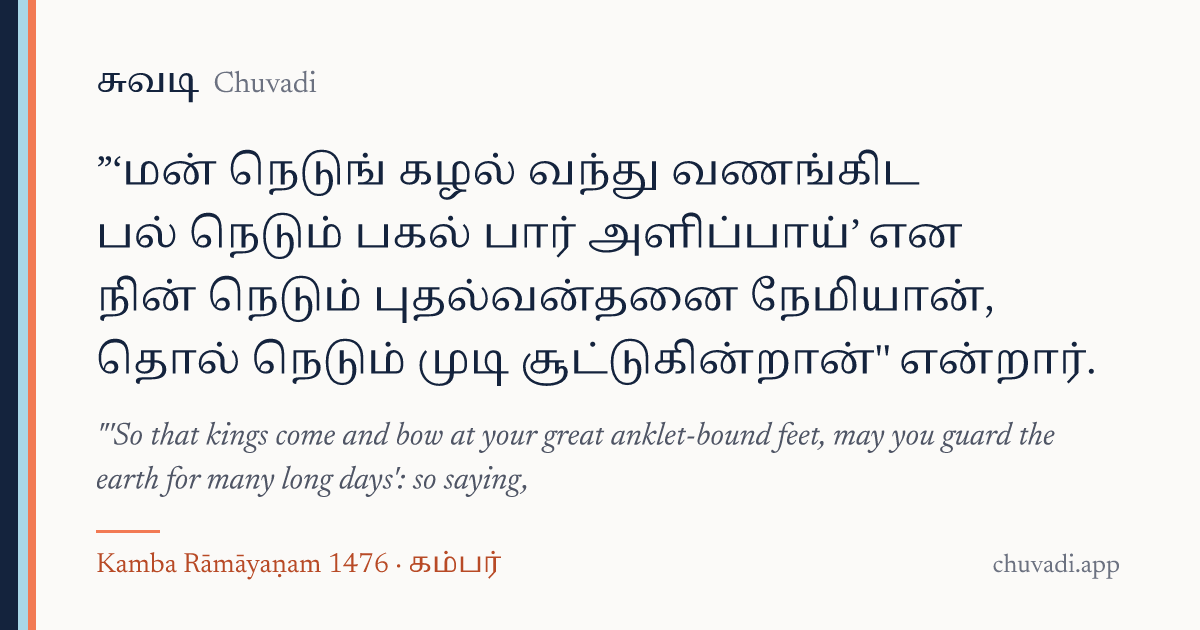
கம்பராமாயணம் 1476 · அயோத்தியா 1.89
பாடல் · The poem
Tap a word to see its gloss in the commentary and where else it occurs.
பொருள் · Meaning in Tamil
நேமியான் - சக்கரவர்த்தியாகிய தயரதன்; நின் நெடும் புதல்வன்தனை - உன் பெருமைக்குரிய மகனாகிய இராமனை; மன் நெடுங் கழல் வந்து வணங்கிட - எல்லா அரசர்களும் உன் பெரிய வீரக்கழல் அணிந்த அடிகளில் வீழ்ந்து வணங்க; பல் நெடும் பகல் - பல நீண்ட நாள்கள்; பார் அளிப்பாய் - இந்நிலவுலகத்தைக் காப்பாயாக, என - என்று கூறி; தொல் நெடும்முடி - பழமையான நீண்ட திருமுடியை; சூட்டுகின்றான் - அணிவிக்கின்றான்; என்றார் - என்று சொன்னார்.
நின் நெடும் புதல்வன் நின் மூத்த புதல்வன் என்றும் ஆம். நால்வரையும் தன் மக்களாகக் கருதி அன்பு செய்பவள் கோசலை ஆதலின், இராமனைக் குறிக்க ‘மூத்த புதல்வன்’ என்னும் பொருளில், ‘நெடும்புதல்வன்’ என்றாராம். தொல்முடி - பாரம்பரியமாக வந்து கொண்டிருக்கின்ற முடி. ‘மன் நெடுங்கழல் வந்து வணங்கிட’ தயரதன் பொருந்திய தனது நெடிய வீரக்கழல் அணிந்த அடியில் இராமன் வந்து வணங்கிட, அவனுக்கு முடிசூட்டுகின்றான் எனக் கூட்டிப் பொருள் உரைத்தலும் ஒன்று.
ஆங்கிலம் · English translationAI
Translation
- "'So that kings come and bow at your great anklet-bound feet,
- may you guard the earth for many long days': so saying,
- upon your noble son the king who wields the wheel of rule
- is setting the ancient lofty crown," they said.
What the poem says
The women give Kōcalai the news: Tacarataṉ, the emperor, is crowning her son with the ancestral crown, blessing him to rule the earth for many years with all kings bowing at his feet.
They call Irāmaṉ her "tall" or eldest son, a delicate touch, since Kōcalai loves all four princes as her own. Another reading takes the bowing to be Irāmaṉ bowing at his father's feet as he is crowned.