



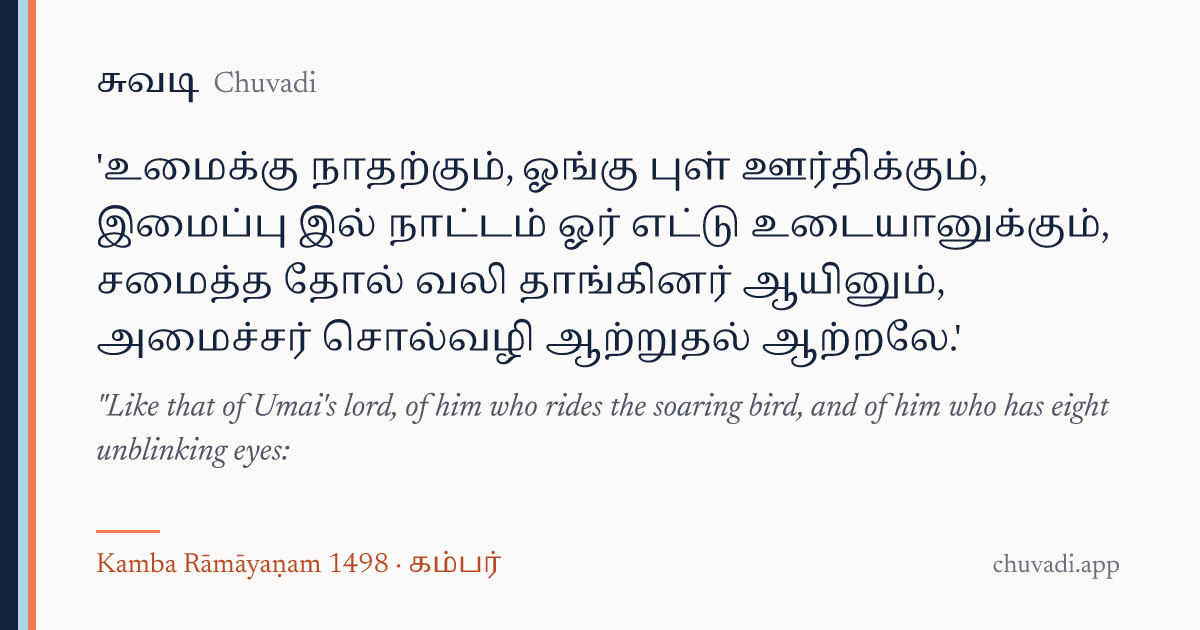
கம்பராமாயணம் 1498 · அயோத்தியா 2.15
பாடல் · The poem
Tap a word to see its gloss in the commentary and where else it occurs.
பொருள் · Meaning in Tamil
உமைக்கு நாதற்கும் - உமாதேவியின் கணவனாகிய சிவபெருமானுக்கும்; ஓங்கு புள் ஊர்திக்கும் - உயர்ந்த கருடனை வாகனமாக உடைய திருமாலுக்கும்; இமைப்பு இல் நாட்டம் - இமையாத கண்கள்; எட்டு உடையானுக்கும் - எட்டு உடைய நான்முகனுக்கும்; சமைத்த - பொருந்திய; தோள்வலி - தோள் ஆற்றலை; தாங்கினர் - பெற்றுடையராக (அரசர்); ஆயினும் - இருந்தாலும்; அமைச்சர் சொல் வழி - மந்திரியரது ஆலோசனை வழியில்; ஆற்றுதல் - அரசாட்சியைச் செய்தல்; ஆற்றல் - ஆண்மையாகும்.
மும்மூர்த்திகளைப் போலத் தோள்வலி பெற்ற அரசரும் அமைச்சர் சொற்கேட்டு ஆட்சி நடத்தல் வேண்டும் என்பதாம். நான்முகன் ஆதலால் எட்டுக் கண்கள் உடையான் ஆயினன். ‘ஓர்’ அசை. உ (அம்ம) மா (வேண்டாம்) அம்மா வேண்டாம் என்று சொல்லியபடியால் உமா என்று பெயராயிற்று என்பர். உமா, உமை என வந்தது. அமைச்சர் - அமாத்தியர்; அருகிருந்து ஆவன சொல்வார். ‘உழையிருந்தான்’ எனப் பெயர் உரைப்பர் திருவள்ளுவர் (குறள். 638.). ‘ஏ’காரம் ஈற்றசை.
ஆங்கிலம் · English translationAI
Translation
- "Like that of Umai's lord, of him who rides the soaring bird,
- and of him who has eight unblinking eyes:
- though kings bear such strength of shoulder as was fashioned for them,
- to rule by the counsel of ministers is true strength."
What the poem says
Even a king as mighty as the three great gods, Civaṉ the husband of Umai, Tirumāl who rides the eagle, and four-faced Piramaṉ with his eight unblinking eyes, should govern by the advice of his ministers. That, not personal power, is real strength.
The commentary adds a traditional explanation of the goddess's name Umā, from her mother's cry "O, do not!" when she undertook harsh penance, and notes that the Tirukkuṟaḷ calls a minister "the one who stays beside the king".