



கம்பராமாயணம் 1499 · அயோத்தியா 2.16
பாடல் · The poem
Tap a word to see its gloss in the commentary and where else it occurs.
பாட வேறுபாடு · Project Madurai reads
பொருள் · Meaning in Tamil
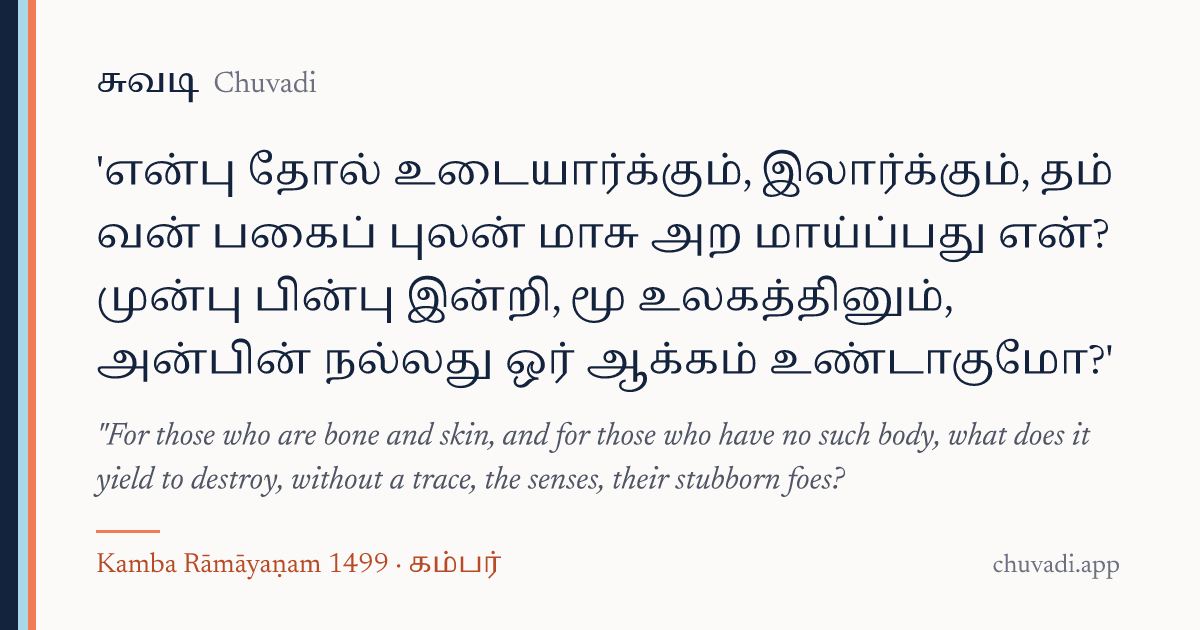
என்பு தோல் உடையார்க்கும் - எலும்பும் தோலும் உடையார் ஆகி உள்ள முனிவர்களுக்கும்; இலார்க்கும் - அவை இல்லாது தேவசரீரம் பெற்ற தேவர்களுக்கும்; தம் வன்பகைப் புலன் - தம்முடைய வலிய பகையாகிய புலன்களை; மாசு அற - குற்றம் இல்லாமல்; மாய்ப்பது என்? - அழிப்பது என்ன பயனைத் தரும்; மூ உலகத்தினும் - மூன்று உலகங்களிலும்; முன்பு பின்பு இன்றி - தனக்கு மேம்பட்டதும் பிற்பட்டதும் இல்லாமல் சிறந்து நிற்கிற; அன்பின் - அன்பைவிட; நல்லது ஓர் ஆக்கம் - நல்லதாகிய ஒரு செல்வம்; உண்டாகுமோ - உளதாகுமோ? (இல்லை என்றபடி.)
இந்திரிய வசம் செய்வதைவிட அன்புடையராயிருத்தல் யார்க்கும் பெருஞ் செல்வம் ஆகும் என்பதாம். “உரிவை தைஇய ஊன் கெடு மார்பின், என்பு எழுந்து இயங்கும் யாக்கையர்” என்ற (முருகு 129-130) அடிகளையொட்டி ‘என்பு தோல் உடையார்’ என்ற முனிவரரை அறிக. தேவர்கள் புண்ணிய சரீரம் உடையவர், பூதபௌதிக உடம்பு உடையவர் அல்லர் ஆதலின் ‘இலார்க்கும்’ என்றார். ‘முன்பு, பின்பு இன்றி’ இறந்த காலத்தும், எதிர்காலத்தும் இல்லாமல் நிகழ்காலத்தும். அன்பின் நல்ல ஆக்கம் இல்லை என உரைத்து, கம து ஒப்ப உயர்ந்த ஆக்கம் அன்பே என்றார் எனலும் ஆம்.
ஆங்கிலம் · English translationAI
Translation
- "For those who are bone and skin, and for those who have no such body,
- what does it yield to destroy, without a trace, the senses, their stubborn foes?
- With nothing before it or after it, in all three worlds
- is there any wealth better than love?"
What the poem says
Vacittaṉ ranks love above even self-mastery. Ascetics, wasted to bone and skin, and gods, whose bodies are not made of the elements, labour to subdue their senses; but what does that achieve compared with love?
In all three worlds, and in past, present and future, there is no gain greater than love. The picture of the emaciated sages echoes a line of the classical poem Tirumurukāṟṟuppaṭai.