



கம்பராமாயணம் 150 · பால 3.69
பாடல் · The poem
Tap a word to see its gloss in the commentary and where else it occurs.
பொருள் · Meaning in Tamil
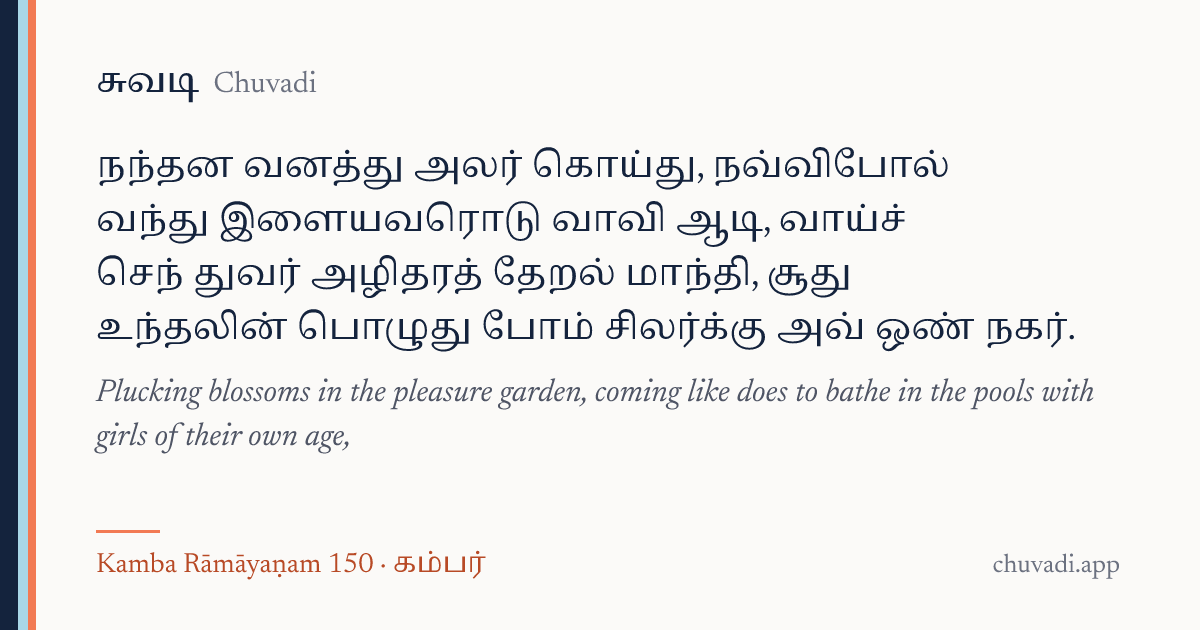
நந்தனவனத்து அலர்கொய்து - நந்தனவனம் சென்று மலர்ந்த மலர்களைப் பறித்தும்; நவ்விபோல் வந்து - பெண்மானைப் போல வந்து; இளையவரொடு வாவி ஆடி - தம்மை ஒத்த இள மகளிருடன் பொய்கையில் நீராடியும்; வாய்ச்செந்துவர் அழிதர - தமது வாயின் பவள நிறம் அழியுமாறு; தேறல் மாந்தி - தேனைப் பருகியும்; சூது உந்தலின் - தாயமாடும் முதலிய விளையாட்டுகளனைத்தும் ஆடியும்; அவ்வொள் நகர் சிலருக்குப் பொழுது போம் - அந்த ஒளிமிக்க நகரிலே வாழும் மற்றும் சிலருக்குப் பொழுதுபோகும்.
நந்தவனத்திலே மலர்கள் பறித்தும் மான் போல நடந்து இளம் பெண்களுடன் பொய்கையில் நீராடியும் வாயின் செந்நிறம் மாற, தேனைப் பருகியும் தாயமாடியும் சிலருக்குப் பொழுது போகும் என்றதால் இங்குக் கூறப்படுபவர் இளமகளிர் என அறிகிறோம். சூது: தாயமாடுதல். உந்தல்: ஆடுதல். செந்துவர்: பவளச் செம்மை. 66ஆம் பாடல் தொடங்கி நான்கு பாடல்களில் நகர மாந்தரின் பலவகைப் பொழுதுபோக்குக் கூறப்பட்டது.
ஆங்கிலம் · English translationAI
Translation
- Plucking blossoms in the pleasure garden, coming like does
- to bathe in the pools with girls of their own age,
- drinking honey-wine till the coral red of their lips fades, and throwing
- the dice — so passes the time for some in that bright city.
What the poem says
The last of the four verses on leisure describes the young women of Ayōttī. They gather flowers in the gardens, bathe in the pools with their friends, moving as gracefully as deer, sip honeyed drinks and play dice.