



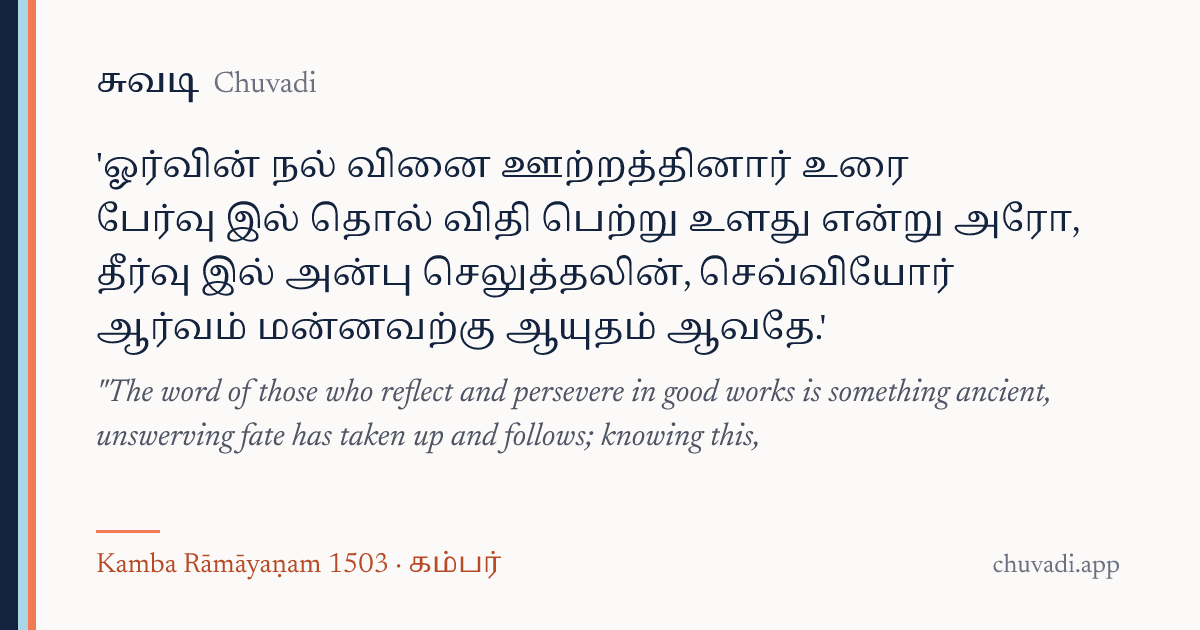
கம்பராமாயணம் 1503 · அயோத்தியா 2.20
பாடல் · The poem
Tap a word to see its gloss in the commentary and where else it occurs.
பொருள் · Meaning in Tamil
ஓர்வின் - ஆய்வினை உடைய; நல்வினை ஊற்றத்தினார் - நல்ல தொழிலின்கண் எப்பொழுதும் முயலும் முயற்சியை உடைய முனிவர்களது; உரை - மொழியை; பேர்வு இல் தொல்விதி - மாறு படுதல் இல்லாத பழைய விதி; பெற்று உளது - அடைந்து (அவ்வுரைவழி) நடக்கின்றது; என்று - என்று கருதி; தீர்வு இல் அன்பு செலுத்தலின் - அவர்களிடத்து நீங்காத அன்பைச் செலுத்துகின்ற காரணத்தால்; செவ்வியோர் ஆர்வம் - நன்மையுடைய அப்பெரியோர்தம்பால் செலுத்தும் விருப்பம்; மன்னவற்கு - அரசனுக்கு; ஆயுதம் ஆவது - படைக்கலம் ஆகும்.
முன்னர் (1419) ‘அவர் ஏவ நிற்கும் விதி’ என்றதும் காண்க. முனிவர்க்கு ஊழும் கட்டுப்பட்டு நடக்கும். அதனால் அவர்களது பிரியத்தைச் சம்பாதித்துக்கொள்ளுதல் மன்னவற்குப் பெரும்படையாகும். “அன்பீனும் ஆர்வம் உடைமை அதுவீனும், நண்பு என்னும் நாடாச் சிறப்பு” என்ற குறளைப் (குறள் - 74) பின்னிரண்டு வரிகளுடன் ஒப்பிடுக. அரோ, ‘ஏ’ ஈற்றசை.
ஆங்கிலம் · English translationAI
Translation
- "The word of those who reflect and persevere in good works
- is something ancient, unswerving fate has taken up and follows; knowing this,
- because the king bears them unfailing love, the goodwill of those worthy ones
- becomes a weapon for the king."
What the poem says
Vacittaṉ returns to the holy men. Since fate itself obeys the word of the thoughtful sages, as he said earlier, a king who loves them steadily wins their goodwill, and that goodwill is a better weapon than any army.
A Tirukkuṟaḷ couplet says that love gives rise to warm regard, and regard to the priceless gift of friendship.