



கம்பராமாயணம் 1504 · அயோத்தியா 2.21
பாடல் · The poem
Tap a word to see its gloss in the commentary and where else it occurs.
பொருள் · Meaning in Tamil
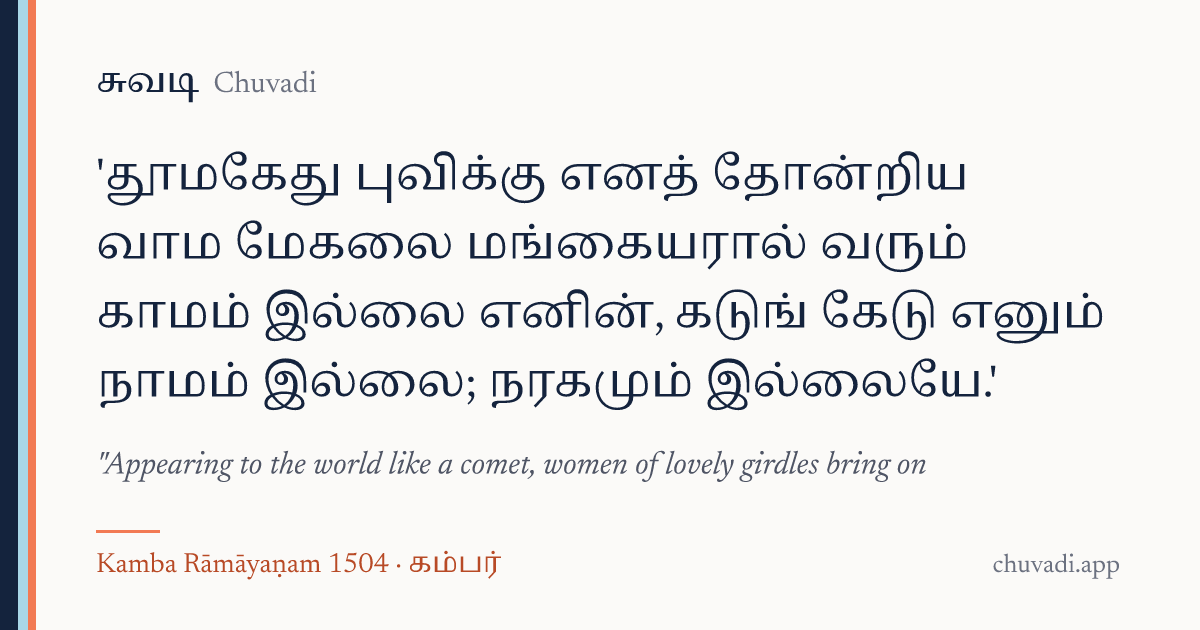
புவிக்கு - இந்த உலகில் உள்ளவர்க்குத் (தீமை விளைக்கத் தோன்றும்); தூமகேது என - வால் நட்சத்திரம் என்று சொல்லும்படி; தோன்றிய - பிறந்துள்ள; வாம மேகலை மங்கையரால் - அழகிய மேகலாபரணம் அணிந்த பெண்களால்; வரும் - உண்டாகின்ற; காமம் இல்லை எனின் - காம நோய்மட்டும் இல்லையானால்; கடும் - கொடிய; கேடு எனும் நாமம் இல்லை - கெடுதி என்னும் சொல்லே இல்லையாகும்; நரகமும் இல்லையே - நரகத் துன்பமும் இல்லை.
பெருங்கேடு விளைதற்கு உற்பாதம் தூமகேது. அதுபோல மங்கையரும் கேடு விளைப்பர் என்றவாறாம். காமம் கேட்டிற்கும் நரகிற்கும் வாயில் என்றார். “காமத்தால் வருவன நேரே பகையல்லவாயினும் ஆக்கம் சிதைத்தல், அழிவு தலைத்தருதல் என்னும் தொழில்களாற் பகையோடு ஒத்தலின் பகைப்பாற்படுவனவாம்” என்னும் திருக்குறள் ‘பெண்வழிச் சேறல்’ அதிகார முகவுரையிற் பரிமேலழகர் உரைத்தனவற்றை இங்குக் கருதுக. இனிப் பின்னர்க் கிட்கிந்தா காண்டம் அரசியற் படலத்து இராமன் வசிட்டன்பால் கேட்டறிந்தனவற்றைச் சுக்கிரீவனுக்கு உரைத்தமை “மங்கையர் பொருட்டால் எய்தும் மாந்தர்க்கு மரணம் என்றல், சங்கை இன்று உணர்த்தி... அங்கவர் தங்களாலே அல்லலும் பழியும் ஆதல், எங்களின் காண்டி” (4127) என்ற பாடலாற் கண்டு இதனுடன் இணைத்துக் கருதுக. ‘ஏ’ ஈற்றசை: தேற்றம் எனினும் ஆம்.
ஆங்கிலம் · English translationAI
Translation
- "Appearing to the world like a comet,
- women of lovely girdles bring on
- lust; were there no such lust, the very name of bitter ruin
- would not exist, nor would hell."
What the poem says
Vacittaṉ's last warning is against lust. Women are compared to a comet, an omen of disaster in old belief, and lust is called the doorway to ruin and to hell: without it, the word "ruin" would not even exist.
The view is that of the traditional advice literature for kings, which treats desire for women as an enemy of royal fortune. Later in the epic Irāmaṉ passes the same lesson on to Cukkirīvaṉ, citing his own sorrows as proof.