



கம்பராமாயணம் 1506 · அயோத்தியா 2.23
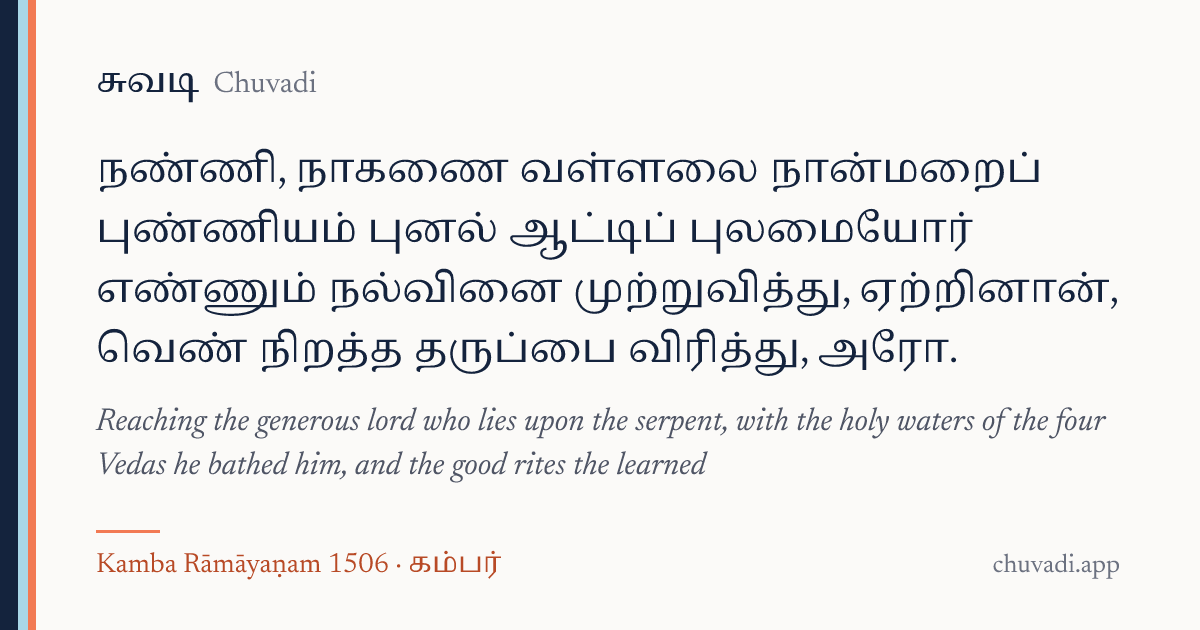
பாடல் · The poem
Tap a word to see its gloss in the commentary and where else it occurs.
பொருள் · Meaning in Tamil
நாகணை வள்ளலை நண்ணி - அரவணையில் அறிதுயில் அமர்ந்த அண்ணலைச் சென்றடைந்து; (வழிபட்டு அவனுக்கு முன் இராமனை) நான்மறை - நால் வேத முறைப்படி அமைந்த; புண்ணியப் புனல் ஆட்டி - நன்மையுடைய தீர்த்தங்களால் நீராட்டி; புலமையோர் எண்ணும் - அறிவுடையோர் எண்ணுகின்ற; நல்வினை - நல்ல சடங்குகளை; முற்றுவித்து - முடியச் செய்து; வெண்நிறத்த - வெண்மையான; தருப்பை விரித்து - தருப்பைப் புல்லைப் பரப்பி; ஏற்றினான் - அதன்மேல் எழுந்தருளச் செய்தான்.
பட்டம் பெற்று முடிசூடுவார்க்கு முன்னர் நிகழும் சடங்குகளில் திருமால் கோயிலில் நீராட்டுதலும் ஒன்று போலும். முதல்நாள் விரதம் இருக்கச் செய்தலின் தருப்பையைப் பரப்பி அதன்மேல் ஏறச்செய்தான். ‘ஆயிர மௌலியான்’ தானம் அடைந்து, நாகணை வள்ளலை - இராமனை, புனல் ஆட்டி என நேரே கூறலும் ஒன்று. நண்ணினான் என மேல் முடிய இங்கு நண்ணி எனத் தொடங்கியது அந்தாதித்தொடை. ‘அரோ’ - ஈற்றசை.
ஆங்கிலம் · English translationAI
Translation
- Reaching the generous lord who lies upon the serpent, with the holy waters
- of the four Vedas he bathed him, and the good rites the learned
- prescribe he carried through to the end, and seated him
- on white darbha grass that he had spread.
What the poem says
At the temple Vacittaṉ worships Tirumāl, who reclines on the serpent couch, and then bathes Irāmaṉ in sacred water with Vedic rites and completes the ceremonies that precede a coronation.
Because Irāmaṉ must keep a vow and fast on the eve of the crowning, the sage seats him on spread darbha grass. Another reading takes "the lord on the serpent" to be Irāmaṉ himself. The verse opens with the word that closed the previous one, linking them.