



கம்பராமாயணம் 1509 · அயோத்தியா 2.26
பாடல் · The poem
Tap a word to see its gloss in the commentary and where else it occurs.
பொருள் · Meaning in Tamil
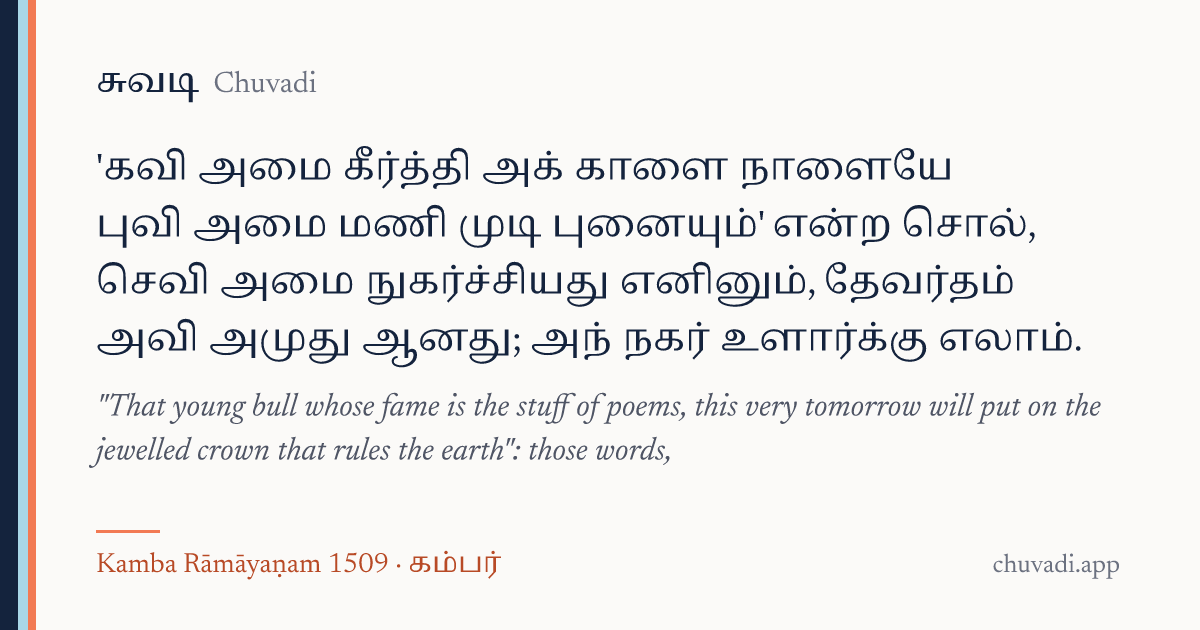
கவி அமை கீர்த்தி அக் காளை - கவிதைகளில் புனையப்படும் புகழை உடைய அந்த இராமன்; நாளையே - நாளைக்கே; புவி அமை - அரசு புரிதற்குரிய; மணிமுடி - அழகிய மகுடத்தை; புனையும் - தரிப்பான்; என்ற சொல் - என்ற வள்ளுவர் வார்த்தை; செவி அமை நுகர்ச்சியது எனினும் - காதுகளால் அனுபவிக்கப்படும் ஓசை இனிமையளவினதுதான் ஆனாலும்; அந்நகர் உளோர்க்கு எலாம் - அயோத்தி நகரில் உள்ளவர்களுக்கெல்லாம்; தேவர்தம் - தேவர்களது; அவி அமுது ஆனது - அவியுணவையும் அமுதத்தையும் ஒத்திருந்தது.
செவி நுகர்ச்சிக்கு எட்டியது நிலவுலகச் சொல்லே; ஆயினும், தேவர்தம் அமுதமெனச் சுவைப்பயன் தந்தது என்பது கருத்து. கீர்த்தி என்பது கொடைப்புகழ். “உரைப்பார் உரைப்பவை எல்லாம் இரப்பார்க்கு ஒன்று, ஈவார்மேல் நிற்கும் புகழ்” என்றார் வள்ளுவரும். (குறள். 232) அவி - வேள்வியில் கொடுக்கப்பெறுவது. அமுதம் - பாற்கடலில் இருந்து பெறப்பட்ட சாவா மருந்து. அவியமுது உம்மைத்தொகை. நாளையே - ‘ஏ’ தேற்றம்.
ஆங்கிலம் · English translationAI
Translation
- "That young bull whose fame is the stuff of poems, this very tomorrow
- will put on the jewelled crown that rules the earth": those words,
- though they were only something for the ear to enjoy, became the gods'
- oblations and nectar for everyone in that city.
What the poem says
The heralds' announcement is only sound, something the ear takes in, yet to the people of Ayōtti it tastes like the food of the gods: the oblations offered in sacrifice and the nectar of immortality churned from the ocean of milk.
Irāmaṉ's fame, the kind poets sing, is especially the fame of generosity; the Tirukkuṟaḷ says that all the praise singers sing belongs to those who give to the needy.