



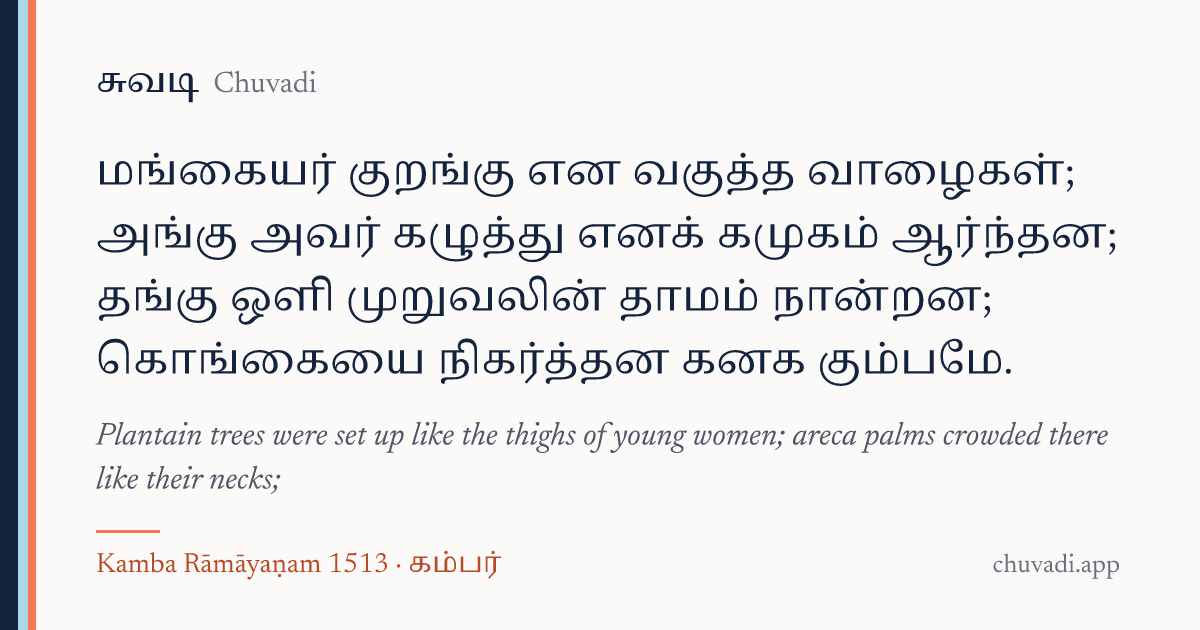
கம்பராமாயணம் 1513 · அயோத்தியா 2.30
பாடல் · The poem
Tap a word to see its gloss in the commentary and where else it occurs.
பொருள் · Meaning in Tamil
அங்கு - அயோத்தியில்; மங்கையர் குறங்கு என - மாதரது தொடை போல; வாழைகள் - வாழை மரங்கள்; வகுத்த - நிறுத்தப்பட்டன; அவர் கழுத்து எனக் கமுகம் ஆர்ந்தன - அம்மகளிர் கழுத்துப் போலக் கமுக மரங்கள் நிறைந்தன; தங்கு ஒளி முறுவலின் - (அவரிடத்தே) வெள்ளொளி நிறைந்த புன்சிரிப்புப் போல; தாமம் நான்றன - முத்துமாலைகள் தொங்கின; கனக கும்பம் - பொன்மயமான பூர்ண கும்பங்கள்; கொங்கையை நிகர்த்தன - மகளிரது தனங்களை ஒத்து விளங்கின.
வாழை, கமுகு நிறைத்து, முத்துமாலைகள் தொங்கவிட்டு, பூர்ண கும்பங்கள் வைத்து நகரை அழகுபடுத்தினர். பெண்களைப் பற்றிய உவமைகளே அனைத்துக்கும் கூறியது நயம். வாழை திரட்சிக்கும், கமுகு வரைக்கும் மென்மைக்கும், தாமம் வெண்மைக்கும் வரிசைக்கும், கும்பம் வடிவமைப்புக்கும், ஒளிக்கும் உவமையாயின. இங்கே மரபுவழி உவமைகள் உவமேயங்களாக வந்தமை காண்க. ‘ஏ’காரம் ஈற்றசை.
ஆங்கிலம் · English translationAI
Translation
- Plantain trees were set up like the thighs of young women;
- areca palms crowded there like their necks;
- strings of pearls hung down like their smiles, where light dwells;
- and golden pots were the match of their breasts.
What the poem says
The festive decorations of a South Indian town are listed: banana trees and areca palms set up at doorways, strings of pearls hung up, and golden pots filled for the occasion.
The poet plays a game with convention. These are the very things poets normally use to describe a woman's thighs, neck, smile and breasts; here the comparison is reversed, and the decorations are likened to the women.