



கம்பராமாயணம் 1515 · அயோத்தியா 2.32
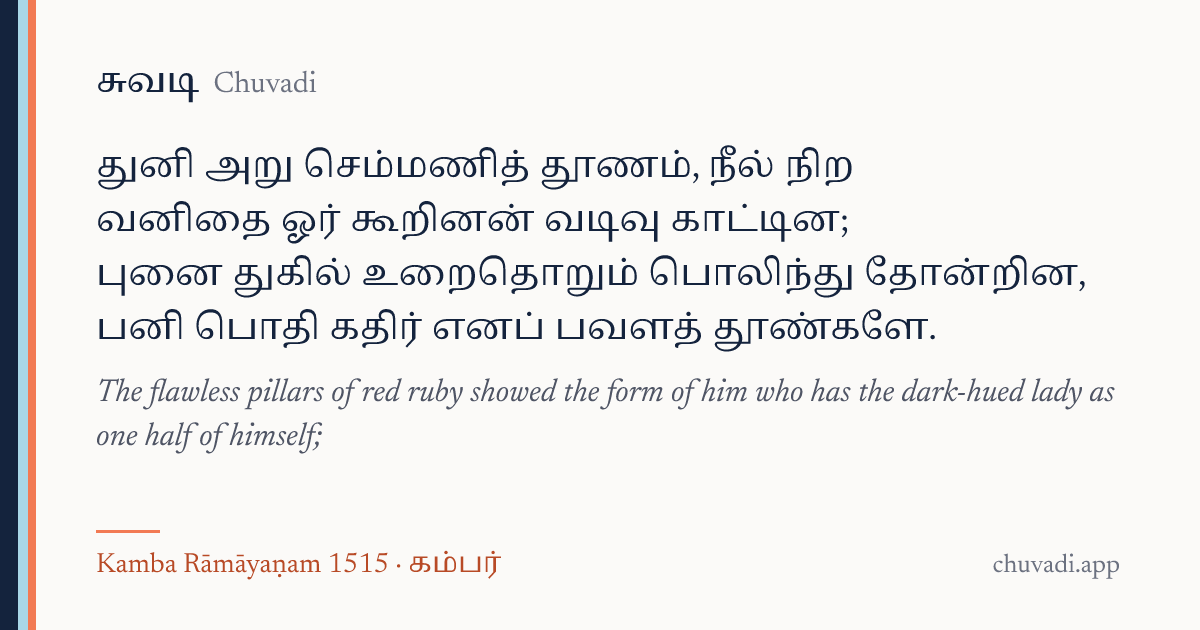
பாடல் · The poem
Tap a word to see its gloss in the commentary and where else it occurs.
பாட வேறுபாடு · Project Madurai reads
பொருள் · Meaning in Tamil
புனை துகில் உறை தொறும் பொலிந்து தோன்றின - அழகிய (வெண்மையான) துணி உறைகளுக்குள்ளே விளங்கித் தோன்றுவனவாகிய; துனி அறு - குற்றம் அற்ற; செம்மணித் தூணம் - சிவந்த மாணிக்கத்தால் ஆகிய தூண்கள்; நீல் நிற வனிதை - நீல நிறம் உடைய பார்வதியை; ஓர் கூறினன் - தன்னுடைய இடப்பாகத்தில் உடையவன் ஆகிய சிவபெருமானது; வடிவு - (திருநீறு பூசிய செம்மை) வடிவத்தை; காட்டின - காண்பித்தன; பவளத் தூண்கள் - (வெள்ளுறையில் பொதிந்த) பவளத்தால் ஆகிய தூண்கள்; பனி பொதி கதிர் என - பனியில் மறைந்த காலைச் செஞ்சூரியன் என்னும்படி (பொலிந்து தோன்றின - விளங்கித் தோன்றின.)
செம்மணித் தூண்களும் பவளத் தூண்களும் வெண்மையான துணி உறையால் மூடப்பெற்றுள்ள காட்சியைச் சித்திரித்தார். திருநீறு வெண்மையான உறைக்கும், உள்ளே பொதிந்த செம்மேனி செம்மணித் தூணத்துக்கும் உவமையாம். அவ்வாறே பனி வெள்ளுறைக்கும், உட்பொதிந்த சிவந்த சூரியன் பவளத்தூணுக்கும் உவமையாம். ‘புனைதுகில் உறைதொறும் பொலிந்து தோன்றின’ என்ற மூன்றாம் அடியை முன்னும் பின்னும் கூட்டிப் பொருள் செய்க. இது இடை நிலைத் தீவக அணியோடு கலந்துவந்த உவமையணியாம். துகில் - வெண்மையான ஆடை. ‘ஏ’காரம் ஈற்றசை.
ஆங்கிலம் · English translationAI
Translation
- The flawless pillars of red ruby showed the form
- of him who has the dark-hued lady as one half of himself;
- shining through every sheath of fine cloth wrapped around them,
- the coral pillars looked like the sun swathed in mist.
What the poem says
For the festival, the ruby and coral pillars of the palaces are wrapped in white cloth, and the red glows through.
The ruby pillars look like Civaṉ, whose red body is smeared with white sacred ash, and who shares his body with the dark goddess Pārvati. The coral pillars look like the red morning sun seen through white mist. The third line serves both comparisons at once, a figure Tamil poetics calls the "middle lamp".