



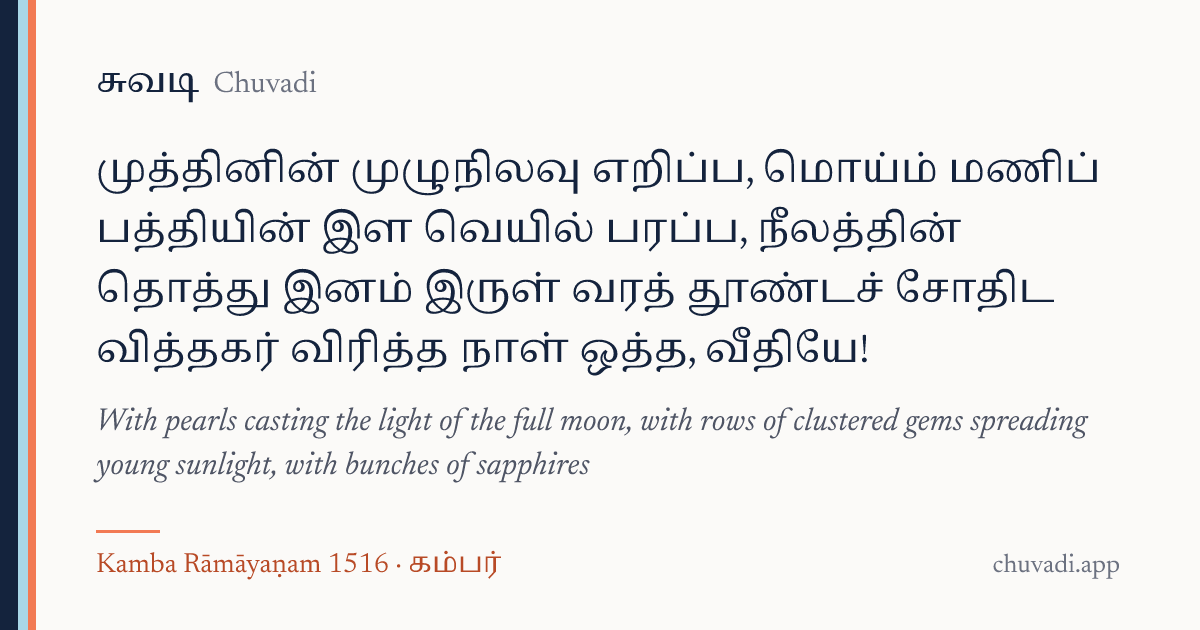
கம்பராமாயணம் 1516 · அயோத்தியா 2.33
பாடல் · The poem
Tap a word to see its gloss in the commentary and where else it occurs.
பொருள் · Meaning in Tamil
வீதி - (அயோத்தி நகரத்) தெருக்கள்; முத்தினின் - (அலங்கரித்த முத்து மாலைகளில் உள்ள) முத்துக்களால்; முழுநிலவு எறிப்ப - முழுமையான நிலவொளியை எங்கும் விளங்கச் செய்ய; மொய் - நெருங்கிய; மணிப் பத்தியின் - மணிக்கற்கள் வரிசை; இளவெயில் பரப்ப - இளமையான வெயிலைப் பரவச் செய்ய; நீலத்தின் தொத்து இனம் - (அழகுபடுத்திய) நீலமணிகளின் தொகுதியான கூட்டம்; இருள் வரத் தூண்ட - எங்கும் இருள் உண்டாகச் செய்ய; (இவற்றால்) சோதிட வித்தகர் - சோதிட நூல் அறிஞர்; விரித்த - விளக்கக் கூறுகின்ற; நாள் ஒத்த - நாளை ஒத்தன.
பகல், நிலவு, இருள் ஆகியவற்றோடு கூடிய ஒருநாள் போல, இவ்வீதிகள் மணியால் இளவெயிலும், முத்தால் நிலவொளியும், நீலமணியால் இருளும் பரப்பின என்று வருணித்தார். “நீல மாலைத், தஞ்சுடைய இருள் தழைப்பத் தரளம் ஆங்கே தண்மதியின் நிலாக்காட்டப் பவளம் தன்னால் செஞ்சுடர வெயில்விரிக்கும் அழகு” என்ற திருமங்கையாழ்வார் வாக்கு (3.4.4) இக்கற்பனைக்கு மூலம்போலும்.
ஆங்கிலம் · English translationAI
Translation
- With pearls casting the light of the full moon, with rows of clustered
- gems spreading young sunlight, with bunches of sapphires
- stirring up darkness, they were like a day as the masters
- of astrology lay it out: such were the streets!
What the poem says
The streets are hung with pearls, red gems and sapphires. The pearls give off moonlight, the red gems the glow of early sun, and the sapphires a kind of darkness.
So each street contains a whole day, with its sunlight, moonlight and night, like the full day of hours an astrologer sets out. The commentary suggests the idea comes from a hymn of the Vaiṣṇava poet-saint Tirumaṅkai Āḻvār.