



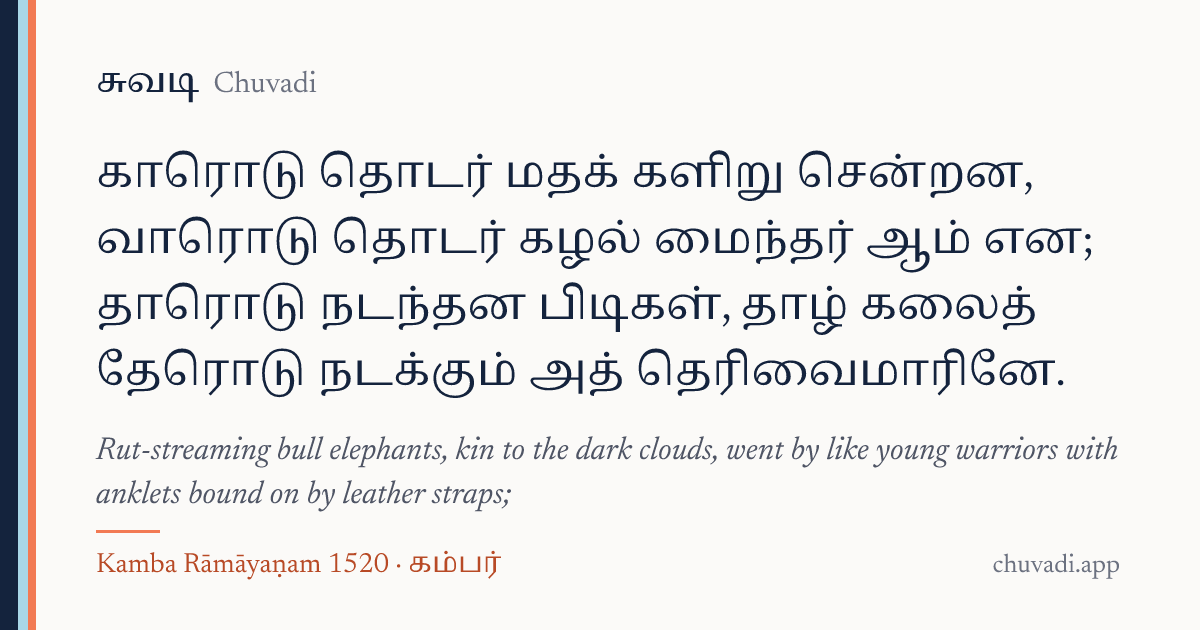
கம்பராமாயணம் 1520 · அயோத்தியா 2.37
பாடல் · The poem
Tap a word to see its gloss in the commentary and where else it occurs.
பொருள் · Meaning in Tamil
வாரொடு தொடர் கழல் மைந்தர் ஆம் என - வார்கயிற்றாற் கட்டிய வீரக்கழலை உடைய வீரர் போல; காரொடு தொடர் மதக் களிறு சென்றன - மேகத்தோடு ஒப்புமை பற்றுகின்ற மதநீர் உடைய யானைகள் சென்றன; தாழ்கலைத் தேரொடு - தொங்கக்கூடிய மேகலை யணிந்த தேர் போன்ற அல்குலோடு; நடக்கும் - நடந்து செல்லும்; அத் தெரிவைமாரின் - அந்நாட்டுப் பெண்களைப் போல; பிடிகள் - பெண் யானைகள்; தாரொடு நடந்தன - தம்மேல் கட்டிய கிண்கிணி மாலையுடன் சென்றன.
அழகுபடுத்தப் பெற்ற களிறும் பிடியும் அந்நகரில் நடந்து சென்ற காட்சியை மைந்தரும் மாதரும் போல என்று வருணித்தார். ‘வார்’ - தோற்கயிறு; வீரக் கழலைக் கட்டப் பயன்படுவது. தார் - கிண்கிணிச் சதங்கை கோத்த மாலை. ‘கலைத்தேர்’ அல்குலுக்கு வெளிப்படை. கலை - மேகலை, முதற்குறை, மேகலை யணிந்த தேர் எனவே அல்குலாயிற்று. இனி, இதனையே அந்நகரில் மைந்தர் களிறு போலச் சென்றனர் என்றும், தெரிவைமார் பிடிபோல நடந்தனர் எனவும் கொள்ள வைத்த நயம் அறிந்து மகிழற்பாலது. ‘ஏ’காரம் ஈற்றசை.
ஆங்கிலம் · English translationAI
Translation
- Rut-streaming bull elephants, kin to the dark clouds, went by
- like young warriors with anklets bound on by leather straps;
- cow elephants walked along with their strings of bells,
- like the women there who walk with chariot-like hips beneath low-slung girdles.
What the poem says
Decorated elephants parade through the city. The tuskers, dark as rain clouds and streaming with rut, move like young warriors wearing hero's anklets tied with leather straps.
The cow elephants, hung with strings of little bells, walk like the city's women, whose broad hips, under their jingling girdles, are conventionally compared to chariots. The verse can equally be read the other way round, with the young men walking like tuskers and the women like cow elephants.