



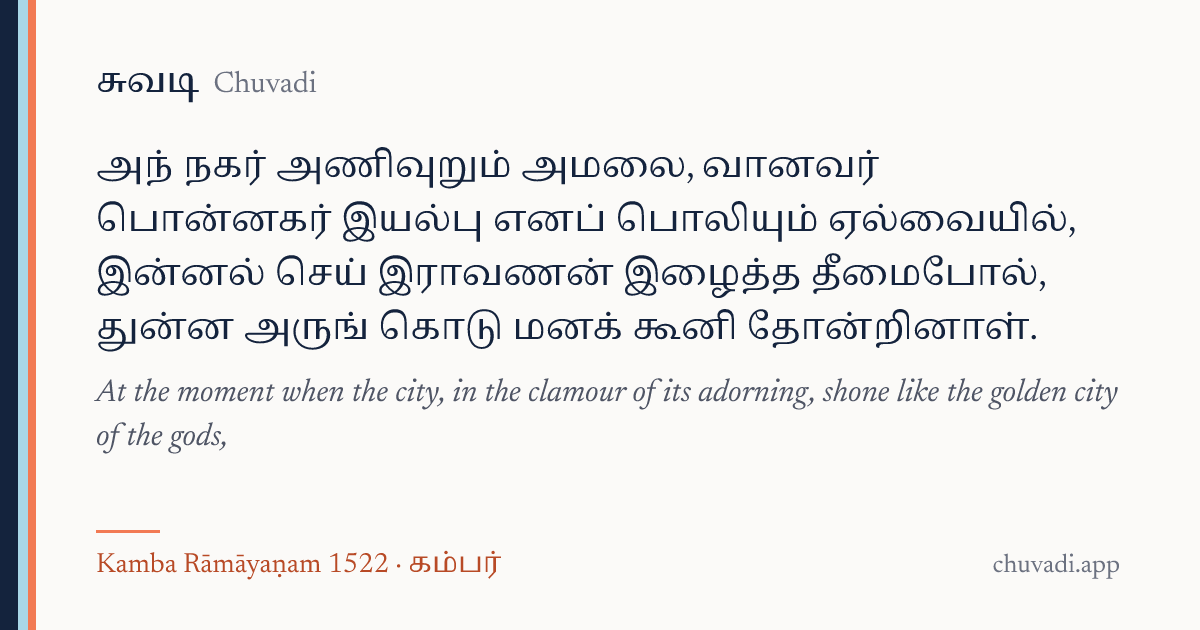
கம்பராமாயணம் 1522 · அயோத்தியா 2.39
பாடல் · The poem
Tap a word to see its gloss in the commentary and where else it occurs.
பொருள் · Meaning in Tamil
அந் நகர் - அந்த அயோத்தி நகரத்தை; அணிவுறும் - அழகு படுத்துகின்ற; அமலை - பேராரவாரத்தால்; வானவர் - தேவர்களது; பொன்னகர் இயல்பு என - அமராவதி நகரத்தின் தன்மை எனச் சொல்லும்படி; பொலியும் - விளங்குகின்ற; ஏல்வையில் - நேரத்தில்; இன்னல்செய் - (உலகிற்குத்) துன்பம் செய்கின்ற; இராவணன் இழைத்த தீமைபோல் - இராவணன் செய்த தீமை (அவனை அழிக்க இப்பிறப்பில் உரு எடுத்து வந்தது) போல; துன்ன அருங் கொடு மன - அணுகுதற்கரிய கொடிய மனம் படைத்த; கூனி - கூனி என்னும் மந்தரை; தோன்றினாள் - வெளியில் வந்து நகரைப் பார்த்தாள்.
கூனி அரச மாளிகை உப்பரிகையின் மீதேறி நகர் அலங்கரிக்கப் படுதற்கும் மக்கள் மகிழ்ச்சியுடன் இருத்தற்கும் காரணம் என்ன என்று தன்னருகே இருந்த இராமனது செவிலித்தாயை வினாவி உணர்ந்து புறப்பட்டாள் என்பது வான்மீகம். கூனி செய்த சூழ்ச்சியால் இராமன் காடு சென்று இராவண வதம் நடைபெற இருத்தலின், “இராவணன் இழைத்த தீமை போல்” என்று கூனியைக் கூறினார். இராவணன் - அழுகிறவன் என்பது பொருள். கைலாய மலையைத் தூக்கியபோது அடியில் அகப்பட்டுக் கொண்டு கதறினான். ஆதலின் இறைவன் இராவணன் என்று பெயர் கொடுத்தான் என்பர். இராவண வதநோக்கமாகத் தேவர்கள் அவளை அனுப்பினர். ஆதலின், அத் தேவ ரகசியத்தை உட்கொண்டு ‘கூனி தோன்றினாள்’ என்பாரும் உளர். ஏல்வை - பொழுது, காலம் எனப் பொருள்படும்.
ஆங்கிலம் · English translationAI
Translation
- At the moment when the city, in the clamour of its adorning,
- shone like the golden city of the gods,
- like the evil done by Irāvaṇaṉ, who brings suffering to the world,
- the hunchback of cruel, unapproachable mind appeared.
What the poem says
At the height of the celebrations, Mantarai, Kaikēyi's hunchbacked maid, called Kūṉi, "the hunchback", appears. In Vālmīki's version she climbs to a palace terrace, sees the decorations and learns the reason from Irāmaṉ's nurse.
The poet compares her to the evil deeds of Irāvaṇaṉ taking bodily form: her scheme will send Irāmaṉ to the forest and so lead to Irāvaṇaṉ's death. Some read this as the gods' secret plan. The demon king's name is explained as "the one who cried out", from when he was pinned under Mount Kailāsa.