



கம்பராமாயணம் 1523 · அயோத்தியா 2.40
பாடல் · The poem
Tap a word to see its gloss in the commentary and where else it occurs.
பொருள் · Meaning in Tamil
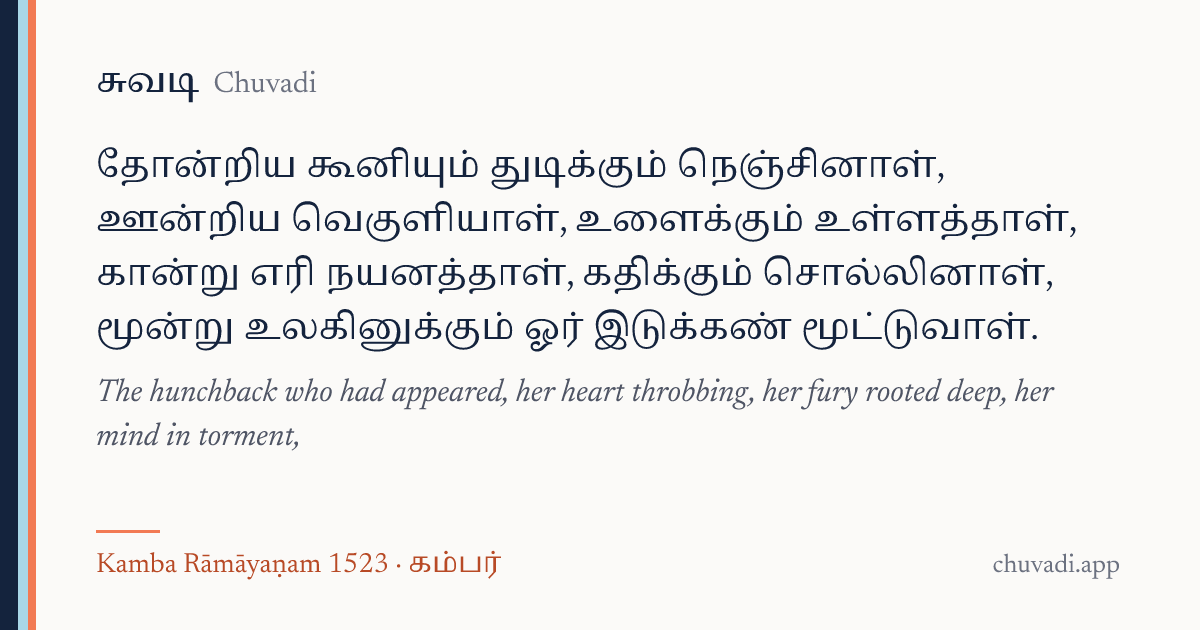
தோன்றிய கூனியும் - அவ்வாறு வெளியில் வந்த கூனியும்; (நகர் அணிசெயப் பெறுவது கண்டு ஆத்திரம் அடைந்து) துடிக்கும் நெஞ்சினாள் - கோபத்தால் துடிக்கின்ற மனமுடையவளாய்; ஊன்றிய வெகுளியாள் - கால்கொண்டு நிலைநின்ற கோபம் உடையவளாய்; உளைக்கும் உள்ளத்தாள் - வேதனைப்படும் மனம் உடையவளாய்; கான்று எரி நயனத்தாள் - நெருப்புக் கக்கி எரிகின்ற கண்ணுடையளாய்; கதிக்கும் சொல்லினாள் - படபடப்பாகத் தோன்றும் சொல்லுடையவளாய்; மூன்று உலகினுக்கும் - மூவுலகங்களுக்கும்; ஓர் - ஒப்பற்ற; இடுக்கண் - (தீர்க்க முடியாத) துன்பத்தை; மூட்டுவாள் - செய்யத் தொடங்குகிறவளாய் (ஆயினள்).
இராமனது முடிசூட்டுவிழாச் செய்தி அறிந்த கூனி பொறுக்கலாற்றாமல் மனம் வெதும்பிச் சீறியபடியைக் கவி இங்ஙனம் எடுத்துக்காட்டினார். இவை கோபத்தின் மெய்ப்பாடுகள். மேற்பாடலில் ‘தோன்றினாள்’ என முடித்து, இங்குத் ‘தோன்றிய’ எனத் தொடங்கியது அந்தாதித் தொடை. இச்செய்யுள் தொடர்ந்து சென்று பின்னர் 1448 ஆம் பாடலில் ‘விரைவின் எய்தினாள்’ என்பதில் முடியும்.
ஆங்கிலம் · English translationAI
Translation
- The hunchback who had appeared, her heart throbbing,
- her fury rooted deep, her mind in torment,
- her eyes spewing fire, her words sputtering,
- was set to kindle a calamity for all three worlds.
What the poem says
The poet describes Mantarai's rage at the news of the coronation through its outward signs: a pounding heart, settled fury, inner torment, eyes that seem to spit fire, and words that tumble out.
She is about to set in motion a disaster for all three worlds. The sentence that begins here runs on and ends two verses later, when she reaches Kaikēyi.