



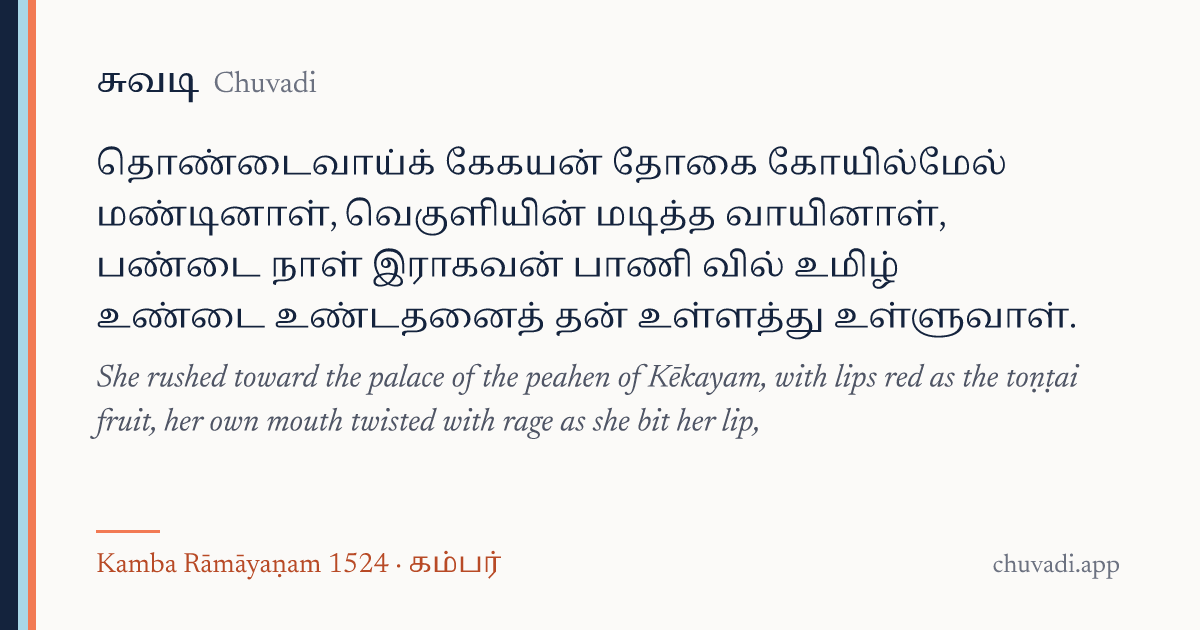
கம்பராமாயணம் 1524 · அயோத்தியா 2.41
பாடல் · The poem
Tap a word to see its gloss in the commentary and where else it occurs.
பொருள் · Meaning in Tamil
பண்டைநாள் - (இராமனது குழந்தைப் பருவமாகிய) முன்னாளில்; இராகவன் - இராமனது; பாணி வில் - கையில் உள்ள வில்லினால்; உமிழ் - வெளிப்படுத்தப்பெற்ற; உண்டை - மண்ணுருண்டை; உண்டதனை - (தன்மேல்) பட்டதனை; தன் உள்ளத்து - தன் மனத்தின்கண்; உள்ளுவாள் - நினைத்து; வெகுளியின் - கோபத்தால்; மடித்த - கீழ் உதட்டை மடித்துக் கடித்த; வாயினாள் - வாயை உடையவளாய்; தொண்டை வாய் - கொவ்வைக்கனி போன்ற சிவந்த வாயை உடைய; கேகயன் தோகை - கைகேயியின்; கோயில் மேல் - மாளிகையிடத்து; மண்டினாள் - நெருங்க; (‘எய்தினாள்’ என மேல் முடியும்)
இராமன் சிறுவனாய் இருந்தபொழுது கையிற் சிறு வில்லும் மண்ணுருண்டை கோத்த அம்பும் கொண்டு குளத்தருகே விளையாடி வருகையில், இக்கூனி, குடங்கொண்டு நீர்மொண்டு மகளிருடனே கலந்து வரும்போது, தன் அரண்மனைத் தாதிதானே என்ற சொந்தத்தால், மண்ணுருண்டையை வில்லிற்கோத்து இவள்மேல் அடித்தான். இவள் கைநெகிழ்ந்து குடம் வீழ, மற்ற மகளிர் பரிகசிக்க, இவள் கடுங்கோபம் உற்று இராமனைத் துன்புறுத்தச் சமயம் நோக்கி இருந்தாள் என்பதோர் கதை. இக்கதை வான்மீகத்தில் இல்லை; கம்பரும் விரிவாகக் கூறவில்லை; ஆயினும் “கூனகம் புகத் தெறித்த கொற்றவில்லி”, “கொண்டை கொண்ட கோதை மீது தேனுலாவு கூனி கூன் உண்டை கொண்டு அரங்க வோட்டி உள் மகிழ்ந்த நாதன்”, “கூனே சிதைய உண்டைவில் நிறத்தில் தெறித்தாய்” (திவ்யப். 780, 799, 2947) என்னும் ஆழ்வார்கள் அருளிச் செயலால் விரிவாக அறியப்படுகிறது. தொண்டை - கொவ்வைக் கனியைக் குறித்தது, பொருளாகு பெயர்.
ஆங்கிலம் · English translationAI
Translation
- She rushed toward the palace of the peahen of Kēkayam, with lips red as the toṇṭai fruit,
- her own mouth twisted with rage as she bit her lip,
- brooding in her heart on how, in days gone by, she had been struck
- by the clay pellet shot from the bow in Irākavaṉ's hand.
What the poem says
Mantarai hurries to the palace of Kaikēyi, the princess of Kēkayam, called a peahen for her beauty. Biting her lip in anger, she remembers an old grudge.
According to a story not found in Vālmīki, when Irāmaṉ was a boy playing with a toy bow that shot clay pellets, he playfully hit Mantarai, a servant of the household, as she carried water. She dropped her pot, the other women laughed, and she nursed her resentment ever since. The Vaiṣṇava saints' hymns allude to this episode.