



கம்பராமாயணம் 1526 · அயோத்தியா 2.43
பாடல் · The poem
Tap a word to see its gloss in the commentary and where else it occurs.
பாட வேறுபாடு · Project Madurai reads
பொருள் · Meaning in Tamil
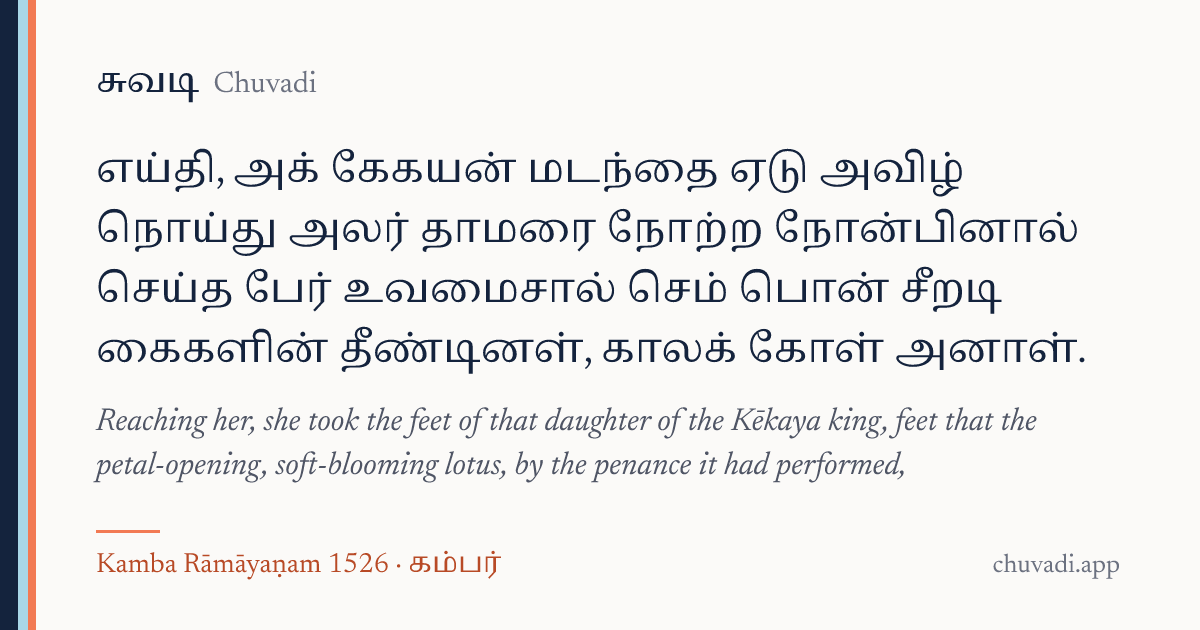
காலக் கோள் அனாள் - தீய காலத்தே தோன்றித் தீங்கு பயக்கும் ராகு, கேது என்னும் கிரகங்களை ஒத்த கூனி; எய்தி - கைகேயியை அடைந்து; அக்கேகயன் மடந்தை - அந்தக் கைகேயியினது; ஏடு அவிழ் - இதழ் விரிந்த; நொய்து அலர் - மென்மையாக மலர்ந்த; தாமரை - தாமரையானது; நோற்ற நோன்பினால் - (நீரில் ஒரு காலில் நின்று) செய்த அருந்தவத்தால்; பேர் உவமை சால் செய்த - பெரிய உவமையாக அமையும்படி பொருந்திய; செம்பொன் சீறடி - சிவந்த பொன்னணி அணிந்த சிறிய பாதங்களை; கைகளில் தீண்டினள் - தன் கைகளால் தொட்டாள்.
தாமரை பல காலம் நீரில் நின்று செய்த தவத்தால் இவள் அடிக்கு உவமையாகப் பெற்றது என்று அடியைப் புனைந்துரைத்தார். மகளிர்க்கு அடிசிறுத்திருத்தல் வேண்டுமென்பது உடற்கூற்றியல் நலம் உணர்ந்தார் கூற்று. கண், தோள், அல்குல் என மூவழிப்பெருகியும், நுதல், நுகப்பு, அடி என மூவழிச் சிறுகியும் இருத்தல் வேண்டும். “அகல் அல்குல், தோள், கண் என மூவழிப் பெருகி, ஆதல், அடி, நுகப்பு என மூவழிச் சிறுகி” (கலித். 108: 2-3) என்றது காண்க. இதனால் கைகேயி பேரழகி என்பதும் உணர்க. படுக்கையில் உறங்கியிருந்த கைகேயியைத் துயிலுணர்த்த வேண்டித் தொட்டாள் என்பதைத் தீண்டினள் என்றார். தீமை நிகழ்தற்காதாரமாகத் தொடுகின்ற தொடுகையைத் தீண்டல் என்பது வழக்கு, “பாம்பு தீண்டியது” என்றாற்போல. இங்கு கூனியைக் ‘காலக்கோள்’ ஆகிய இராகு, கேது என்னும் பாம்பாகக் குறித்தாராதலின், அதற்கேற்பத் ‘தீண்டல்’ நயம் உடைய சொல்லாகிறது. ‘காலக் கோள்’ என்பதற்கு, உலகிற்குத் துன்பம் விளைக்கும் உற்பாதமாகிய ‘தூமகேது’ போன்ற கோள்களைக் குறிப்பினும் அமையும் என்க. கூனியைப் பின்னர் ‘வெவ்விடம் அனையவள்’ (1452) என்றதும் இதுபற்றியே என்க.
ஆங்கிலம் · English translationAI
Translation
- Reaching her, she took the feet of that daughter of the Kēkaya king, feet that the petal-opening,
- soft-blooming lotus, by the penance it had performed,
- had won the right to be likened to, those small feet of red gold,
- and touched them with her hands, she who was like a planet of doom.
What the poem says
Mantarai wakes Kaikēyi by touching her small feet. The lotus is said to have stood long in the water doing penance just to earn the honour of being compared to those feet; classical poetry held that a beautiful woman's feet, forehead and waist should be small.
Mantarai is likened to the shadow planets Rāhu and Kētu, serpents in Indian astronomy that bring eclipses. The verb chosen for her touch is the one used for a snake's bite, so even waking the queen is an ominous act.