



கம்பராமாயணம் 1527 · அயோத்தியா 2.44
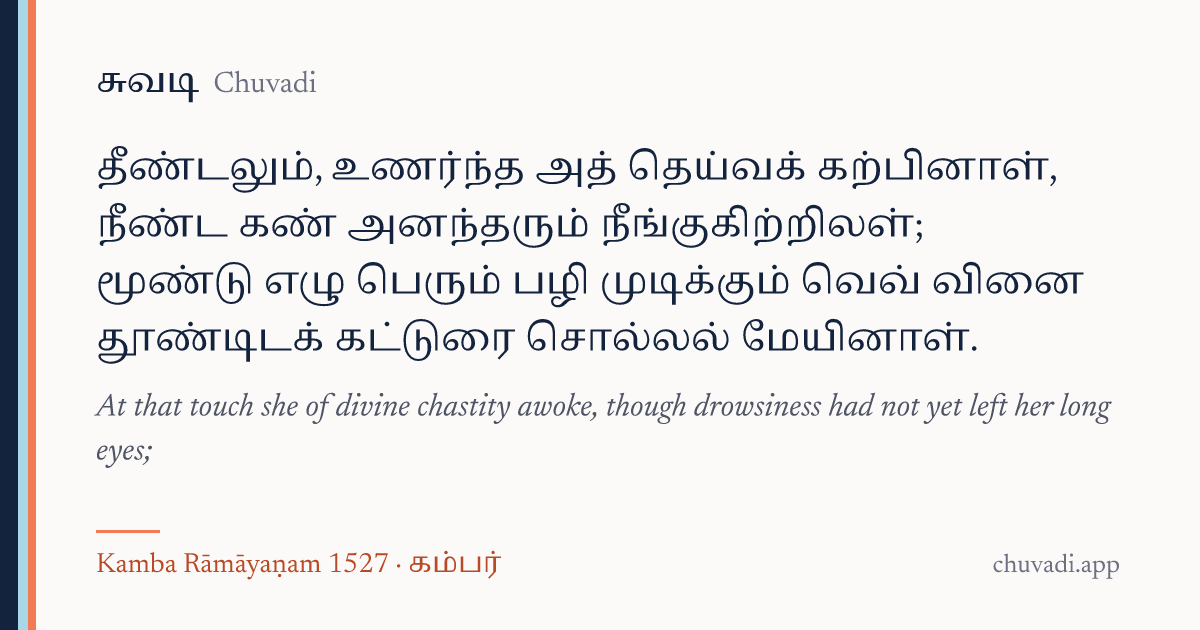
பாடல் · The poem
Tap a word to see its gloss in the commentary and where else it occurs.
பொருள் · Meaning in Tamil
தீண்டலும் - (கூனி) காலைத் தடவிய அளவில்; உணர்ந்த - துயிலுணர்ந்த; அத்தெய்வக் கற்பினாள் - அந்தத் தெய்வத் தன்மை பொருந்திய கற்பினை உடைய கைகேயி; நீண்ட கண் - தன் நீண்டமைந்த கண்களில்; அனந்தரும் - தூக்க மயக்கமும்; நீங்குகிற்றிலள் - (முற்றாக) நீங்கப் பெற்றாளில்லை; (ஆனால் அதற்குள்ளாகவே கூனி) மூண்டு எழு பெரும்பழி - மேலும் மேலும் மிக்கெழுகின்ற பெரும்பழியை; முடிக்கும் - உண்டாக்கி முடிக்கப் போகின்ற; வெவ்வினை - கொடிய வினையானது; தூண்டிட - (அவள் உள் நின்று அவளைப் பேசும்படி) ஏவுதல் செய்ய; கட்டுரை - பேச்சை; சொல்லல் மேயினாள் - பேசத் தொடங்கினாள்.
கணவன் கருத்துக்கு மாறுபடாதிசைந்த உள்ளம் உடையவள் என்பார் “தெய்வக் கற்பினாள்” என்றார்; தன் நன்மை கருதாது உலக நன்மை கருதியவள் ஆதலின் எனலும் ஆம். தூக்கம் நீங்கு முன்னரே பேசத் தொடங்கினாள் என்றது கூனியின் உள்ளக் கொதிப்பின் விரைவைப் புலனாக்கும். ‘வினை தூண்டிட’ என்பது இராவணன் வினை, கைகேயி வினை, கூனி வினை என்று பலவாறாகக் கொள்ள நிற்கும் ஆதலின் பொதுவாகக் கூறினார்.
ஆங்கிலம் · English translationAI
Translation
- At that touch she of divine chastity awoke,
- though drowsiness had not yet left her long eyes;
- and as a cruel fate, which would bring about a great and swelling infamy,
- urged her on, the hunchback began her speech.
What the poem says
Kaikēyi wakes, though she is still half asleep. Mantarai does not wait for her to come fully awake; driven by a fatal force, she starts talking at once, a sign of how her anger is boiling over.
The poet still calls Kaikēyi a woman of "divine chastity", wholly devoted to her husband. The "cruel fate" that drives events is left open: it may be read as Irāvaṇaṉ's karma, Kaikēyi's or Mantarai's own.