



கம்பராமாயணம் 1529 · அயோத்தியா 2.46
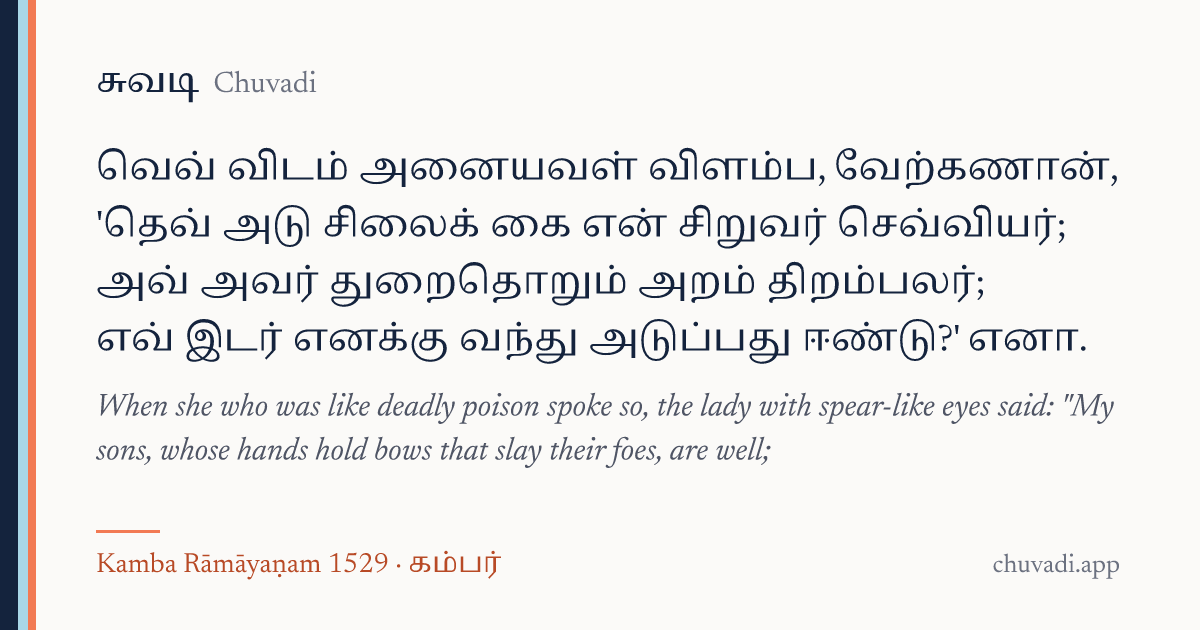
பாடல் · The poem
Tap a word to see its gloss in the commentary and where else it occurs.
பொருள் · Meaning in Tamil
வெவ்விடம் அனையவள் - கொடிய நஞ்சையொத்த கூனி; விளம்ப - இவ்வாறு சொல்ல; வேற்கணாள் - வேலையொத்த கண்ணையுடைய கைகேயி; தெவ் அடு சிலைக் கை என் சிறுவர் - பகைவரை அழிக்கும் வில்லைப் பிடித்த கையை உடைய என் புதல்வர்; செவ்வியர் - நலமாய் இருக்கின்றனர்; அவ் அவர் துறை தொறும் - அவரவர்களுடைய தொழில்களில் எல்லாம்; அறம் திறம்பலர் - தருமத்திலிருந்து மாறுபடாதவர்கள்; (எனவே) ஈண்டு - இப்பொழுது; எனக்கு; வந்து அடுப்பது - வந்து நேர்வது; எவ் இடர்? - என்ன துன்பம்; எனா - என்று சொல்லி; (அடுத்த பாட்டில் முடியும்)
பிறரால் தீங்கு வராது காக்கவல்லவர் ஆதலின் ‘தெவ்வடு சிலைக்கை’ யுடையவர்; தாம் தீங்குநெறிகளிற் செல்லாதவர் ஆதலின் அறம் திறம்பலர்; அதுவே துன்பம் எப்படி வரும், என்ன துன்பம் வரும் என்றாள் கைகேயி. சிறுவர் என்பது நால்வரையும் குறித்தது.
ஆங்கிலம் · English translationAI
Translation
- When she who was like deadly poison spoke so, the lady with spear-like eyes said:
- "My sons, whose hands hold bows that slay their foes, are well;
- each of them, in every walk of life, never swerves from dharma;
- what trouble could come near me here?" and so
What the poem says
Kaikēyi is untroubled. All four princes, whom she calls "my sons", are well; they are strong enough to protect her from any enemy, and too righteous to bring trouble on her themselves.
So what danger could there be? Her reply continues in the next verse. The poet calls Mantarai "like deadly poison", and Kaikēyi has eyes like spears, a standard compliment.