



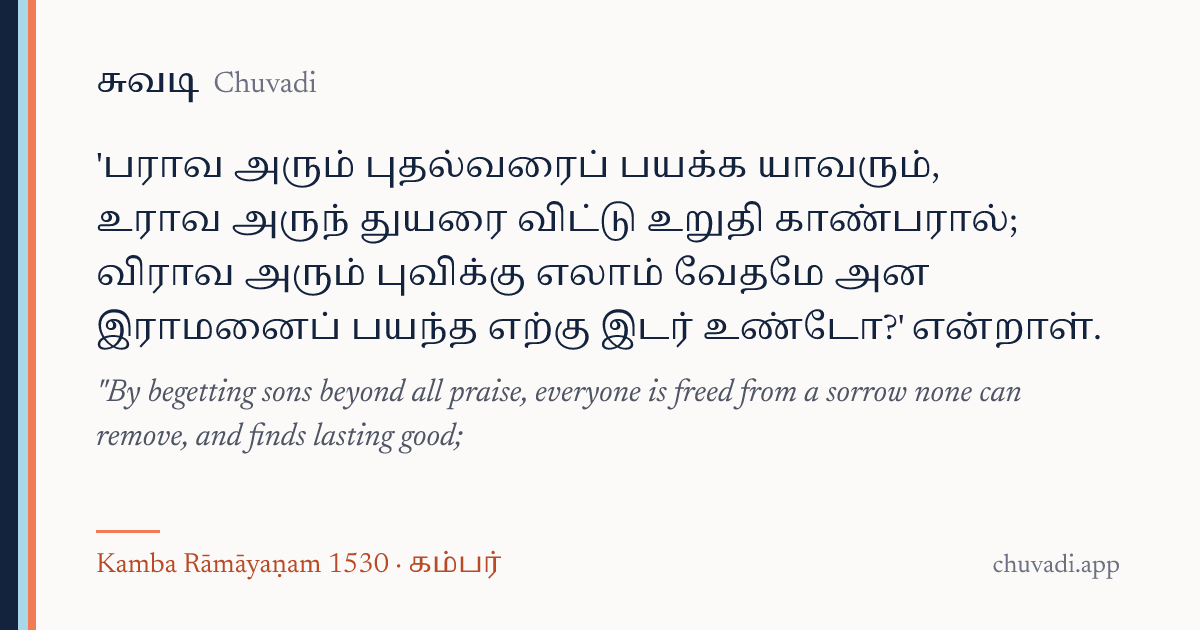
கம்பராமாயணம் 1530 · அயோத்தியா 2.47
பாடல் · The poem
Tap a word to see its gloss in the commentary and where else it occurs.
பொருள் · Meaning in Tamil
பராவ அரும் - புகழ்தற்கு அரிய; (நற்குணம் உள்ள) புதல்வரைப் பயக்க - புத்திரரைப் பெறலால்; யாவரும் - எல்லோரும்; உராவ அருந் துயரைவிட்டு - பிறரால் நீங்குதற்கரிய வலிய துன்பத்தை விட்டு; உறுதி காண்பர் - நற்கதி அடைவர்; விராவ அரும் புவிக்கு எலாம் - ஒன்றோடொன்று கலவாத தனி வேறான உலகங்களுக்கு எல்லாம்; வேதமே அன - வேதத்தைப் போன்று விளங்குகின்ற; இராமனைப் பயந்த எற்கு - இராமனைப் பெற்றெடுத்த எனக்கு; இடர் உண்டோ? - துன்பம் உளதாகுமோ?; என்றாள் - என்றும் கூறினாள்.
புத்திரரைப் பெற்றவர்கள் பிறரால் நீக்குதற்கரிய ‘புத்’ என்னும் நரகத் துன்பத்திலிருந்தும் நீங்குவார்கள்; நற்கதி அடைவார்கள் என்று அனைவரும் கூறுவர்; எல்லா உலகங்களுக்கும் வேதமே போல் விளங்கும் இராமனைப் பெற்ற எனக்குத் துன்பம் உண்டோ என்று வினாவினாள்; மேற்பாட்டில் சிறுவர் என்று நால்வரையும் பொதுவாகச் சொன்னவள் இப்பாட்டில் இராமனைப் பிரித்துப் பாராட்டி அன்பினால் நெகிழ்ந்தாளாம். ‘ஆல்’ ஈற்றசை.
ஆங்கிலம் · English translationAI
Translation
- "By begetting sons beyond all praise, everyone
- is freed from a sorrow none can remove, and finds lasting good;
- for me, who bore Irāmaṉ, who is like the Veda itself
- to all the separate worlds, can there be any trouble?" she said.
What the poem says
Kaikēyi continues: tradition holds that a good son saves his parents from the hell called Put, which no one else can avert.
Then, singling out Irāmaṉ from the four, she says that she has borne Irāmaṉ, who guides every world as the Veda does; how could any trouble touch her? Her love for Irāmaṉ, whom she counts as her own son, is complete at this point, which makes her later change all the more shocking.