



கம்பராமாயணம் 153 · பால 3.72
பாடல் · The poem
Tap a word to see its gloss in the commentary and where else it occurs.
பாட வேறுபாடு · Project Madurai reads
பொருள் · Meaning in Tamil
காடும் புனமும் கடலன்ன கிடங்கும் - அந்நகரைச் சூழ்ந்த காடுகளிலும் கொல்லைகளிலும் கடல் போன்ற அகழியின் ஓரங்களிலும்; மாதர் ஆடும் குளனும் - பெண்கள் நீர் விளையாடும் தடாகங்களிலும்; அருவிச் சுனைக் குன்றும் - அருவிகளையும், சுனைகளையும் உடைய மலைகளிலும்; உம்பர்வீடும் - மேல் வீடுகளிலும்; விரவும் மணப்பந்தரும் - பற்பல இடங்களிலும் விரவியுள்ள முத்துப் பந்தர்களிலும்; வீணை வண்டும் பாடும் பொழிலும் - வீணை போல வண்டுகள் ரீங்காரம் செய்யும் சோலைகளிலும்; மலர்ப்பல்லவப் பள்ளி மன்னும் - (ஆகிய இடங்களிலெல்லாம்) மலர்களாலும் தளிர்களாலும் அமைந்துள்ள படுக்கைகள் நிலைத்திருக்கும்.
அந்நகரத்தில் வாழ்பவர்களின் செல்வச் செருக்கையும் கவலை இல்லாமையையும், களிப்பின் மிகுதியையும் காட்டி நிற்கும் பாட்டு இது. வீறு கோள் அணியாகும். மாதர்: அழகு - பண்பாகு பெயர் (பெண்களை உணர்த்தி நின்றது). பல்லவம்: இளந்தளிர். உம்பர்வீடு: மேன்மாடி. மன்னோ: அசை.
ஆங்கிலம் · English translationAI
Translation
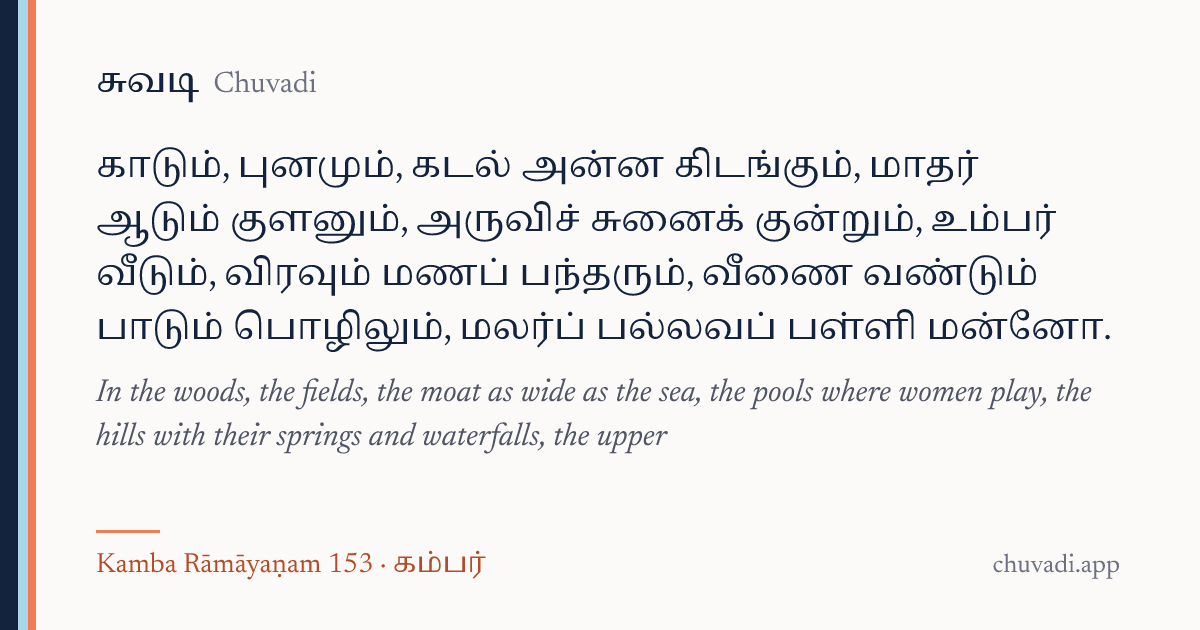
- In the woods, the fields, the moat as wide as the sea, the pools
- where women play, the hills with their springs and waterfalls, the upper
- storeys of houses, the wedding pavilions scattered everywhere, and the groves
- where bees hum like the vīṇā — everywhere lie beds of flowers and tender leaves.
What the poem says
Everywhere you look in and around Ayōttī, in woods, fields, pools, hills, rooftops, pavilions and gardens, there are couches strewn with flowers and fresh leaves for resting and for love.
The verse sums up the ease, wealth and carefree pleasure of the city's people.