



கம்பராமாயணம் 154 · பால 3.73
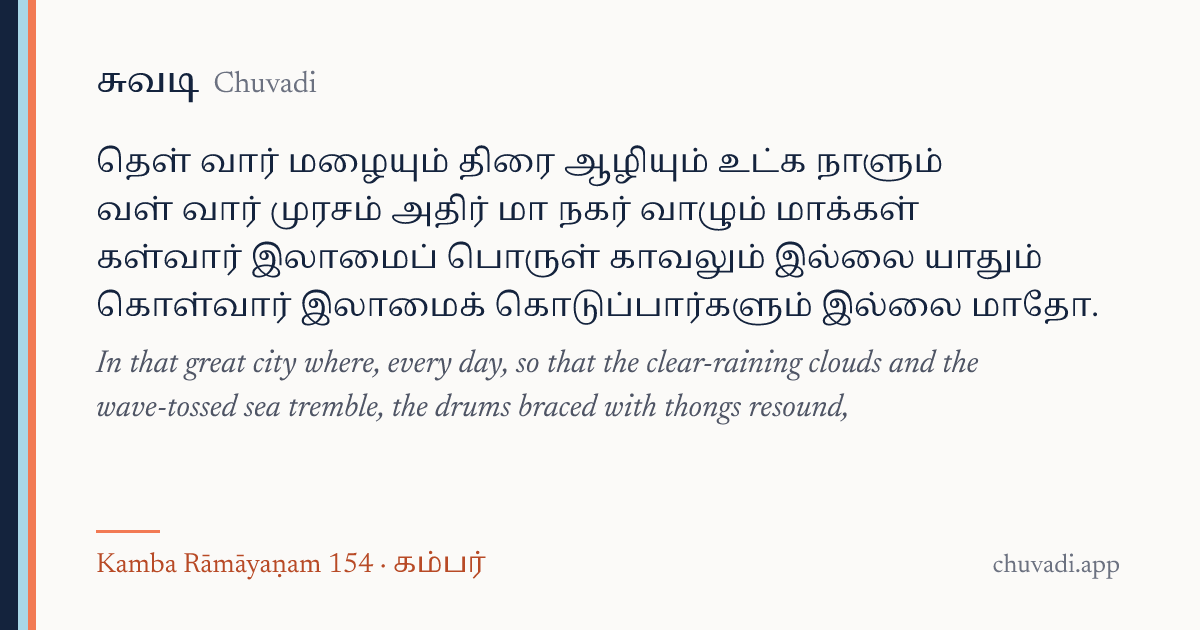
பாடல் · The poem
Tap a word to see its gloss in the commentary and where else it occurs.
பொருள் · Meaning in Tamil
தெள்வார் மழையும் திரை ஆழியும் உட்க - தெளிந்த நீரைத் தரும் மேகங்களும் அலைகளை உடைய கடலும் அஞ்சும்படி; நாளும் வள்வார் முரசம் அதிர் மாநகர் - நாள்தோறும் தோல் வாரினால் கட்டிய பேரிகைகள் எப்போதும் ஒலித்துக் கொண்டிருக்கும் அந்நகரில்; வாழும் மாக்கள் - வாழ்கின்ற ஐயறிவே உடைய மாக்களிடையே கூட; கள்வார் இலாமைப் பொருள் காவலும் இல்லை - களவு செய்பவர் இல்லாமையால் பொருள்களைக் காவல் காப்பவரும் இல்லை; யாதும் கொள்வார் இலாமை கொடுப்பார்களும் இல்லை - எதையும் யாசிப்பவர் இல்லையாதலால் கொடையாளிகளும் அந்த நகரத்தில் இல்லை.
வறுமைப் பிணியும், அதன் காரணமாகச் செய்யும் களவு முதலிய வஞ்சகச் செயல்களும் அயோத்தி நகரில் இல்லை என்பது கருத்து. மாக்கள் என்பது அறிவில் தாழ்ந்தவர்களைக் குறிக்கும். “மாவும் மாக்களும் ஐயறிவினவே” என்பது தொல்காப்பியம். அறிவுக் குறை உள்ளவர்களிடை களவு செய்யும் கீழ்மை இல்லை என்பது கருத்து. தெள்வார் மழை என்பதற்கு தெளிவுடைய மேகம் என்றும் பொருள் கூறலாம். ஆயினும் தெளிந்த நீரைத் தரும் மேகம் என்பதே சிறப்பு. மாதோ: அசை.
ஆங்கிலம் · English translationAI
Translation
- In that great city where, every day, so that the clear-raining clouds and the wave-tossed sea
- tremble, the drums braced with thongs resound,
- among the people who live there, since there are no thieves, there is no guarding of wealth;
- and since no one takes anything, there are no givers either.
What the poem says
One of the most famous verses in Kampaṉ's poem. In Ayōttī, where the festival drums never stop, there are no thieves, so no one needs to guard property.
No one is poor enough to beg, so there is no room for charity either. The word for the people is one that can mean the unlearned, so the commentary takes it to mean that even the simplest folk there are honest.