



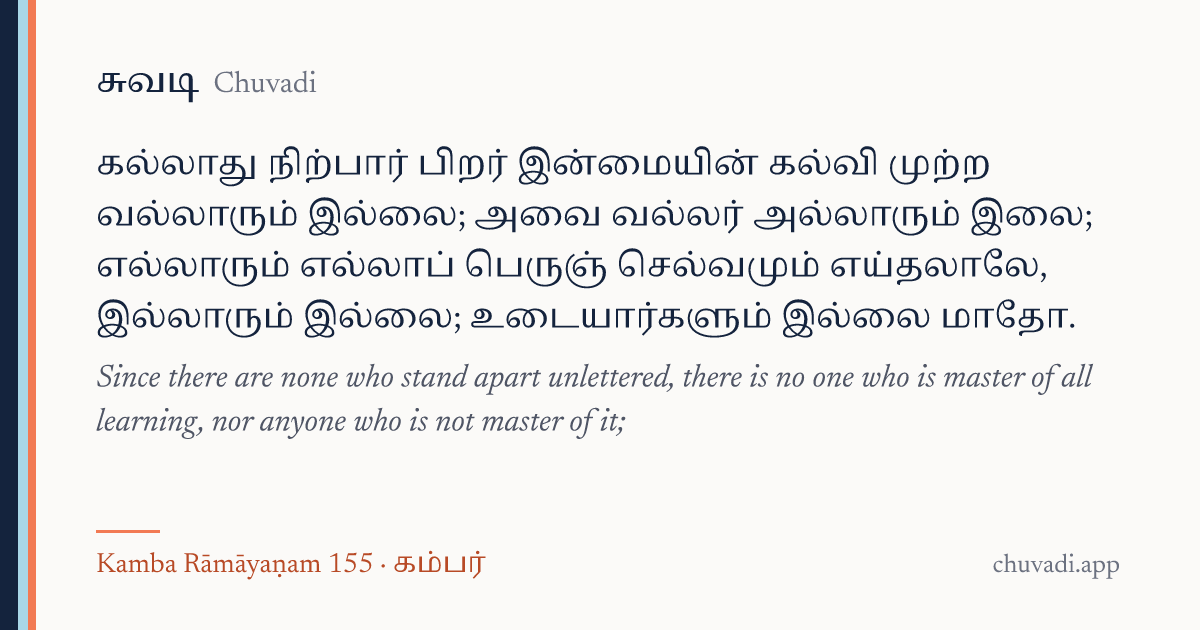
கம்பராமாயணம் 155 · பால 3.74
பாடல் · The poem
Tap a word to see its gloss in the commentary and where else it occurs.
பாட வேறுபாடு · Project Madurai reads
பொருள் · Meaning in Tamil
கல்லாது நிற்பார் பிறர் இன்மையின் - நல்ல கலை நூல்களைப் படிக்காது நிற்பவர்களாகிய வீணர்கள் இல்லாமையாலே, கல்வி முற்ற வல்லாரும் இல்லை - கல்வியில் முற்றும் வல்லவர் என்று அங்கு எவரும் இல்லை; அவை வல்லர் அல்லாரும் இல்லை - அக் கல்வித் துறைகளில் வல்லவரும், அஃது இல்லாதவரும் இல்லை; எல்லோரும் எல்லாப் பெருஞ்செல்வமும் எய்தலாலே - அந்நகரில் வாழ்பவர்கள் எல்லோரும் கல்வி, பொருள் ஆகிய எல்லாச் செல்வமும் அடைந்திருப்பதாலே; இல்லாரும் இல்லை உடையார்களும் இல்லை - அந்த நகரத்திலே இல்லாதவரும் இல்லை, உடையவர்களும் இல்லை.
இப்பாடல் அந்நகரத்தவரின் அறிவுப் பெருக்கத்தையும், செல்வச் சிறப்பினையும் தெரிவிக்கிறது. கல்லாத வீணரைப் ‘பிறர்’ என்றார். அங்குக் கற்றவர்-கல்லாதவர் என்ற வேறுபாட்டையோ, செல்வர் வறியவர் என்ற வேறுபாட்டையோ காண இயலாது என்பது கருத்து.
ஆங்கிலம் · English translationAI
Translation
- Since there are none who stand apart unlettered, there is no one
- who is master of all learning, nor anyone who is not master of it;
- since all have gained every great kind of wealth,
- there are none who lack, and none who are rich.
What the poem says
A companion to the previous verse, built on the same pattern. In Ayōttī everyone is learned, so no one stands out as a scholar or as an ignoramus.
Everyone enjoys every kind of wealth, so there are no poor and therefore no rich. The distinctions that come with inequality vanish.