



கம்பராமாயணம் 156 · பால 3.75
பாடல் · The poem
Tap a word to see its gloss in the commentary and where else it occurs.
பாட வேறுபாடு · Project Madurai reads
பொருள் · Meaning in Tamil
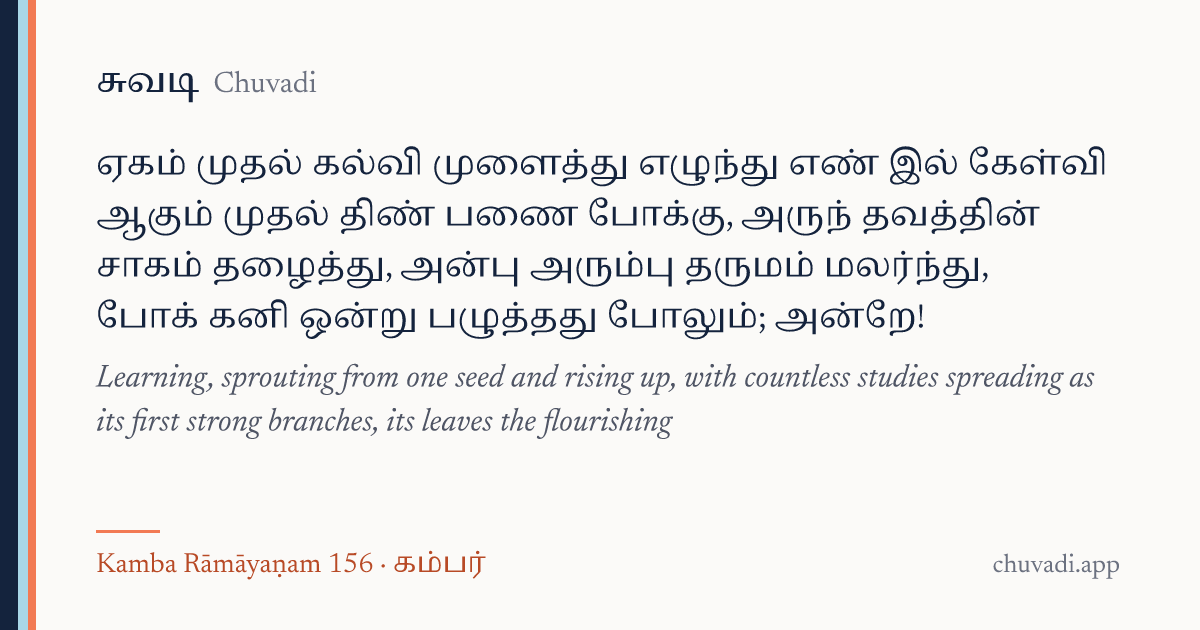
ஏகம் முதல் கல்வி முளைத்து எழுந்து - கல்வி என்னும் ஒரு வித்து ஒப்பற்றதாக முளைத்து மேலெழுந்து; எண்ணில் கேள்வி ஆகும் - எண்ணற்ற பல்நூல் கேள்வியாகிய; முதல் திண்பணை போக்கி - முதன்மையும், வலிமையும் வாய்ந்த கிளைகளை எங்கும் பரவச் செய்து; அரும் தவத்தின் சாகம் தழைத்து - அரிய தவமாகிய இலைகள் தழைத்து; அன்பு அரும்பி - எல்லா உயிர்களிடமும் செலுத்தும் அன்பாகிய அரும்பு அரும்பி; தருமம் மலர்ந்து - அறச் செயல்களாகிய மலர்கள் மலர்ந்து; போகம் கனி ஒன்று - இன்ப அநுபவம் என்னும் பழத்தை; பழுத்தது போலும் - பழுத்த பழ மரத்தைப் போன்று (அந்த அயோத்தி மாநகர் பொலிந்து விளங்கியது).
அயோத்தியின் சிறப்பைக் கூறும் இப்பாடல் முற்றுருவகம். கல்வியால் அடக்கம்; அடக்கத்தால் நல்வாழ்வு - நல்வாழ்வால் பொருள் - அற வழியே பெற்ற பொருளால் அறம். அவ்வறத்தால் இன்ப அநுபவம் கிடைக்கும் என்பதனை நயம்படக் கூறும் பாட்டு இது எனலாம்.
ஆங்கிலம் · English translationAI
Translation
- Learning, sprouting from one seed and rising up, with countless studies
- spreading as its first strong branches, its leaves the flourishing
- of hard penance, love its buds, righteous deeds its blossom —
- it was as if it had ripened into a single fruit of joy.
What the poem says
The description of the city ends with a sustained metaphor. Ayōttī is a great tree. Its seed is learning, its branches are wide study, its leaves are austerity, its buds are love for all beings and its flowers are good deeds.
Its ripe fruit is enjoyment rightly earned. The commentary reads this as a sequence: learning brings discipline, discipline a good life and lawful wealth, wealth spent on dharma, and dharma brings happiness.