



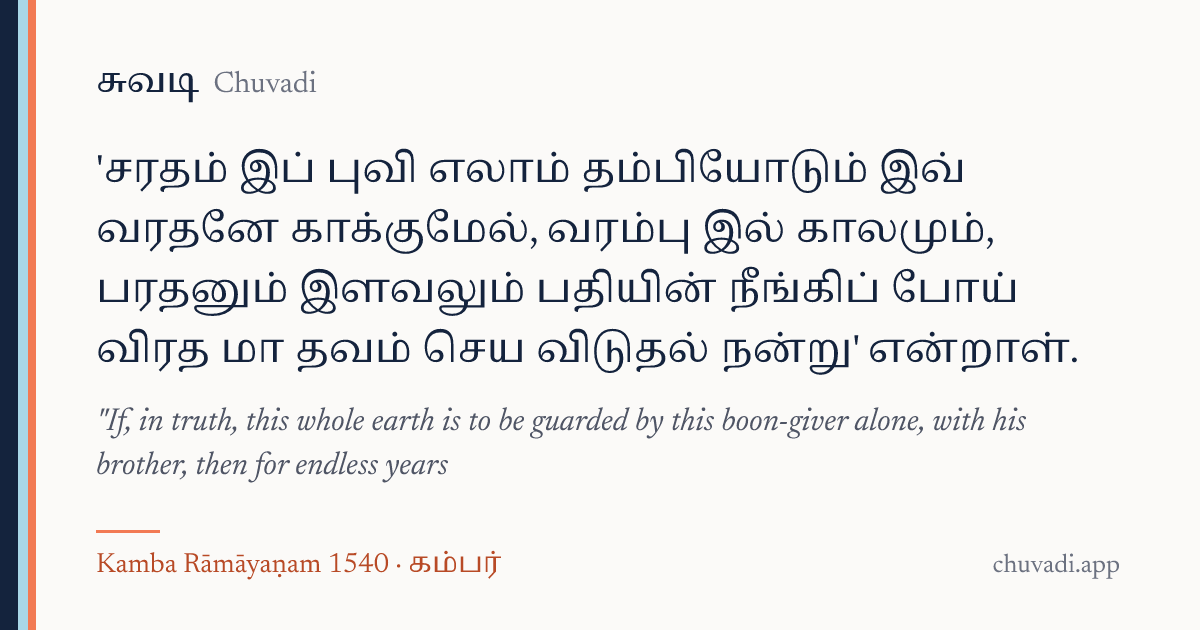
கம்பராமாயணம் 1540 · அயோத்தியா 2.57
பாடல் · The poem
Tap a word to see its gloss in the commentary and where else it occurs.
பொருள் · Meaning in Tamil
இப் புவி எலாம் - இந்த உலகமெல்லாம்; சரதம் - மெய்யாக; இவ்வரதனே - இந்த இராமனே; தம்பியோடும் - இலக்குமணனோடும் (சேர்ந்து); காக்குமேல் - (அரசு நடாத்திக்) காப்பானாயின்; பரதனும் இளவலும் - பரதனும், சத்துருக்கனனும்; வரம்பு இல் காலமும் - (இராமன் அரசு செய்யும்) அளவற்ற காலங்கள்; பதியின் நீங்கிப் போய் - அயோத்தியிலிருந்து விலகிச் சென்று; மாதவ விரதம் செயவிடுதல் - உயர்ந்த தவமாகிய விரதத்தைச் செய்யும்படி அனுப்பி விடுதல்; நன்று - அவனுக்கு நன்மை பயப்பதாம்; என்றாள் - என்று கூறினாள்.
இராமன் ஆட்சியில் நகரவாசம் செய்வதைவிட, வனவாசம் சென்று தவம், விரதம் செய்தால் மறுமைக்காவது பயன் என்றாளாம். இலக்குமணனை இராமன் தம்பி என்றும், சத்துருக்கனனைப் பரதன் தம்பி என்றும் கூறினமை “பரதனும் இளவலும் ஒரு நொடி பகிராது ..... வரதனும் இளவலும்” என்னும் முன்னைய செய்யுளாலும் (307) தேற்றமாதல் காண்க. இப்பாடலால் குறிப்பாக அரசு பெற்று ஆளாதவர் வனவாசம் செய்தல் வேண்டும் எனக் காட்டி, அதனையே பின்னர் (இராமனுக்கு) வரமாக வேண்ட வழிசெய்தாள் மந்தரை என்றும் கூறலாம்.
ஆங்கிலம் · English translationAI
Translation
- "If, in truth, this whole earth is to be guarded by this
- boon-giver alone, with his brother, then for endless years
- it would be best to let Paratan and the younger one leave the city
- and go off to keep vows and great penance," she said.
What the poem says
Mantarai pictures the future: Irāmaṉ ruling with Ilakkuvaṉ beside him, while Paratan and his younger brother Catturukkaṉaṉ have no place. They might as well leave the city and spend their lives as ascetics in the forest, gaining at least some merit for the next world.
The idea that the brother who does not rule should go to the forest plants the seed of the second boon Kaikēyi will later demand, but turned against Irāmaṉ.