



கம்பராமாயணம் 1543 · அயோத்தியா 2.60
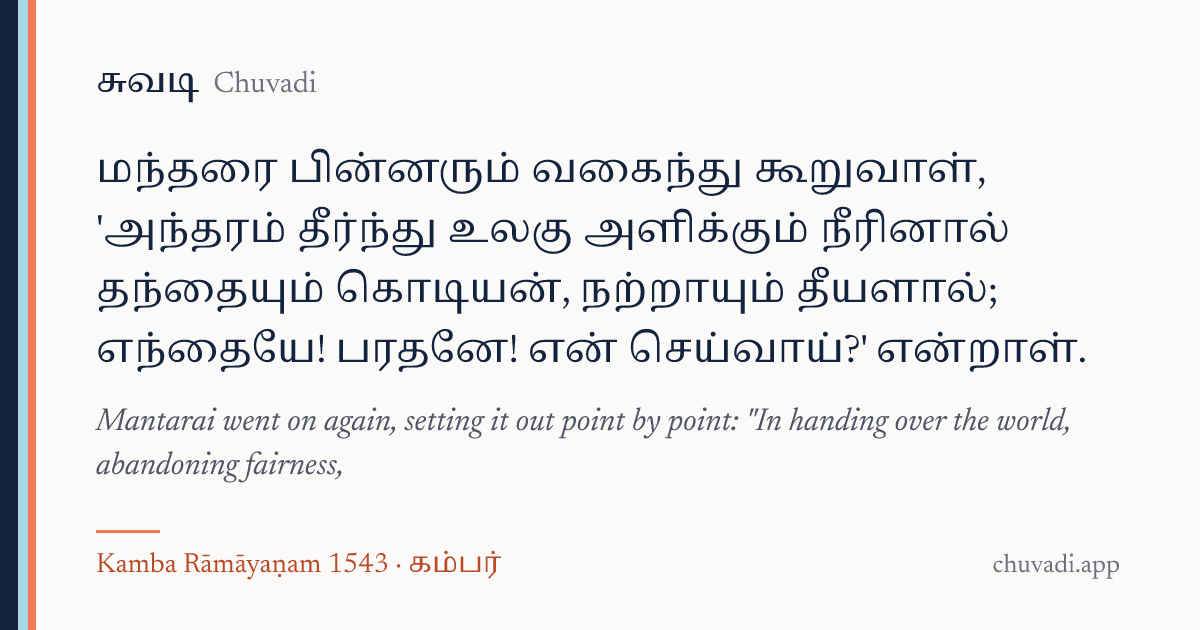
பாடல் · The poem
Tap a word to see its gloss in the commentary and where else it occurs.
பொருள் · Meaning in Tamil
மந்தரை -; பின்னரும் - மறுபடியும்; வகைந்து கூறுவாள் - வகைப்படுத்திச் சொல்பவளாகி; எந்தையே! பரதனே! - என் தந்தையே! பரதனே!; அந்தரம் தீர்ந்து - நடுவுநிலைமை விலகி; உலகு அளிக்கும் நீரினால் - அரசை இராமனுக்குக் கொடுக்கும் தன்மையால்; தந்தையும் கொடியன் - தயரதனும் கொடியவன்; (அச்செயலுக்கு மகிழும் காரணத்தால்); நற்றாயும் தீயளால் - உன்னைப் பெற்ற கைகேயியும் கொடியவள்; என்செய்வாய் - (இவர்களுக்கிடையில்) நீ யாது செய்வாய்?; என்றாள் -
கைகேயிக்குக் கூறுவதனால் பயனில்லை என்று கருதிப் பரதனை நோக்கி முறையிட்டாற் போலக் கூறுகிறாள் மந்தரை. ‘எந்தையே!’ என்பது என் செல்வமே! என் அப்பா! என்று பரிவு காட்டித் தன்னோடு நெருக்கிக்கொண்டாற் போலப் பேசும் மொழி. கைகேயிக்குத் தன் மகன்மேல் அன்பு இல்லாதது போலவும், இவளுக்குப் பரதன்மேல் அளவிறந்த பரிவு பெருகிவிட்டது போலவும் இவ் அழைப்புகள் காட்டும். ‘உலகு அளிக்கும்’ என்பதற்கு, உலகைக் காப்பாற்றும் என்று பொதுவாகப் பொருள் உரைத்தலும் ஒன்று. ‘ஆல்’ தேற்றம்.
ஆங்கிலம் · English translationAI
Translation
- Mantarai went on again, setting it out point by point:
- "In handing over the world, abandoning fairness,
- your father is cruel, and your own mother is wicked too;
- my darling! Paratan! What will you do?" she cried.
What the poem says
Giving up on reasoning with Kaikēyi, Mantarai turns away and laments to the absent Paratan, as though he were there. His father is cruel for giving the kingdom away unfairly, and his mother is wicked for rejoicing at it.
She calls him "my dear one", an endearment, as if she loved him more than his own mother does. It is a calculated performance meant to shame Kaikēyi.