



கம்பராமாயணம் 1545 · அயோத்தியா 2.62
பாடல் · The poem
Tap a word to see its gloss in the commentary and where else it occurs.
பாட வேறுபாடு · Project Madurai reads
பொருள் · Meaning in Tamil
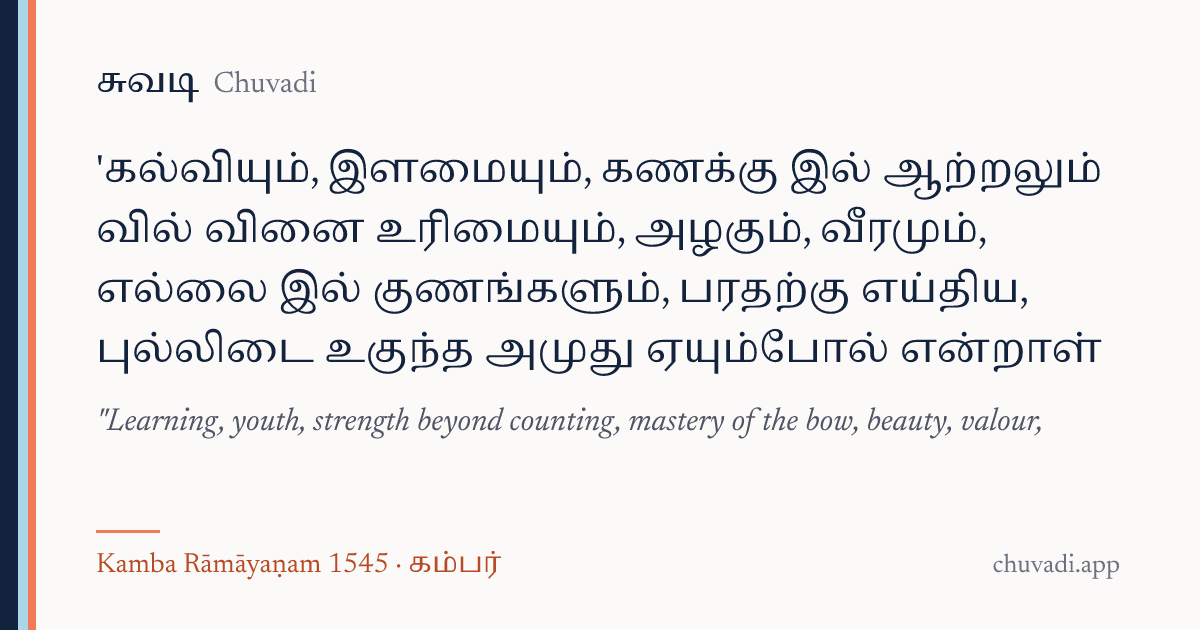
பரதற்கு - பரதனுக்கு; கல்வியும் இளமையும் -; கணக்கு இல் ஆற்றலும் - அளவில்லாத வல்லமையும்; வில்வினை உரிமையும் - வில் தொழிலில் திறமையும்; அழகும், வீரமும் -; எல்லை இல் குணங்களும் - அளவில்லாத நற்குணங்களும்; எய்திய - வந்து பொருந்தி உள்ளன; (அரசன் ஆகாவிடின் அவை அனைத்தும்) புல்லிடை உகுந்த அமுது ஏயும் போல் - புல்தரையில் சொரிந்த தேவர் அமுதம் போலப் பயனற்றதாக ஆகும் போலும்; என்றாள் -
அரசனாயிருந்தால் குணச்சிறப்புகள் மக்களுக்குப் பயன்செய்யும்; அவனுக்குப் புகழ் தரும். இல்லாவிடில் வீண் என்றாள் மந்தரை. கைகேயியை நோக்கி ‘உன் மகனுக்கு அரசன் ஆவதற்கு என்ன குறைச்சல்’ என்று கேட்டாளாம். இவ்வளவு சிறப்புகள் உடைய உன் மகனை உன் அறியாமையால் பாழாக்குகிறாயே என்று இரங்கிக் கூறுவாள் போலப் பேசினாள். ‘புல்லிடை உகுத்தல்’ “வில்லினும் வாளினும் விரிந்த ஆண்தொழில், புல்லிடை உகுத்தனென்” என்று பின் (2214) வருவதும் காண்க. “அங்கணத்துள் உக்க அமிழ்தற்றால்” என்று (குறள். 720) வள்ளுவர் கூறும் உவமை இதற்கு ஒருபுடை ஒப்பு நோக்கலாகும்.
ஆங்கிலம் · English translationAI
Translation
- "Learning, youth, strength beyond counting,
- mastery of the bow, beauty, valour,
- and boundless virtues have all come to Paratan,
- like nectar spilled on the grass," she said.
What the poem says
Mantarai lists Paratan's gifts: learning, youth, immense strength, skill with the bow, beauty, courage and countless virtues. Without a throne to exercise them, she says, they are wasted like the nectar of the gods spilled on grass.
Her implied question is: what does Paratan lack that would stop him from being king? The image recalls a Tirukkuṟaḷ couplet about nectar poured into a drain.