



கம்பராமாயணம் 1548 · அயோத்தியா 2.65
பாடல் · The poem
Tap a word to see its gloss in the commentary and where else it occurs.
பொருள் · Meaning in Tamil
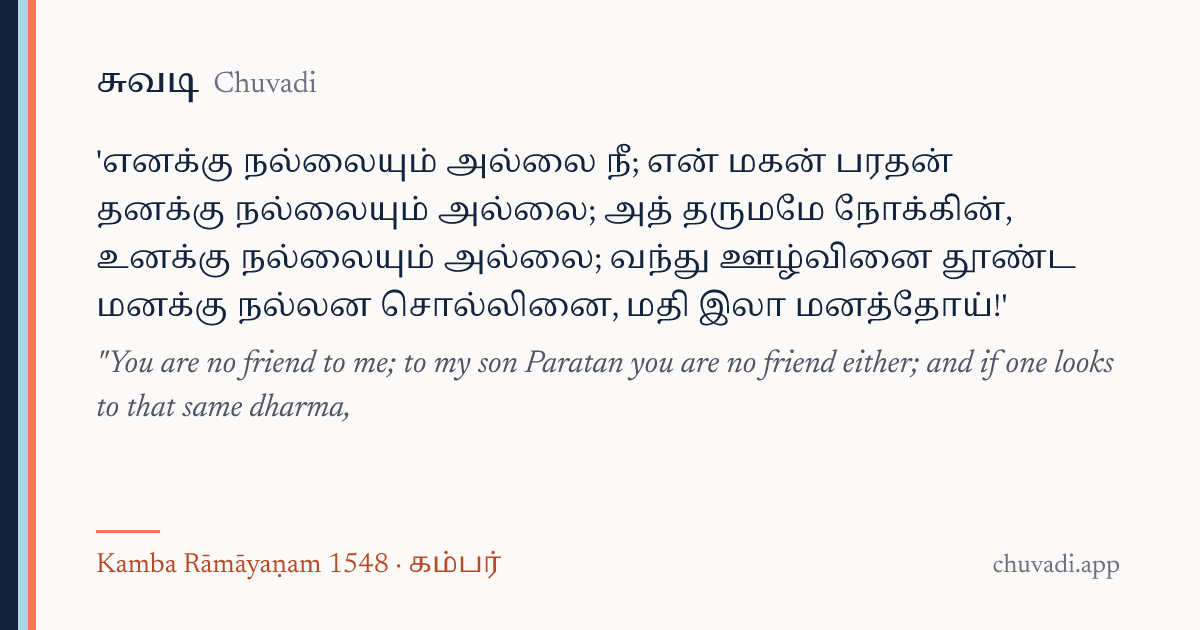
மதி இலா மனத்தோய் - அறிவில்லாத நெஞ்சினை உடையவளே; நீ எனக்கு நல்லையும் அல்லை - நீ எனக்கு நன்மையைச் செய்பவள் அல்லள்; என் மகன் பரதன் தனக்கு நல்லையும் அல்லை - என் மகனாகிய பரதனுக்கு நன்மையைச் செய்பவளும் அல்லள்; அத் தருமமே நோக்கின் - அந்த அரச தருமத்தை ஆராய்ந்தால்; உனக்கு நல்லையும் அல்லை - உனக்கு நன்மையைச் செய்து கொள்பவளும் அல்லள்; ஊழ் வினை வந்து தூண்ட - (நீ செய்த) முன்னைய வினை (விதிவழியாக) வந்து உன்னைச் செலுத்த; (அதனால்) மனக்கு நல்லன சொல்லினை - உன் மனத்துக்கு இதமானவற்றைச் சொன்னாய்.
மந்தரை சொல்லியபடி நடந்தால் பழி, பாவங்களுக்கு இடனாதலின் ‘எனக்கும், என் மகன் பரதனுக்கும் நன்மையன்று’ என்றாளாம். அன்றி, அரச தருமத்தை ஆராயின் இது ஒரு சதிவேலை என எண்ணப்படுதலின் மந்தரைக்கே தீதாய் முடியும் என்றும் கூறினாள் கைகேயி. புத்தி பூர்வமாக இல்லாவிடினும் இத்தகைய மாறுபாடான செயல்கள் விதிவழியாகவே நிகழும் ஆதலின் ‘ஊழ் வினை தூண்ட’ என்று சொன்னாள். மனக்கு - மனத்துக்கு; அத்துக் கெட்டது. இதனால் முன்பு, “இராமனைப் பயந்த எற்கிடருண்டோ” (1453) என்று கூறிய கைகேயி, “என்மகன் பரதன்” என்று பரதனைத் தன்மகன் என்று சுட்டுகிற அளவுக்கு மந்தரையின் போதனையால் மனமாற்றம் அடைந்திருக்கிறாள் என்பது புலனாகும்.
ஆங்கிலம் · English translationAI
Translation
- "You are no friend to me; to my son Paratan
- you are no friend either; and if one looks to that same dharma,
- you are no friend even to yourself; as your fate came and drove you on,
- you have said whatever pleased your own mind, you witless creature!"
What the poem says
Kaikēyi tells Mantarai that her advice helps no one: acting on it would bring disgrace on Kaikēyi and on Paratan, and by royal law it could be judged a conspiracy that would destroy Mantarai herself. Only her fate, her karma, can be driving her to speak like this.
There is a telling detail. Earlier Kaikēyi said "I who bore Irāmaṉ"; now she says "my son Paratan". Mantarai's words have already begun to work on her.