



கம்பராமாயணம் 1550 · அயோத்தியா 2.67
பாடல் · The poem
Tap a word to see its gloss in the commentary and where else it occurs.
பொருள் · Meaning in Tamil
அறிவு இலி! - அறிவற்றவளே!; என் எதிர் நின்று போதி - என் எதிரிலிருந்து அகலுவாயாக; நின் புன்பொறி நாவை - உன்னுடைய அற்ப உரைக்கிடன் ஆகிய நாக்கை; சேதியாது - துண்டித்துப் போக்காமல்; இது பொறுத்தனென் - இக்குற்றத்தைப் பொறுத்தேன்; புறம் சிலர் அறியின் - புறத்தே உள்ள சில மனிதர் அறிவாராயின்; நீதி அல்லவும் நெறிமுறை அல்லவும் - நீதிக்கும் நெறி முறைகளுக்கும் மாறுபாடாக; நினைந்தாய் ஆதி - சதி செய்தாய் ஆவாய்; ஆதலின் -; அடங்குதி - பேசாமல் அடங்குவாய்; என்றாள்.
நீ என் தோழியாதலால் உன் நாவைத் துண்டிக்காமல் விட்டேன். இத்தகைய பேச்சு வெளியார் காதில் விழுந்தால் நீ அரசருக்கெதிராகச் சதி தீட்டியதாக அறிந்து அரச தண்டனை கிடைக்கும். அதனால் வாயை மூடு என்றாள் கைகேயி. அற்பத்தனமாகப் பேசியபடியால் நாக்கைப் ‘புன்பொறி’ என்றாள்.
ஆங்கிலம் · English translationAI
Translation
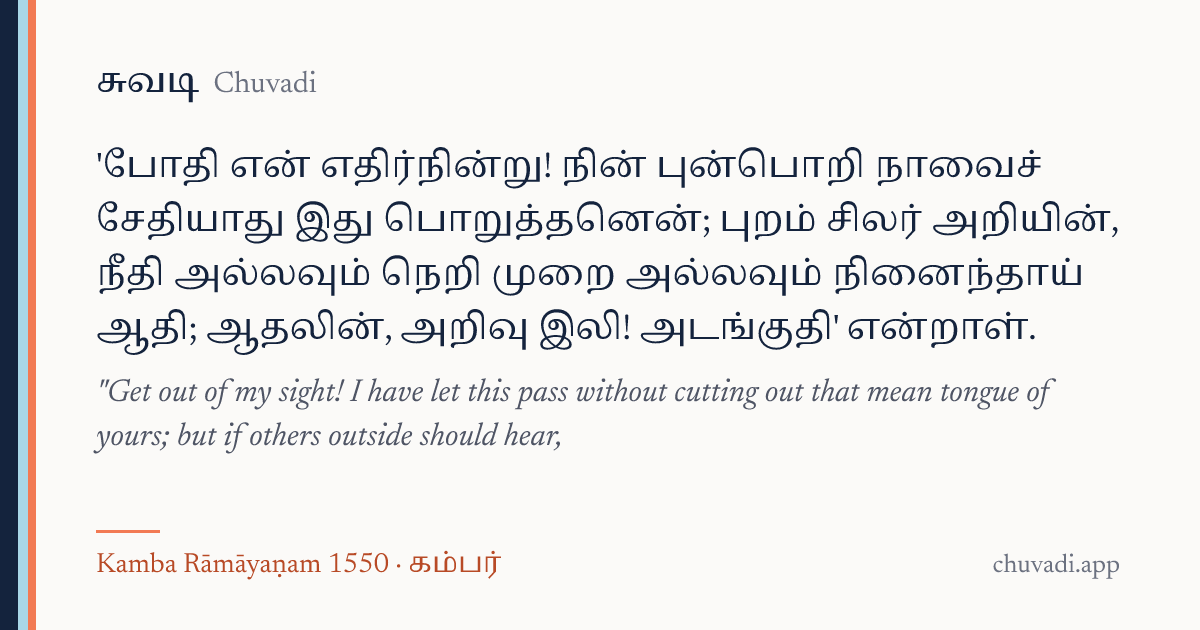
- "Get out of my sight! I have let this pass without cutting out
- that mean tongue of yours; but if others outside should hear,
- you will be one who has plotted what is neither just nor lawful;
- so, you fool, keep quiet," she said.
What the poem says
Kaikēyi orders Mantarai out of her presence. Because Mantarai is her own companion, she has spared her the punishment of having her tongue cut out for such talk.
But if anyone else hears it, Mantarai will be judged guilty of plotting against the king and his lawful order. So she had better hold her tongue.