



கம்பராமாயணம் 1571 · அயோத்தியா 3.4
பாடல் · The poem
Tap a word to see its gloss in the commentary and where else it occurs.
பாட வேறுபாடு · Project Madurai reads
பொருள் · Meaning in Tamil
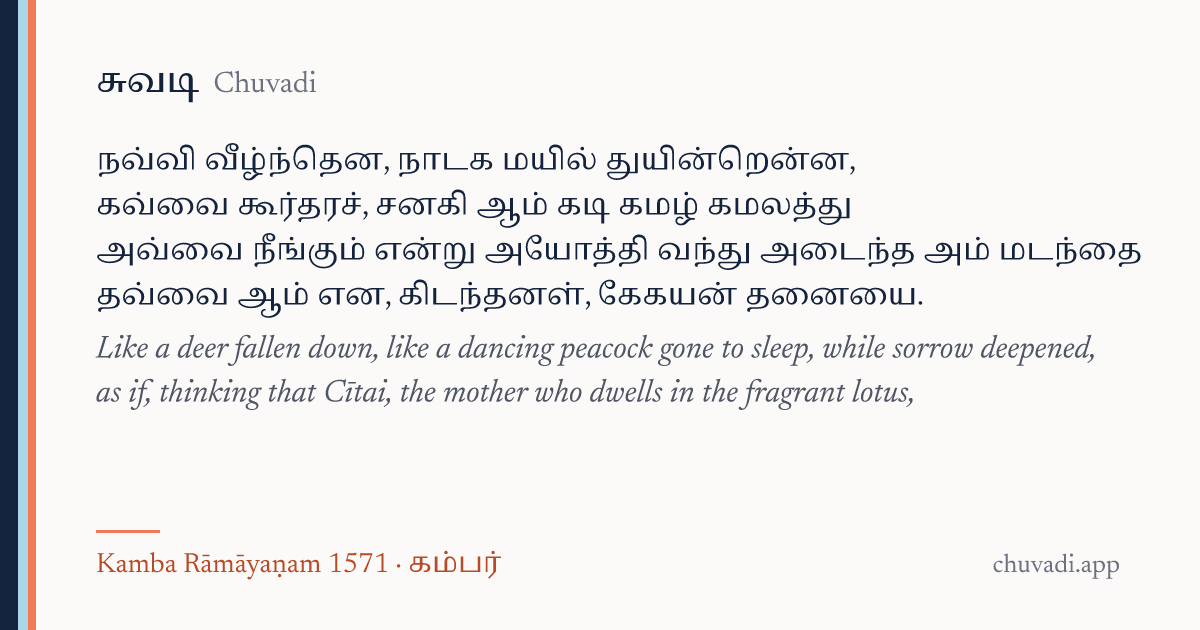
கேகயன் தனையை - கேகயன் மகளாகிய கைகேயி; நவ்வி வீழ்ந்து என - மான் விழுந்தாற் போலவும்; நாடகம் மயில் துயின்று என்ன - ஆடும் இயல்புடைய மயில் ஆடல் ஒழிந்து தூங்கினாற் போலவும்; கவ்வை கூர்தர - துன்பம் மிக; சனகி ஆம் கடிகமழ் கமலத்து அவ்வை - மணங்கமலும் செந்தாமரையில் வீற்றிருக்கும் தாயாகிய திருமகள்; நீங்கும் என்று - ‘அயோத்தியை விட்டு நீங்குவாள்’ என்று கருதி; அயோத்தி வந்து அடைந்த - அயோத்தி நகரத்தை வந்து சேர்ந்த; அம் மடந்தை தவ்வை ஆம் என - அத்திருமடந்தையின் தமக்கையாகிய மூதேவி என்னுமாறு; கிடந்தனள் - சோர்ந்து கிடந்தாள்.
ஓடும் மானையும் ஆடும் மயிலையும் கேகயன் மகளுக்கு உவமை கூறுவது இந்நாள் வரை அவளிடம் இருந்த இனிய தோற்றத்தைக் காட்டியது. திருமகள் இருந்த இடத்தைக் கைப்பற்றுவோம் என்று கருதி மூதேவி அங்கு வந்து குடிபுகுந்ததுபோலக் கிடந்தாள் என்பது தற்குறிப்பேற்றம். அவ்வை - தாய்; தவ்வை - தமக்கை.
ஆங்கிலம் · English translationAI
Translation
- Like a deer fallen down, like a dancing peacock gone to sleep,
- while sorrow deepened, as if, thinking that Cītai, the mother who dwells in the fragrant lotus,
- would leave it, there had come to Ayōttī that lady's
- elder sister, so lay the daughter of the Kēkaya king.
What the poem says
Kaikēyi lies collapsed on the floor. The deer and the peacock recall the grace she has had until now; that grace has fallen still.
The striking image is of the two sisters of Hindu tradition: Tirumakaḷ (Lakshmi), goddess of fortune, and her elder sister Mūtēvi, goddess of misfortune. Cītai is Tirumakaḷ incarnate. The poet imagines that, foreseeing that fortune is about to leave Ayōttī, ill fortune has hurried in to take her place, and Kaikēyi lying there looks like that elder sister. This is a poetic fancy in which the poet attributes his own reason to what he sees.